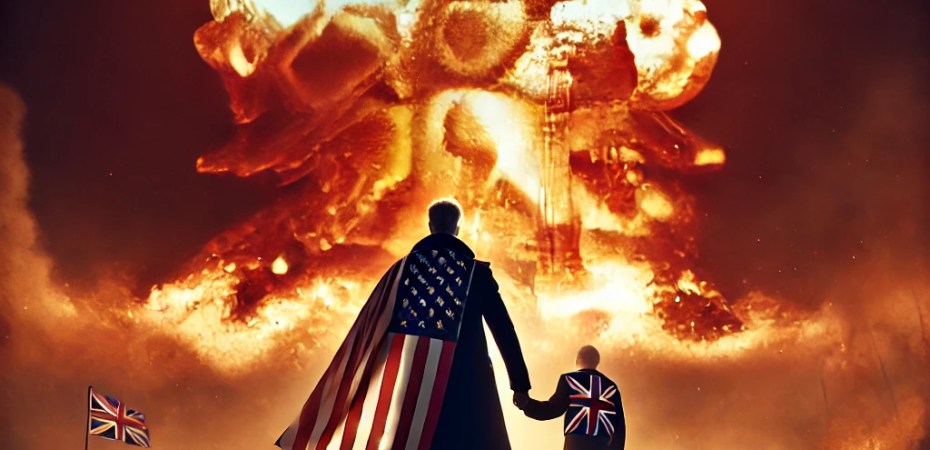
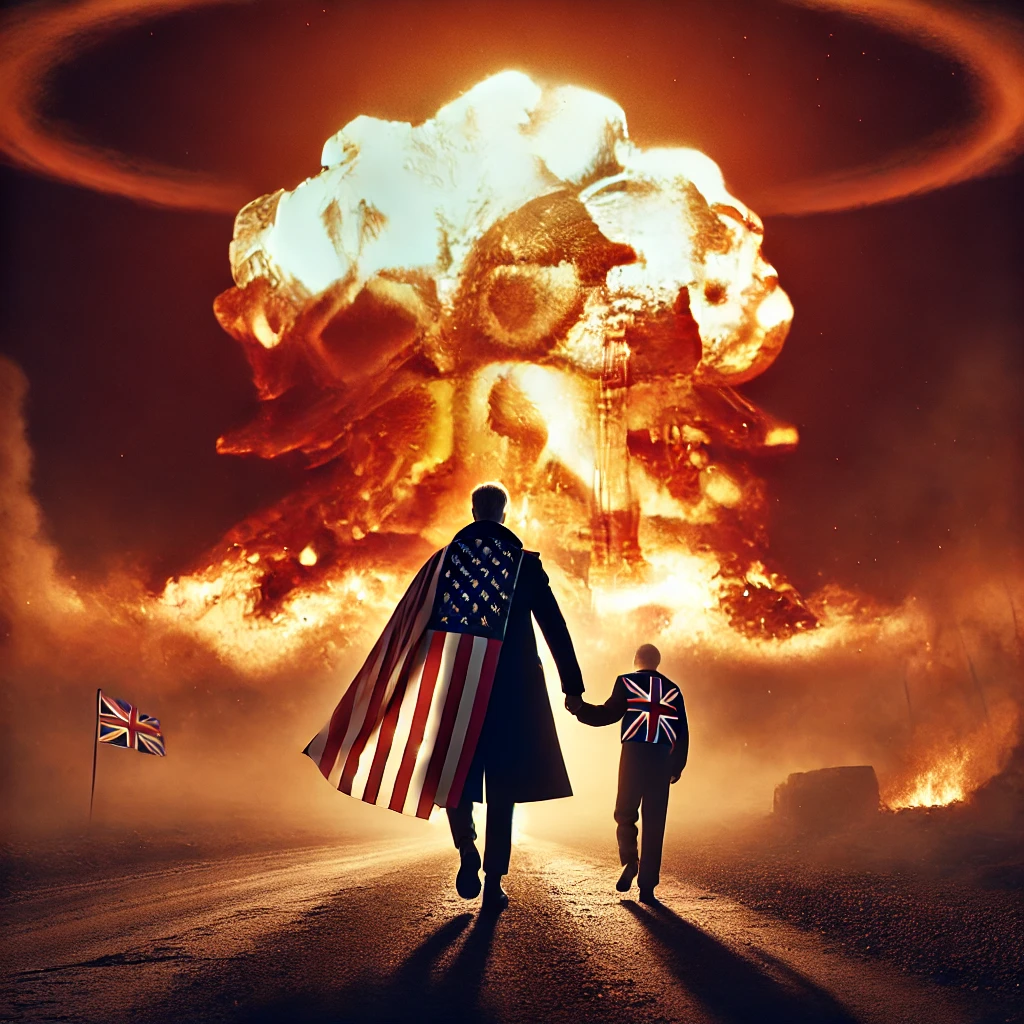
There is no mistake so ruinous that an American neoconservative will not seek to repeat it—nor one so obviously self-destructive that Britain’s political class will not blindly follow. Donald Trump, to his credit, seems to have realised that America’s reckless foreign policy of the past thirty years—engineered by the same gaggle of ideologues who ruined Iraq, destabilised Libya, and left Afghanistan in disgrace—is a failure. He has hinted at reversing one of the most damaging blunders of the post-Cold War order: the relentless expansion of NATO, a policy that has driven Russia into the arms of China and brought the world to the brink of a war nobody wants.
Yet here in Britain, there is no such reflection. No recognition that our country—supposedly independent—has been reduced to a vassal state, its foreign policy dictated by Washington, its defence priorities indistinguishable from those of the American empire. Instead of looking to secure Britain’s future through peace and prosperity, our ruling class is determined to provoke conflicts that serve no British interest. The madness of the American neoconservatives is bad enough. The servile obedience of their British counterparts is worse.
The American neoconservatives—those architects of disaster who engineered the Iraq War—have never faced justice for their failures. Instead, they have regrouped, refashioned themselves as defenders of “democracy,” and set their sights on new wars. Their dream of an American-led unipolar world collapsed with the failure of their Middle Eastern adventures, yet rather than learn humility, they have turned to a new strategy: war by proxy, endless escalation, and a fixation on breaking Russia and, ultimately, China.
Their British enablers—Labour and Conservative alike—have followed along without hesitation. What interest does Britain have in confronting Russia? None at all. Yet British arms and money have been thrown into the black hole of Ukraine’s unwinnable war, and our politicians speak as though it is Britain’s duty to fight to the last Ukrainian.
This is not a policy made in London. It is dictated from Washington, just as British foreign policy has been dictated for decades. Brexit was supposed to mean sovereignty, yet when it comes to war and diplomacy, Britain has no independent course. We are a mere outpost of the American empire, committed to self-destruction at the bidding of foreign masters.
NATO was meant to defend Western Europe. It achieved this goal decades ago. But once the Soviet Union collapsed, it should have been dismantled or at least restrained. Instead, America’s foreign policy establishment seized the opportunity to expand its influence. One by one, former Soviet states were drawn into NATO, their leadership enticed with promises of security, their populations offered the illusion of Western prosperity. This was not done for their benefit—it was a strategy to hem in Russia, to ensure that it could never again rise as a rival to American power.
But Russia is not Iraq. It is not Libya. It is not a nation that can be bombed into submission or destroyed with economic sanctions. It is a vast, nuclear-armed power with a history of enduring hardship and resisting foreign threats. By treating Russia as an enemy, NATO ensured that it would become one. By pushing the alliance to Russia’s doorstep, the West guaranteed that, sooner or later, war would come. That war came in Ukraine—a conflict that could have been avoided if NATO had simply recognised the reality that Ukraine was never going to be a stable Western outpost.
Yet instead of looking for peace, the neoconservatives escalated. The British Government, as always, was eager to play along. Rishi Sunak, and now Keir Starmer, have tied Britain to this reckless policy, ensuring that billions are spent on a war that serves no British interest. Our economy stagnates, our infrastructure crumbles, but there is always money for war—so long as Washington orders it.
A British foreign policy in British interests would not involve endless war. It would seek peace and free trade with other nations, not ideological crusades. We have no reason to antagonise Russia. We have no reason to march into conflict with China. The notion that Britain must be on the front line of these confrontations is absurd. Our geography, our economy, and our history should all point us towards a policy of pragmatism—yet our politicians are incapable of pursuing it.
Instead of working towards trade agreements and economic growth, Britain wastes its resources on conflicts that do nothing for its people. Instead of ensuring that its own citizens are safe and prosperous, the British Government sends weapons to foreign battlefields. Instead of recognising the decline of American hegemony and seeking new alliances based on mutual benefit, our leaders cling to Washington’s every demand, even when it leads to disaster.
The next frontier of neoconservative madness is China. Having failed to subdue Russia, the warmongers are setting their sights on a confrontation that would make the Ukraine war look trivial. The same people who insisted Iraq would be a quick victory and that Ukraine could defeat Russia now tell us that China can be contained, that war in the Pacific is winnable. It is not.
Unlike the neoconservatives in Washington, China does not seek ideological dominion. It seeks economic growth, trade, and stability. Britain’s interest should be in maintaining a peaceful relationship with China—not in provoking hostility on behalf of America. Yet that is precisely what our government is doing. Under American pressure, Britain has taken hostile actions against China, from banning Huawei to aligning itself with America’s aggressive posturing in the Pacific. This is sheer idiocy. China is Britain’s third-largest trading partner. It is a rising superpower, while America is a declining one. Britain’s economic future depends far more on stable trade with China than on loyalty to America’s collapsing empire.
And, yes, I do happen to be Chinese by ancestry, and you can accuse me of rationalising my own interests with high talk of British national interests. However, even admitting this possible bias, I fail to see what possible good there can be for this country in hostility to China.
Britain stands at a crossroads. It can continue on its current path—subservience to Washington, endless war, and economic decline—or it can reclaim its sovereignty and pursue a foreign policy in its own interest. That means abandoning the disastrous entanglements of the past. It means recognising that Britain is not an American colony. It means rejecting the neoconservative vision of perpetual war and instead pursuing peace, trade, and national prosperity.
To do this, Britain must sever itself from the neoconservatives and their British puppets. It must end its involvement in America’s wars, reject further provocations against Russia and China, and chart a course that serves its own people, not the interests of foreign ideologues.
The neoconservatives have brought America to the edge of ruin. If Britain continues to follow, it will share the same fate.
Discover more from The Libertarian Alliance
Subscribe to get the latest posts sent to your email.
Sebastian, we must not allow ourselves to be dragged into a war with China by the US. China is too far away from us for it to matter to us – and we could well find ourselves siding with the losers. All we need from China is free trade – and we should stop all the commentary on China’s internal politics (poorly understood by most people in Britain, as the boundaries of free speech in China are much wider than in Britain).