Directed by: Na Hong-jin
Written by: Na Hong-jin
Starring: Kwak Do-won, Hwang Jung-min, Chun Woo-hee, Jun Kunimura
Release Date: May 12, 2016 (South Korea)
Available on: Amazon Prime Video
I have watched many, many horror films—enough that the genre rarely surprises me nowadays. Jump scares are mechanical, supernatural threats predictable, and every so-called psychological thriller turns out to be yet another exercise in overexplained trauma. But The Wailing is different. It is not merely unsettling; it is an experience—two and a half hours of slow-building horror that worms its way under your skin and festers there. Few films manage to be this gripping, this unpredictable, or this utterly unnerving. Indeed, once I had told her it a foreign art film, shot in the best possible taste, my grandmother agreed to watch it with me and wholly enjoyed herself—though with tea and toilet breaks that might have been tiresome had they woken my sleeping parents.
Most modern horror films are content to sketch out a threat—ghost, demon, serial killer—and then march dutifully towards a climax where said threat is either vanquished or, in a boring twist, revealed to be victorious. The Wailing does not allow for such easy resolutions. It gives us a small, rural town in South Korea and a hapless, incompetent police officer who finds himself caught in the midst of something vast and unknowable. And then it just lets the horror spread, creeping like a sickness, until we are as lost and helpless as the characters onscreen.
The film follows Jong-goo (Kwak Do-won), a bumbling, small-town policeman who is more used to dealing with drunks than investigating murders. His town, however, is not peaceful for long. A mysterious sickness begins spreading—people become feverish, develop grotesque boils, and then lose their minds, slaughtering their own families in fits of uncontrollable rage. The townspeople, superstitious and wary, suspect the arrival of a strange Japanese man (Jun Kunimura) who lives in the mountains. They believe he is a ghost or a demon, or something worse.
Jong-goo, neither intelligent nor particularly brave, fumbles through his investigation with all the skill of a man who is in way over his head. His approach to police work mostly involves reacting to events in blind panic. But when his own daughter begins exhibiting the symptoms of the strange disease, he has no choice but to take matters seriously. The film then shifts from eerie police procedural to something much darker, as a shaman (Hwang Jung-min) is called in to exorcise whatever evil has taken hold of the town.
What follows is a most harrowing sequence—a ritual that is as loud and frenzied as it is visually hypnotic. The drums pound, the shaman screams, blood is spilled, and the film reaches a fever pitch of paranoia and hysteria. But The Wailing is not a film that rewards easy explanations. There are no clear-cut heroes or villains, no guarantees that the rituals being performed are working in anyone’s favour. Every scene tightens the noose, leaving the audience in the same position as Jong-goo: unsure and afraid.
Kwak Do-won delivers a genuinely human performance. His Jong-goo is not a Hollywood hero. He is not particularly brave, nor smart, and certainly not prepared to deal with supernatural horror. But he is real. He sweats, stumbles, loses his temper, and makes mistakes. He is a man desperately trying to hold his family together while the world crumbles around him. And in that struggle, he becomes painfully relatable.
Jun Kunimura, as the enigmatic Japanese stranger, is mesmerising. He says little, does even less, and yet exerts an oppressive presence over the entire film. Is he truly evil, or just another victim caught in the madness? The film refuses to say, and Kunimura plays the role with a masterful ambiguity.
Hwang Jung-min, as the shaman, provides one of the film’s most intense performances. At first, he seems powerful, confident, a man who knows exactly what must be done. But as events spiral further into nightmare territory, his arrogance begins to crack, and what emerges is pure, animal panic.
And then there is Chun Woo-hee as the mysterious woman in white. She appears and disappears like a spectre, always watching, always knowing more than she lets on. Her presence alone is enough to send shivers down the spine.
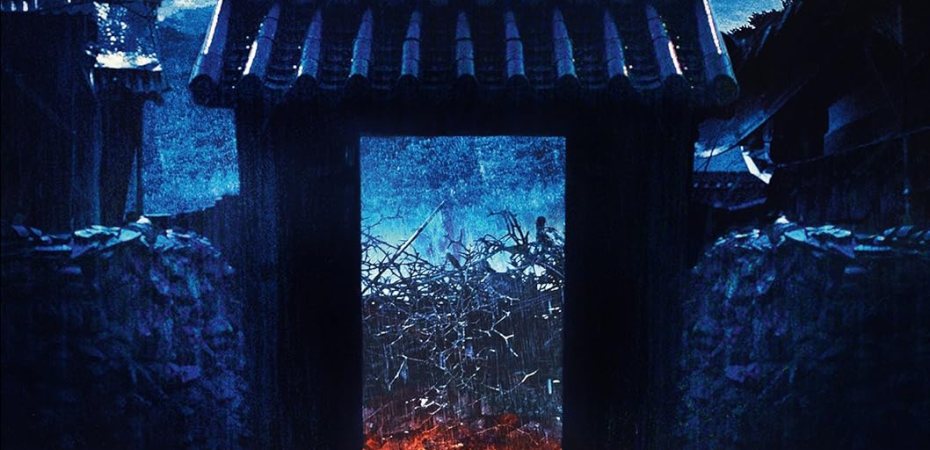
Na Hong-jin, who already proved himself a master of suspense with The Chaser and The Yellow Sea, surpasses himself here. The film is beautifully shot, every frame heavy with tension. The village feels damp, decayed, infected with something beyond understanding. The mist rolls over the mountains like a living thing, hiding unspeakable horrors. There is an air of sickness that never lifts, a feeling that something is deeply, fundamentally wrong.
This is horror done right. There are no cheap tricks here—no artificial jump scares, no obnoxious music stingers telling the audience when to be afraid. Instead, the terror builds slowly, inevitably, suffocating both the characters and the viewer. By the time the film reaches its devastating climax, the sense of dread is almost unbearable.
Unlike many horror films, The Wailing does not provide comfort. It does not allow the audience the satisfaction of knowing what was real and what was illusion. It does not hand out neat explanations or heroic last stands. Instead, it leaves behind an overwhelming sense of helplessness, as if the world itself has conspired against these people.
The Wailing is not just a horror film. It is an experience. It is the rare kind of film that lingers long after the credits roll, leaving questions that have no answers and fears that have no resolution. It is a film that demands to be watched, dissected, and watched again.
South Korea has already given us some of the greatest horror films of the modern era—A Tale of Two Sisters, I Saw the Devil, Train to Busan—but The Wailing stands above them all. It is a masterclass in tension, storytelling, and sheer, unrelenting terror. If you have not seen it, do so immediately.
Just don’t expect to sleep afterwards.
Discover more from The Libertarian Alliance
Subscribe to get the latest posts sent to your email.