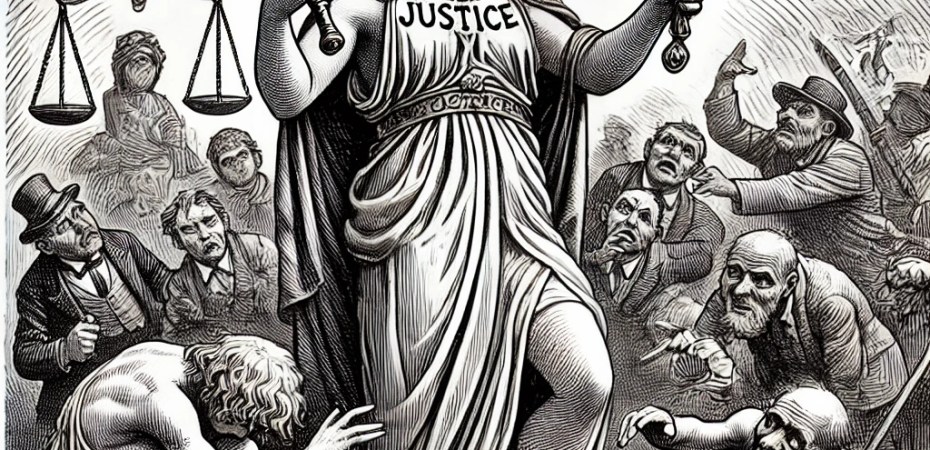
Three years ago, the world was told a story of horror. In the town of Bucha, just northwest of Kyiv, Russian soldiers were said to have executed hundreds of civilians. The claims, vivid and immediate, were amplified across every major Western outlet: bodies on the streets, hands tied, shot at close range. “Barbarity,” declared politicians. “A war crime,” said newspapers. It was, we were assured, a massacre that proved the inhumanity of the Russian campaign in Ukraine.
And yet—three years on—the questions persist, unanswered and, more worryingly, unasked by those who first broadcast the charges.
The Ukrainian government claimed over 400 civilians had been murdered. But where are the names? Where are the names, the addresses, the photographs, the autopsy reports, that would normally accompany such an extraordinary event? In Britain, even the killing of a single person under unusual circumstances leads to an inquest and journalistic scrutiny. Here, with one of the largest alleged atrocities in modern European warfare, the silence has been near total. The media that once brayed for justice no longer mention Bucha at all.
Even more curiously, it is not Ukraine or the West that has demanded a full international investigation—it is Russia. Last week, Russia’s envoy to the United Nations again called on the Security Council to examine the facts of what happened in Bucha. And again, that call was dismissed—this time by Denmark, which currently holds the rotating presidency. Its reason? That to engage would be to “dignify disinformation.”
That may be so. Or it may not. But the refusal to engage is not a sign of confidence.
From the beginning, there have been peculiarities. The Russian army withdrew from Bucha on March 30, 2022. On March 31, the town’s mayor posted a video celebrating the liberation. He made no mention of bodies on the streets. Footage showed empty roads and calm skies. Then, several days later—between April 1 and April 6—images emerged showing corpses lying openly in the streets, many with white armbands, some with their hands bound.
To those watching carefully, the bodies appeared freshly killed—no bloating, no decomposition, no scavenger damage. If they had been lying there since before the Russians left, how was this possible? Satellite images published by The New York Times attempted to show that the bodies were present before April 1. But they raised more questions than they answered. The photographic resolution was poor. Shadows were inconsistent. More importantly, if such a massacre had taken place during the Russian occupation, why did no civilian, no journalist, and not even the mayor mention it until four days after the Russians had gone?
It is not unreasonable to suggest that something happened in the intervening period. What, exactly, we do not know.
One voice that has received little attention in the Western press is that of Adrien Bocquet, a French journalist who was present in Bucha in early April 2022. He travelled with medical volunteers and claims to have seen Ukrainian forces placing corpses on the road and binding their hands with white ribbons—intended, he believes, to mark them as pro-Russian collaborators. His testimony, however disputed, is troubling. He says he was vilified in the French press, and he has since received death threats.
Is he lying? Perhaps. But the role of a free press is not to ignore uncomfortable voices—it is to weigh them.
If this were an isolated incident, the lack of transparency might be attributed to the confusion of war. But it is not. The West has also refused to permit an independent investigation into the sabotage of the Nord Stream pipeline—a brazen act of international vandalism that some former intelligence officials have suggested could only have been carried out by a state actor. Again, the calls for inquiry came from Russia. Again, they were dismissed.
Is it really a coincidence that those accused are the ones demanding that evidence be examined?
Western governments have spent the past decade lecturing the world about the rules-based international order. But those rules seem to apply only when convenient. When the accused is a Western ally—or indeed, the West itself—procedural integrity gives way to silence.
None of this is to exonerate Russia from its conduct in Ukraine. War always brings suffering. But we must distinguish between what we know, what we suspect, and what we simply wish to be true.
The assumption that Russian soldiers, for no military or political reason, lined up hundreds of civilians and executed them in a town they were about to leave, should not have been accepted without scrutiny. It may be true. But if it is true, let us see the proof. Let us have names, medical records, ballistic analysis. Let us have evidence that will stand up in a courtroom—not just headlines and official statements.
We are told that international law matters. If so, it must apply universally. And that means investigating crimes no matter who committed them.
It is uncomfortable to ask who benefited from Bucha, but the question must be asked. The images emerged at precisely the moment when peace talks between Russia and Ukraine were making progress in Istanbul. Within days of the reports, British Prime Minister Boris Johnson flew to Kyiv and urged President Zelensky not to sign any agreement. Western weapons flowed in; the war escalated.
It is not proof of conspiracy. But it is a sequence of events that merits inquiry.
We may never know with certainty what happened in Bucha. But we cannot afford to accept silence as a substitute for truth. If the Russian army committed these killings, its officers must be held to account. But if the atrocity was staged—if it was a provocation designed to extend a war that might otherwise have ended—then the crime is more cynical and more destructive than we have dared to imagine.
Either way, the answer matters. And until we are willing to ask the hard questions, we will remain not defenders of justice, but partisans of a carefully constructed myth.
- Bachega, Hugo. “Bucha Massacre: What Happened in Ukraine Town?” BBC News, April 4, 2022. https://www.bbc.com/news/world-europe-60981228.
- Troianovski, Anton, Malachy Browne, David Botti, and Haley Willis. “Satellite Images Show Bodies Lay in Bucha for Weeks, Despite Russian Claims.” The New York Times, April 4, 2022. https://www.nytimes.com/2022/04/04/world/europe/bucha-ukraine-bodies.html.
- “UN Rights Office: Evidence Growing of War Crimes in Ukraine.” UN News, October 14, 2022. https://news.un.org/en/story/2022/10/1129567.
- Polyanskiy, Dmitry. “Russia’s Statement at the UN Security Council on Bucha.” Permanent Mission of the Russian Federation to the United Nations, April 2025. https://russiaun.ru/en/news/sc_bucha_040425.
- “Adrien Bocquet: Le témoignage du volontaire français à Boutcha est-il crédible?” Libération, May 12, 2022. https://www.liberation.fr/checknews/adrien-bocquet-le-temoignage-du-volontaire-francais-a-boutcha-est-il-credible-20220512_A7FP5THSBBFZFHAAAJDXK6HVGU/.
- Hersh, Seymour. “How America Took Out the Nord Stream Pipeline.” Substack, February 8, 2023. https://seymourhersh.substack.com/p/how-america-took-out-the-nord-stream.
- Al Jazeera Staff. “Russia Calls for UN Probe into Nord Stream Blasts, Fails to Win Support.” Al Jazeera, February 28, 2023. https://www.aljazeera.com/news/2023/2/28/russia-calls-for-un-probe-into-nord-stream-blasts-fails-to-win-support.
- Beale, Jonathan. “Boris Johnson Visits Ukraine and Warns against Peace Deal with Russia.” BBC News, April 9, 2022. https://www.bbc.com/news/uk-politics-61044424.
- MacLeod, Alan. “Media Ignores Eyewitness Accounts Suggesting Ukraine Committed Bucha Atrocities.” MintPress News, April 8, 2022. https://www.mintpressnews.com/media-ignores-eyewitness-ukraine-bucha-atrocities/280653/.
- Security Council Report. “UN Security Council: Ukraine Briefings.” SCR.org, 2022–2025. https://www.securitycouncilreport.org.

Discover more from The Libertarian Alliance
Subscribe to get the latest posts sent to your email.
Thank you Marian. This story is largely nonsense. Along with the one about Russia kidnapping Ukrainian children (=rescuing children from children’s homes that were in a war zone in newly annexed areas and could have been bombed). Whenever the families have travelled to Russia in search of their children, they have been handed over. Note: children are only in children’s homes to begin with because their families don’t care about them….