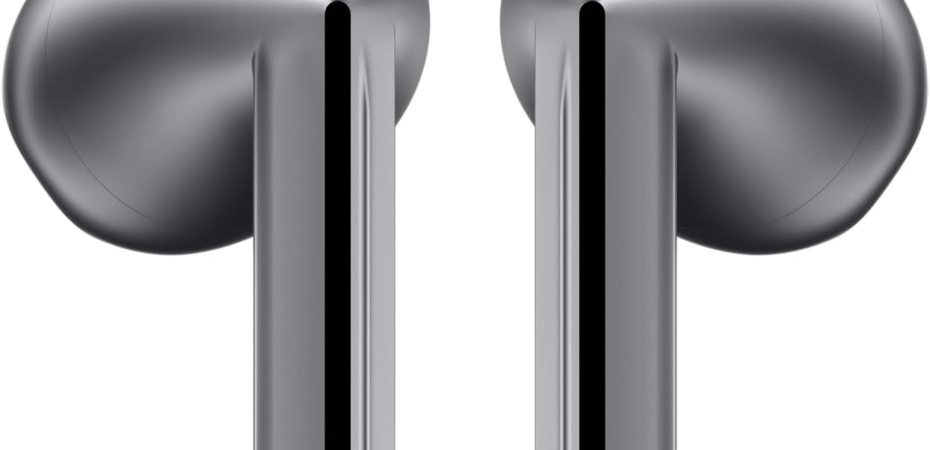
Specifications (so they claim):
- Bluetooth 5.4 with Samsung Seamless Codec
- Active Noise Cancellation and Adaptive EQ
- Dual-driver setup (tweeter + woofer)
- Battery life: 6 hours (buds) + 24 hours (case)
- IP57-rated (water and dust resistance)
- Galaxy AI Voice Commands
- Design: Stem-style, glossy finish
- Price: Allegedly £139 RRP – free with Samsung Galaxy G24
I wouldn’t have bought the Samsung Galaxy Buds 3. That isn’t a snobbish remark. I mean it in the literal sense. They came “free” with my new Galaxy G24—part of a promotional bundle, presumably designed to shift surplus stock before reviewers started telling the truth.
That was lucky. Because if I had paid actual money for them—£139, or whatever the recommended retail fantasy is—I would now be outside the Samsung UK office, demanding a refund, plus ritual seppuku from whoever signed off the design.
The main problem, and it’s a big one, is that they don’t fit. I don’t mean they’re a bit loose. I mean they physically refuse to remain in my ears. My ears are, for the avoidance of doubt, as perfectly formed as the rest of me—symmetrical, clean, delightful to behold, not shaped like a bent bucket. The Buds, however, seem designed for a species that doesn’t exist. Perhaps Korean children have weird elliptical ear canals. Perhaps these were tested on silicon crash dummies rather than actual humans. Either way, the fit is a catastrophe. Push them in and they pop out. Ram them in and they hurt. Even when they just about hover at the edge of your ear canal—like cowards too afraid to enter—they’re poised to fall out the moment you speak, or breathe, or tilt your head.
And if by some miracle they stay in, you’ll wish they hadn’t. The sound is—how shall I put this?—shite. There’s no other word that quite captures the balance of bloated bass, anaemic mids, and the kind of treble that makes cymbals sound like rice crispies in a megaphone. The advertised “dual-driver design” promises separation and clarity. What it delivers is the acoustic equivalent of a sock filled with bees.
Even the Active Noise Cancellation, which Samsung’s marketing department insists is “cutting-edge,” performs like a teenager on work experience. It half-cancels passing buses, completely ignores barking dogs, and introduces a faint background hiss that makes you wonder if you’ve developed tinnitus. Switch it off, and you’re just left with bad sound, no isolation, and a faint sense of betrayal.
The touch controls are a particular triumph. Sensitive when you don’t want them, and completely inert when you do. Try adjusting the volume while walking and you’ll accidentally call your grandmother, trigger Bixby, or disable ANC—all without changing the song. It’s like being mugged by your own fingers.
The one thing Samsung has improved is the design—if by “improved” we mean “copied the AirPods.” These new Buds are stemmed, slimmer, and more angular. Which would be fine if they worked. But they don’t. It’s like seeing someone dressed in a tailored suit who still smells of bin juice. Style without function is still failure.
Now, I could forgive all this if it were a British product. Britain, after all, is a land where quality control died years ago. The people in charge of manufacturing—along with those writing the user manuals and testing the software—are the sort of people who end up in those jobs because no one trusts them to operate a broom. Indeed, virtually every job in this country that pays above minimum wage is increasingly inherited in one way or another. Any British device that does not explode on first use is considered a miracle.
But this is from Samsung. Samsung. A company from South Korea—home of The Wailing, of Myeongdong street food, of technological sophistication so advanced it terrifies the Pentagon. What happened? Where was the QA? What series of meetings, PowerPoints, and self-congratulatory internal emails led to this product being approved?
Everyone responsible should be required to record a public apology, bowing on video, tears streaming, each one explaining—in Korean, English, and Mandarin—how he personally let the world down.
There’s a larger lesson here. Big Tech, once admirable for its ambition and ingenuity, has settled into complacent mediocrity. You don’t need to make good products anymore. You just need to make something shiny, bundle it with a phone, and let the fanboys defend you online. And so we drift, one firmware update at a time, toward the total aesthetic and functional collapse of consumer electronics. At some point soon, someone will sell us a pebble with Bluetooth and we’ll be expected to thank him.
As for me, I’ve gone back to my wired earphones. They’re ugly. The cable tangles. But they stay in. They sound decent. And when I use them, I don’t feel like I’ve been conned by a marketing department in Armani suits.
Discover more from The Libertarian Alliance
Subscribe to get the latest posts sent to your email.