
I sometimes wonder if Dr Joseph Mercola would be happier as a medieval apothecary. He certainly has the enthusiasm for obscure compounds, and the same love of throwing open the cabinet to offer new hope to the worried and ageing. His recent piece on taurine, a naturally occurring amino acid, suggests it might be the “elixir” modern man has missed—neglected not because it fails, but because it doesn’t turn a profit.
That theme runs through much of Mercola’s work: low-cost, natural molecules, often shunned by modern medicine, could be key to health and longevity—but only if you’re wise enough to see past the fog of institutional suppression. With taurine, he’s chosen a molecule that does at least come with some scientific intrigue.
The case is built mostly around a 2023 study published in Science, in which middle-aged mice, monkeys, and worms were given taurine supplements. The results were striking—lifespan extension in mice, improvements in immune function, better mitochondrial performance, and indications of reduced age-related weight gain¹.
He also points to epidemiological data: taurine levels tend to decline with age in humans, and low levels are correlated with poorer metabolic and cardiovascular outcomes². These are linked, in his telling, to inflammation, oxidative stress, and a weakening of immune resilience.
And, as usual, he draws the broader conclusion: taurine’s neglect by mainstream medicine reflects not a scientific judgement, but a market one.
Taurine is involved in important physiological processes—regulating calcium signalling, supporting cardiovascular health, and helping with glucose metabolism. It’s found in meat and fish, which may partly explain why strict vegans often have lower plasma taurine levels. Small trials have shown modest improvements in blood pressure and lipid levels from taurine supplementation³ ⁴.
But this is a long way from proving it extends human life.
The Science paper was a good study—well-run, comprehensive, and promising. But it was also, quite clearly, a preclinical study. Giving taurine to mice and monkeys is not the same as prescribing it to seventy-year-old men on statins. The translation from lab to clinic is not just a step—it’s a chasm.
Nor is correlation proof. It is true that lower taurine levels are observed in older people, but this may be an effect of ageing, not a cause.
What’s frustrating is that Mercola could do real good if he simply stopped overpromising. His instinct to explore forgotten molecules is commendable. Taurine should be studied further. But once again, Mercola isn’t content with a measured conclusion. He frames taurine as a suppressed remedy, elevates minor findings into universal prescriptions, and turns dietary prudence into a personalised health revolution.
Taurine may indeed turn out to be useful. It may help manage chronic inflammation, support ageing muscles, or improve glucose metabolism in diabetics. But no responsible doctor would suggest that people begin high-dose supplementation based on a mouse study.
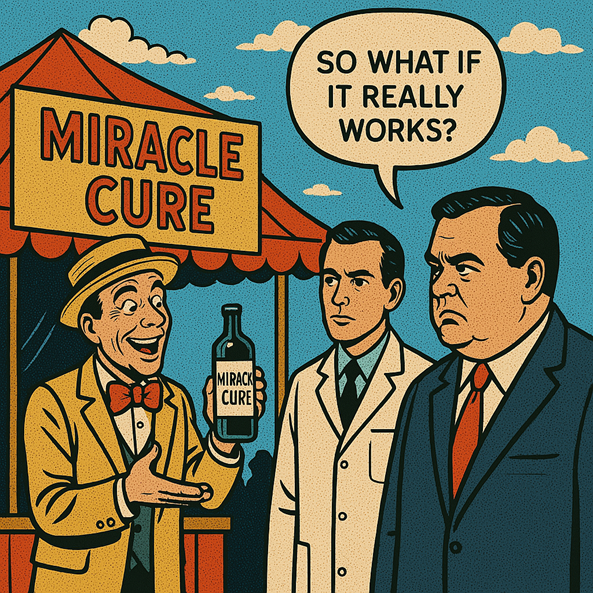
Mercola’s piece is a reminder of how easily the search for vitality can become a market of speculation. He may not be selling snake oil. But the bottle is already on the shelf.
- Singh, H., et al. (2023). “Taurine deficiency as a driver of aging.” Science, 380(6649), 149–158.
- Columbia University Irving Medical Center. (2023). “Taurine deficiency linked to aging and disease in humans.” Press release, June 8, 2023.
- Yamori, Y., et al. (2009). “Dietary taurine and longevity of the Japanese: Possible influence of sea-food consumption.” Advances in Experimental Medicine and Biology, 643, 13–20.
- Shao, A., & Hathcock, J. N. (2008). “Risk assessment for the amino acids taurine, L-glutamine and L-arginine.” Regulatory Toxicology and Pharmacology, 50(3), 376–399.
Discover more from The Libertarian Alliance
Subscribe to get the latest posts sent to your email.