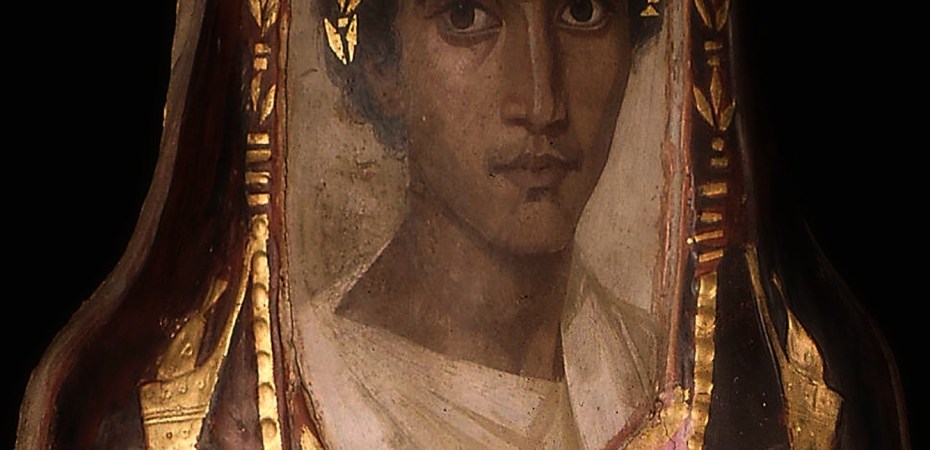
The Daily Mail, never one to miss an opportunity for reporting fashionable drivel, tells me that a House of Commons all-party group is looking into the public display of Egyptian mummies in the British Museum (Displaying Egyptian mummies offends the wishes of their ancestors, committee warns). The supposed concern here is that the display violates the dignity of the long-deceased, as if a bunch of linen-wrapped corpses from the Bronze Age have living descendants poised to file a human rights complaint.
This being said, I am willing to entertain the notion that the people who became Egyptian mummies wouldn’t have been pleased to think they’d one day be gawped at in the British Museum by a shuffling cast of schoolchildren and American God-botherers braying that the gilding on Rubatiti’s coffin proves something in the Book of Exodus. On the other hand, I don’t think my ancestors would have been happy that the House of Commons has a Parliamentary Group for Afrikan Reparations (sic). Was it for this they lost legs on the Somme, or got dragged off to work on various Japanese infrastructure projects after the fall of Singapore? I don’t think so. I’m certainly not happy—not that I imagine the Parliamentary Group for Afrikan Reparations gives a toss about that.
But I suppose I should say something that amounts to more than a cynical moan. According to the report of this committee:
In the UK the mummified person has been excavated and brought back to the UK as an object of racist pseudoscientific research, including in efforts to evidence that Egyptians were white Europeans.
This is the chatbotesque boilerplate usual to the sort of people who have been put up by the ruling class as frontmen and given some governing power over us. More to the point, it is factually incorrect. The higher classes in Egypt seem to have been as white as any other ancient population in the Mediterranean world.
The idea that the ancient Egyptians were black has been dreamed up in the past few decades to satisfy anti-white fantasies. It has no basis in archaeology or genetics. The Egyptians depicted themselves in their own art—brown-skinned, distinct from both lighter-skinned Levantines and darker-skinned Nubians. The distinction was clear. When the Egyptians painted Nubians, they painted them black. When they painted themselves, they painted themselves brown. They wrote about their interactions with these groups and never showed the slightest confusion as to which was which. Their mummies, when examined, do not exhibit Sub-Saharan African features. And modern genetic analysis has confirmed that the pharaohs were most closely related to Near Eastern populations, not to the peoples of Central and West Africa.
This Afrocentric revisionism has flourished, not because it has any intellectual merit, but because it serves a useful ideological function. It allows those who peddle it to claim that white Europeans have not only “stolen” wealth and power but have even stolen history itself—fabricating an Egyptian past that was never theirs. Never mind that this entire argument collapses when confronted with the reality of Egyptian self-representation. It takes a leftist, warped by grievance politics, to pretend otherwise.
If ancient Egyptian skeletons and artwork are not enough, let’s consider DNA. When studies were made of ancient Egyptian remains—including those of the pharaohs—the genetic links were overwhelmingly to the Near East and the Mediterranean, not to Sub-Saharan Africa. The most notable study, conducted in 2017 on mummies from Abusir el-Meleq, found that ancient Egyptians were genetically closest to Levantine and European populations, with little Sub-Saharan influence. This should not be remotely surprising. Egypt, for most of its history, was culturally and geopolitically aligned with the Mediterranean world. It interacted with Nubia but regarded it as foreign—sometimes a trade partner, sometimes an enemy, but always distinct. The notion that Egyptians were secretly black Africans all along, waiting for a modern leftist to rediscover their true identity, is laughable.
Of course, I doubt if the members of this committee have any real concern for the feelings of the mummies or their loved ones. Their entire project is one of spraying guilt at the traditional population of this country. It is another excuse to tell us that we are violent trash who did no good in the world, and that our best recompense is to give up our liberty and our homeland.
So, the real motive here is neither historical accuracy nor respect for the dead. It is yet another face of the wider campaign to delegitimise Britain and the West. By rewriting history to centre victimhood, the ideological aim is clear: strip the British of any claim to historical greatness while presenting their role in world history as one of pure exploitation. The Black Egypt thesis, like the endless attempts to “decolonise” museums, has nothing to do with scholarship. It is an ideological weapon—one that, if unchecked, will see not just our museums emptied, but our entire cultural heritage rewritten as the property of those who were never part of it.
Well, no thanks.
A Reading List Refuting the Black Ancient Egyptians Thesis
For those who remain untainted by fashionable delusions, here is a selection of sources that expose the Black Ancient Egyptians thesis as historical fiction:
- Wilkinson, Toby. The Rise and Fall of Ancient Egypt. London: Bloomsbury Publishing, 2010.
A solid, mainstream account of Egyptian history that does not indulge in race-baiting revisionism. - Snowden, Frank M. Jr. Before Color Prejudice: The Ancient View of Blacks. Cambridge, MA: Harvard University Press, 1983.
Snowden, a black scholar, examines how Greeks and Romans viewed Sub-Saharan Africans—and how they did not confuse them with Egyptians. - Lefkowitz, Mary. Not Out of Africa: How Afrocentrism Became an Excuse to Teach Myth as History. New York: Basic Books, 1996.
A direct takedown of the Afrocentric mythology surrounding Egypt, written by a classicist who became a target for merely stating facts. - Redford, Donald B. Egypt, Canaan, and Israel in Ancient Times. Princeton, NJ: Princeton University Press, 1992.
A thorough examination of the interactions between Egypt and its neighbours, demonstrating the distinct racial and cultural identity of the ancient Egyptians. - Smith, G. Elliot. The Royal Mummies. Cairo: Government Press, 1912.
A study of the skeletal and cranial features of Egyptian mummies, which, unsurprisingly, do not align with Sub-Saharan African populations. - Ehret, Christopher. The Civilizations of Africa: A History to 1800. Charlottesville, VA: University of Virginia Press, 2002.
Even this book, written by a scholar sympathetic to Afrocentric narratives, cannot stretch the evidence to place Egypt in the Sub-Saharan category. - Hawass, Zahi. Various Publications.
The former head of Egypt’s Supreme Council of Antiquities has repeatedly dismissed the claim that the ancient Egyptians were black, based on extensive DNA studies and anthropological research.
Discover more from The Libertarian Alliance
Subscribe to get the latest posts sent to your email.