by Frank Millard
Flag-waving was once a clear indication of patriotism. The British were not generally inclined to fly the flag at other times, as they had a real symbol and image of national unity in their monarch. However, flags came out for visits of the sovereign, jubilees, Empire Day and the sending off or welcoming home of troops. Flags were flown, no doubt, on Mafeking Night, but otherwise St George’s flag was rarely seen apart from church towers on 23rd April and the anniversary of the Battle of Trafalgar. Having an Empire that spanned the world did not require a strict assertion of a narrowly national—or especially Anglocentric—identity (though social Darwinists might have thought otherwise).
In more recent times, the Union Jack and St George’s flag have usually appeared at sporting events or been used to assert a misplaced Anglo-Saxon heritage—an un-Christian stain on Christian flags of unity. More recently still, flag-flying has given way to something else: not expansionism or national pride, but national self-defence, regardless of the ethnicity of those who hold the flag. The flag has become a peace flag—an emblem of peaceful intent rather than war.
The beauty of the “raise the flag” followers is that they represent a peaceful protest movement, in the spirit of Gandhi and King. The protesters care little for whose idea it was or any political reasons behind it. They feel the need to protest without being branded far-right or extremist. A flag of all races and of one people speaks louder than words or shouts. It is the silent cry of the silent majority. Not xenophobic, not “Little Englander,” but “Great Britainer,” committed to justice and the security of the entire nation. Of course, extremists will always attempt to hijack rallies, imposing their narrow interpretation whether from Left, Right, or elsewhere. But if anyone shouts aggressively while carrying the national flag, they insult the country itself and miss the point entirely.
While it is a powerful concept, the flying of flags as silent protest nevertheless points to a deeper malaise than any single issue, which includes social fragmentation and economic despair. In military terms, it resembles a last-ditch defence: the holding of a hill until relief comes—a relief no longer expected, soon or late. The defence is no longer of the country as a whole but of families and neighbourhoods, down to the last street and homestead. These words are not meant to depress or inflame but to illustrate the strength of feeling—feelings made worse by the taunts of left-wing critics who brand flag-bearers as bigots, xenophobes, or racists, when in truth they are as welcoming to genuine refugees now as they ever were.
An example of the peaceful use of the national flag patriotically in a protest was at the Seattle women’s march in 2020 when women’s rights protesters carried the American flag to demonstrate their commitment to the principles of their nation and to assert that their cause was patriotic.
Those peaceful majority supporters of the flag face an economic nightmare. They know a coming budget will not improve matters. They see essential services under pressure, public infrastructure crumbling, shoplifting unchecked, and crime seemingly rising—whether or not statistics bear this out. For example, according to the ONS whereas crime against individuals has decreased over the past decade, headline crime (led by fraud), sexual assaults and shop lifting have increased in the year ending March 2025, The latter by 20%.’ Meanwhile, the police appear more concerned with the words of citizens than their actions. Perceptions may be wrong, but if they are widely shared, they cannot be ignored.
When Margaret Thatcher left office, she had reversed a culture of “managed decline” and restored some measure of national pride. But since then, the country has drifted into unmanaged decline.
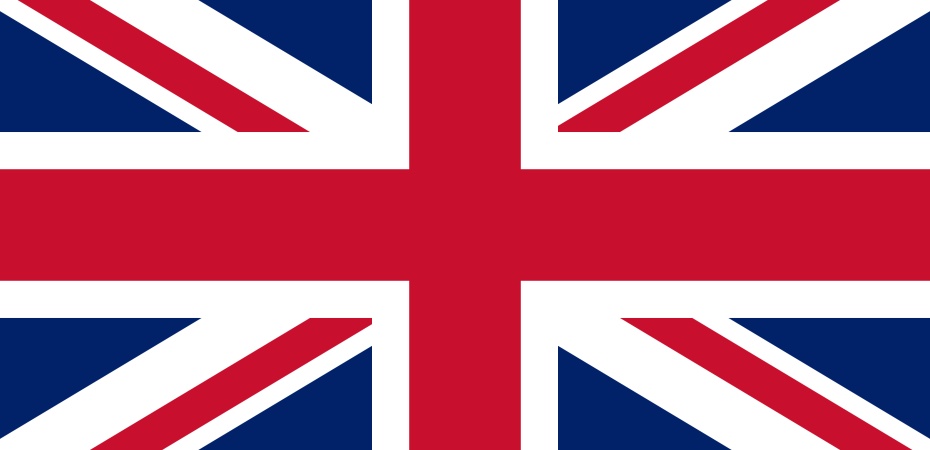
We could describe the Union Jack as the flag of all races and one people to neutralise any unpatriotic connotations. The flag of unity and national self defence.
Hoist it!
Discover more from The Libertarian Alliance
Subscribe to get the latest posts sent to your email.
I think Frank Millard should be severely condemned for this piece. The England flag is not the flag of all races at all, as if the flag were to be co-opted for our complete national dispossession. People of English descent are not people of all races at all. This is our country.
The author of this article seems to have missed the vital difference between the Cross of St George and the Union Jack.
The red and white represents the people and culture of England; the culture which sparked the Enlightenment, and nurtured the Industrial Revolution. (Though we must not overlook the contributions of the Scots to the first, and of the Welsh in particular to the second). And the English common law wasn’t such a bad idea, either.
Whereas the red, white and blue represents the state, that is currently called “the United Kingdom of Great Britain and Northern Ireland.” Its first incarnation was devised in 1606 by order of James the First. And in 1634, if I recall right, Charles the First ordered that only official government functionaries were to be allowed to fly it.
I rarely agree with David Webb, but he is completely right that the St George flag is the flag of the English, both genetically and culturally. Mr Millard’s point, however, sits far better when applied to the Union flag. Indeed, the current Labour policy of social engineering through “overload immigration,” building on the Tories’ slightly more subtly disguised version of the same, is working directly towards making it the “flag of all races” Mr Millard describes.
The English culture is our life-spring, and the Cross of St George represents it. The state is our enemy, and the Union flag represents the state. Mr Webb and I, surely, differ on why we appreciate the English flag – my reasons are cultural, his are genetic. But Mr Webb may rest assured that, should we meet on the parapet at the final Battle of England, I shall be carrying the red and white, not the red, white and blue.
If culture and genetics can be considered separately in the way you imply, then why do we not see the same uniform culture obtain the world over?
Tom, people are the bearers of their cultures. Most character traits are heredity at least 80%.
I mean: heritable.
I agree that culture escheats to people, my comment was a response to Neil (sorry if that was not clear).
However, I have no idea if particular character traits are predominantly heritable. I don’t necessarily accept that the second proposition follows from the first.
Genes must influence things in at least the broadest sense, but there will be a large environmental influence on it as well – and probably it’s hard to tell which predominates. If somebody is brought up by a schizophrenic and becomes schizophrenic himself, is that primarily genetic or environmental? Could be either, really.
Moreover, the same genetic predisposition can be expressed differently depending on the environment. A successful stockbroker or businessman in one type of environment could end up in prison if shaped by a different environment.
Tom, young people learn, in the first instance, from their parents. That sets up a potential for conflict between human nature inside the individual and the received culture outside. As we mature and acquire greater critical faculties, the human nature part of us becomes stronger, and we start to question the culture that exists around us. But not everyone is able to get that far, particularly when the culture has become corrupted, and they are pushed through an education system that is as corrupt as the culture. That, I think, is why cultures that have become corrupted – as today – cling on beyond their usefulness.