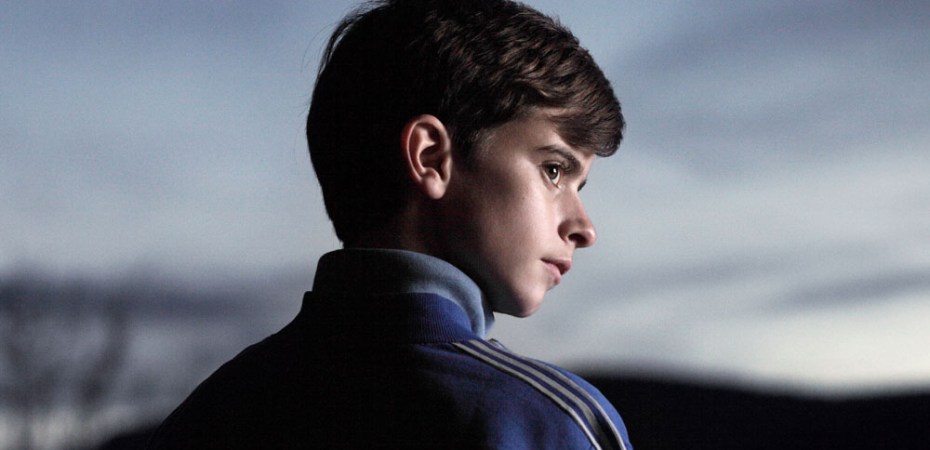
Les Revenants (English: The Returned):
Directed by: Fabrice Gobert
Written by: Fabrice Gobert and Emmanuel Carrère
Starring: Clotilde Hesme, Céline Sallette, Guillaume Gouix, Pierre Perrier, Swann Nambotin, Laetitia de Fombelle, Ana Girardot
Release Date: 26 November 2012 (Canal+)
Available on: Amazon Prime
I found Les Revenants by accident. I had gone on Amazon Prime in search of something violent and Asiatic—a Korean horror film drenched in gore, or some Chinese costume drama with heads rolling in palace courtyards. Instead, the algorithm handed me a French series about a small Alpine town. I pressed play out of idle curiosity. The first ten minutes struck me as strange rather than gripping, but I wanted to see what happened next. By the end of the first episode, I realised I had been caught. I could not stop watching. It took all my self-control to ration myself to one episode a day.
The premise is simple and disturbing. The dead return. They return not as zombies, not as grotesque things that rot, bite, and spread infection, but almost exactly as they were before they died. The only difference is a heightened appetite for food and sex. Beyond that, they are as confused about what has happened as the living they encounter. Camille, a schoolgirl killed in a bus crash, comes home to a mother who has grieved for years and to a twin sister who is now her elder. Simon, who slit his throat on his wedding day, walks back into the life of his former fiancée, now getting married to another man. Madame Costa, presumed dead in a fire, or in some other accident, reappears with a gloomy cheer that suggests she knows more than she will ever explain. The town, already scarred by the collapse of a dam decades earlier, is forced to accommodate the return of its ghosts.
The story gives no single hero. Instead, it drifts from one set of lives to another, letting mysteries accumulate. The acting is excellent throughout. Yara Pilartz as Camille balances teenage awkwardness with uncanny presence. Clotilde Hesme as her mother plays brittle composure cracking into grief and rage. Pierre Perrier as Simon brings equal measures of charm and futility. Laetitia de Fombelle as Madame Costa manages to be both comic and menacing, smiling and chain-smoking her way through every scene. None of these characters is simply likeable. They are as frightened as the living, often unworthy. Even so, the living often seem meaner and pettier than the dead.
What sets the series apart is the tone. The horror is never in gore or violence but in unease. A family dinner becomes unbearable because one guest should not exist. A husband wakes beside the wife he buried. A mother tries to treat her returned child as ordinary, but nothing is ordinary. The dread comes from the refusal of the world to behave as expected. The cinematography lingers on forests that seem endless, on the dull surface of the reservoir that hides everything. The soundtrack by Mogwai is slow, mournful, repetitive, grief turned into music. It is not decoration but part of the story itself.
Yet for all its darkness, the series allows comedy. Serge, a local serial killer who once butchered and ate his victims, is murdered by his brother to stop the killing. Years later, Serge returns. He wants to continue where he left off, but nothing goes right. His women refuse to die. His past victims all turn up to lunch, hostile and wholly uninterested in giving him explanations. His storyline stops the series from collapsing into pure solemnity, reminding us that the universe is not only cruel but ridiculous.
At the centre of everything is Victor, the silent, unageing boy who attaches himself to people without consent. His pale face and dark eyes dominate every scene. He rarely speaks and hardly acts, yet bends the world around him. He unsettles not because he threatens, but because he is impenetrable. He seems to know why the dead have returned, and yet he refuses to explain. He is the gravitational centre of the story, a reminder that the most terrifying thing is not the monster in the shadows but the child already in your living room, watching without comment.
The questions multiply. Why these dead and not others? Why now? Why the dam and the reservoir, the gatherings of silent figures at the water’s edge? Why did Simon kill himself? How did Madame Costa really die? None of these questions is answered. After two seasons, the mystery is no clearer than at the beginning. Some reviewers complain about this, as if every story must be tied up with a bow. But to demand an answer here is to miss the point. The refusal to explain is the point. Les Revenants is not Scooby-Doo. There is no mask to pull off, no villain to expose, no rational explanation to restore order.
The brilliance of the series lies in this refusal. It insists that unknowability is the condition of existence. Life does not explain itself. We may think that the sciences will reveal a universe of facts joined in chains of knowable cause and effect, or that an all-loving and all-powerful God will provide reassurance. In either case, we may think that reason will connect every fact into a pattern. Some can be connected into fragile webs of explanation. But when it comes to the central questions—why things happen, why suffering persists, why the dead sometimes seem more alive than the living—there is only silence. Camille cannot explain why she is back. Simon has no story to tell about the afterlife. Madame Costa smiles because she knows that explanations are impossible. Victor watches in silence because he embodies the void at the heart of reality.
The unknowability of the external world is mirrored in the unknowability of the inner one. We do not even understand ourselves. We know fragments of our motives, glimpses of our desires, memories that often deceive. What we call the self is a collage of stories, some of them invented after the fact. We are mysteries to ourselves, even before we confront the secondary mystery of the world. That is why Les Revenants is unsettling: it denies us the illusion of knowing. It confronts us with characters who cannot explain their own existence and demands that we admit the same about ourselves.
Complaints about the lack of resolution are therefore a failure of comprehension. They show that the viewer expected a puzzle to be solved rather than a truth to be revealed. But the truth revealed is precisely that there are no solutions. The external world is opaque. The internal world is opaque. To expect otherwise is to demand lies. Les Revenants is honest enough to refuse.
I came looking for a Korean bloodbath and instead found a French masterpiece. It is haunting and often very funny. It is a meditation on grief and the refusal of existence to offer reasons. Watch Les Revenants, and you will not find closure. You will find something more truthful: a vision of life itself, where the only certainty is that we shall never be given certainty.
Discover more from The Libertarian Alliance
Subscribe to get the latest posts sent to your email.