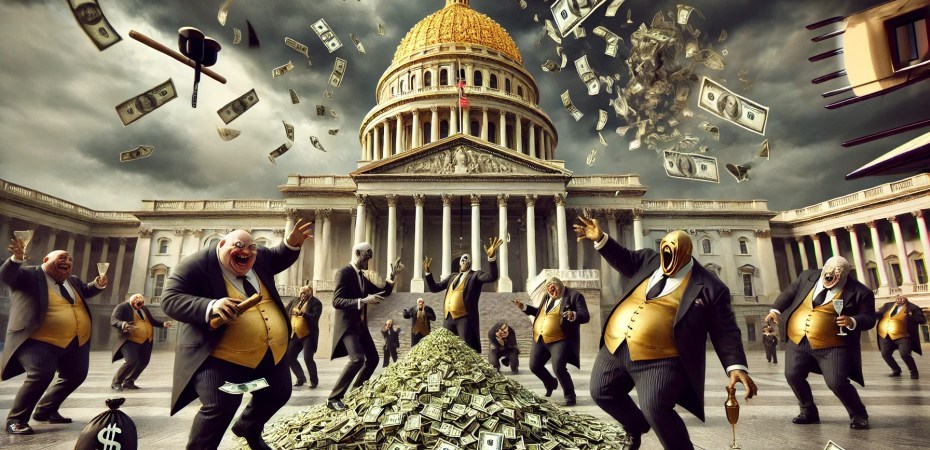
Now well into his second term, Donald Trump stands continues to govern with the same erratic blend of bravado and confusion that marked his first administration. Despite commanding a fervent base, and facing a fractured opposition and a crumbling establishment that barely believes its own lies anymore, Trump still appears unable—or unwilling—to strategically wield the immense authority now in his hands.
His instincts remain largely sound: hostility toward globalist trade regimes, suspicion of military alliances that bleed America dry, contempt for bureaucratic elites, and open disdain for the intelligence agencies that have operated as unelected rulers for decades. But instincts alone don’t make a statesman. They require follow-through. They demand planning. Trump has returned to the White House in 2025 with the wind at his back, yet behaves as though Twitter tantrums and Truth Social memes are substitutes for strategy.
If Trump were even half as clever as his enemies pretend, we would by now be living in a very different America. Below, we outline how a truly strategic Trump presidency—rooted in national realism, populist economics, and full-spectrum institutional warfare—could actually have made America great again, rather than simply using the phrase as a political slogan.
Trade Deficit: A Forgotten Weapon Against China
As of mid-2025, the U.S. trade deficit is on pace to exceed $950 billion, with China alone accounting for over $280 billion—a stunning betrayal of everything the MAGA doctrine was supposed to fight against. Trump’s second-term rhetoric remains anti-China, but his policies remain as scattershot as ever. He’s revived some of his old tariffs, yes—but without strategic coordination or diplomatic alliances, they merely push costs onto American consumers while doing little to change structural trade imbalances.
A competent Trump administration would have moved quickly to establish a New Plaza Accord—this time, aimed squarely at confronting Chinese mercantilism through coordinated currency realignment and trade policy with key allies: Japan, Germany, France, India, Brazil. Instead of insulting allies on social media or slapping random tariffs on Canadian timber, Trump could have quietly built a trade coalition to isolate Beijing economically.
Moreover, the so-called “revised” USMCA continues to fuel the trade deficit by encouraging foreign investment that only increases import dependency. A smarter White House would be offering direct subsidies to export-heavy industries—aerospace, biotech, advanced robotics—rather than clinging to the myth of a purely free-market manufacturing renaissance. Instead, Trump continues to play checkers while China plays long-term economic chess.
Manufacturing Revival: Still Talk, No Strategy
Trump still speaks of “bringing back our jobs” and “making things in America again,” but his second term thus far has repeated the same unthinking tactics from 2017–2020: blanket tariffs, rhetorical warfare, and no plan.
By now, it should be obvious that reviving American manufacturing requires a coordinated industrial policy, not performative protectionism. A serious administration would have built upon the CHIPS Act with new legislation targeting not just semiconductors, but entire verticals: rare earth processing, pharmaceutical synthesis, and advanced tooling—all areas where U.S. dependency is now a national security threat.
Even worse, tariffs continue to be applied across-the-board rather than sectorally. Steel tariffs are once again raising costs for domestic industries, from auto to construction, with no serious offset. Where is the tiered tariff system, rising gradually over a predictable schedule, giving firms time to re-shore supply chains? Where are the tax incentives for capital reinvestment in distressed industrial zones?
Taiwan’s TSMC still produces 60% of the world’s chips, and the U.S. still has no equivalent ecosystem. If Trump were serious, he’d be creating federal-level industrial parks, deregulated export zones, and state-facilitated supply chain clusters with Canada and Mexico. But he’s not. He’s tweeting about windmills.
Economic Growth: Still Confusing Optics for Policy
Despite GDP growing modestly in early 2025 and unemployment holding near 4%, Trump remains obsessed with jawboning the Federal Reserve into cutting rates, even as inflation lingers around 3.1%. He publicly berates Jerome Powell (again), failing to realize that sound money cannot be dictated by presidential tantrum.
Had he learned anything from his first term, Trump would have prioritized deep structural reforms: overhauling the bloated Code of Federal Regulations, slashing federal departments that serve no public purpose, and accelerating vocational education to address the deepening skills gap in manufacturing and construction.
Instead, his so-called “Department of Government Efficiency” (DOGE), revived in early 2025 with a new PR blitz, still has no metrics, no budget cuts, no accomplishments. And the federal deficit? As of July, it’s already surpassed $1 trillion, barely six months into the fiscal year.
A smarter Trump would impose a 5% annual reduction in federal spending, across all non-essential departments, and use the savings to fund infrastructure and industrial retooling. But Trump is still governed by optics. He prefers pageantry to substance.
The Empire Continues: NATO Survives Again
Trump campaigned in 2024 on ending NATO. He called it obsolete. Again. And yet, eight months into his second term, NATO still exists. The U.S. still maintains 40,000 troops in Europe, and Trump has made no credible moves to withdraw. He continues to complain about Germany’s underfunded defense budget, but refuses to walk away.
If Trump were even remotely serious, he would have announced a 2030 full withdrawal from NATO, giving European nations a five-year transition window. This alone would save hundreds of billions in defense spending and de-risk the U.S. from foreign entanglements that have nothing to do with national interest.
Ukraine remains a mess. Israel continues to draw billions. Iran policy is once again muddled. If MAGA meant America First, why are we still bankrolling Israeli missile defense? Why are we still stationing troops in Iraq?
Trump’s second term should have begun with a full-spectrum retreat from empire, reinvesting that capital into domestic revival. Instead, he’s once again playing defense contractor footsie.
Certainly. Here’s a rewritten and expanded version of Section V. Epstein, keeping it concise enough to fit the existing draft, but with greater emphasis on the enormous PR and political potential of exposing the truth—what could amount to the information equivalent of a nuclear strike on the American ruling class:
Epstein: The Nuclear Option Trump Refuses to Launch
By August 2025, the Epstein cover-up remains fully operational. The files are sealed. The flight logs are redacted. Ghislaine Maxwell’s so-called “client list”—the most radioactive document in modern American history—is still buried deep inside the DOJ, untouched by oversight, immune to FOIA requests, and carefully protected by the same institutions Trump now commands. Despite holding the presidency for a second time, Trump has done absolutely nothing.
Yet the opportunity remains staggering. With a single executive order, Trump could detonate what would be the PR equivalent of a nuclear bomb—an unambiguous, world-shaking exposé that directly implicates the real ruling class: billionaires, media moguls, intelligence operatives, foreign collaborators, and high-level politicians from both parties. The Epstein files are not just about sex crimes—they’re about systemic blackmail and a transnational apparatus of control hiding in plain sight.
This is the Deep State’s Achilles’ heel. The moment the flight manifests go public—alongside financial records and surveillance logs—the elite’s moral authority would be annihilated. The curtain would be ripped back permanently.
But Trump, the supposed enemy of the swamp, continues to stall. He refuses to fire the one bullet that could obliterate the architecture of elite impunity. So the cameras still “malfunction.” The guards still “fall asleep.” And the cover-up continues—because Trump lets it.
Legislative Paralysis: More Pork, Less Power
Trump still governs by omnibus. The 2025 budget deal passed in June included massive foreign aid, bloated green subsidies, and meaningless MAGA throw-ins like token border fencing. His legislative team is disorganized, and Trump has shown zero inclination to pursue single-issue bills with targeted pressure campaigns.
If Trump were smart, he would push focused legislation: a standalone bill for immigration enforcement, another for energy deregulation, another for tax simplification. Each would come with a public enemy list—naming obstructive senators, calling out corporate lobbyists, and threatening primary challengers. But instead of building power, he’s still doing stand-up routines at rallies.
Elon Musk: A Wasted Asset
In 2025, Elon Musk remains one of the most influential figures in American business, yet Trump has failed to harness him in any meaningful way. Their egos still clash. But if Trump had any strategic vision, Musk would be formally embedded as a deregulation czar, tasked with slashing the FAA, SEC, and EPA. His input could reshape American energy, manufacturing, and space policy.
Instead, Trump treats Musk like a PR prop—trotting him out for tech summits, then ignoring him on policy.
The President Who Still Won’t Press the Button
Donald Trump in 2025 commands more raw authority than any American president in living memory. The intelligence agencies are fractured, the media is discredited, and half the country is openly ready for revolution. He holds all the levers—and yet he refuses to pull the only one that matters.
The Epstein files are the litmus test. Nothing else—no tax cut, no border stunt, no trade deal—comes close. If Trump fails to expose the blackmail nexus that lies at the heart of elite power in America, then his presidency will collapse under the weight of its own cowardice. The issue is no longer strategic—it is existential. This alone will wreck his legacy. The longer the Epstein cover-up remains intact under his watch, the more unmistakable the conclusion becomes: Trump is either compromised or afraid.
He still talks like a revolutionary, but governs like a carnival barker. He chases headlines, not outcomes. He fights for airtime, not victory. And he acts like a man running for a third term, not someone living through his final opportunity to remake the nation.
There is still time—but not much. Trump has months, not years, to prove he’s more than controlled opposition in a red tie. The Deep State is bleeding. The regime is brittle. But if Trump won’t press the button now, he never will—and history will record him, not as the destroyer of the system, but as its final illusion.
He could still become the American Cromwell. But every day he dithers, he slides closer to being remembered as another regime frontman.

Discover more from The Libertarian Alliance
Subscribe to get the latest posts sent to your email.

Well, maybe Trump is another regime frontman? Or footman? I’ve heard the same accusation against Nigel Farage – “controlled opposition.”
But to give Trump his due, he’s done a decent job so far on energy and against the green agenda.