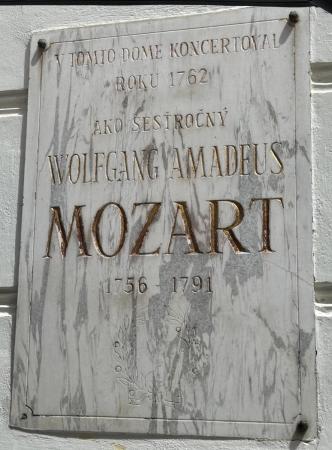
I love Mozart’s music above all others. This is not a conclusion reached after weighing composers against one another, nor is it something I can justify by reference to any single technical achievement. It is simply where I am. Other composers overwhelm me more directly. Some unsettle me more deeply. Some impress me with intellectual ambition or structural daring. Mozart does something else. His music is without flas. It does not strive for effect, and it does not plead for attention. It exists with a confidence that seems unforced and yet absolute.
This is why I have always been uneasy with the way Mozart’s life is presented. We are encouraged to hear the music through a sentimental filter. The story insists on deprivation, neglect, betrayal, and a final happy ending of posthumous recognition. The music, we are told, emerges in spite of everything. Genius is crushed by society and survives only because it cannot be extinguished. This is a comforting story for modern audiences, but it is also a misleading story. It tells us more about our own moral instincts than about the world Mozart inhabited.
What follows is not an attempt to deny that Mozart experienced difficulty. He did. It is instead an attempt to resist the transformation of that difficulty into a sentimental legend. Mozart’s life was shaped less by cruelty than by timing. He lived at a moment when the economic structures of musical life were shifting, and he chose independence before independence had learned how to sustain itself.
The image of Mozart as a neglected genius feels natural to a culture where both institutions and crowds are hostile to excellence. It also flatters the belief that greatness is always recognised too late. Mozart becomes proof. Here is the greatest musical mind of the eighteenth century, so the story goes, dying in poverty while lesser men prospered.
The historical record is less obliging. Mozart was not ignored in Vienna. During the mid-1780s he was one of the city’s most successful musicians. His break with the Archbishop of Salzburg in 1781 and his move to Vienna were not acts of desperation, but calculated decisions. Vienna offered a larger audience, a developing public concert culture, aristocratic families willing to pay for musical distinction. Mozart understood this environment and exploited it with energy.
His income came, in order that varied by any particular year, from public concerts, commissions, opera fees, teaching, and publication. These were never token sums. At his peak, Mozart earned around 3,000 florins a year. This placed him well above the Viennese middle class. A schoolteacher earned roughly 300 florins. A senior civil servant earned around 800. Mozart’s subscription concerts in 1784 alone brought in over 2,000 florins, and there was no income tax to rob him of his earnings. These earnings came from fashionable events attended by people who knew what they were paying for.
Opera commissions added further income. Don Giovanni earned him 450 florins. La clemenza di Tito earned 900. His teaching fees were high enough to restrict his pupils largely to the aristocracy. This does not describe a man excluded from recognition. It describes a man whose work was in demand.
Mozart’s difficulties arose not from an inability to earn but from the instability of his earnings. He was attempting to live as an independent professional at a moment when the old system of patronage was weakening and the new market system had not yet stabilised. The older model offered security at the cost of autonomy. The emerging model offered freedom at the cost of predictability. Mozart chose the second path too early to reap its full benefit.
When public concert culture flourished, Mozart prospered. When tastes shifted after 1787, his income declined sharply. Changes in fashion and increased competition both played a role. His expenses, however, remained fixed. He lived in a large apartment in the Domgasse. He dressed well. He entertained. He owned fine furniture and valuable instruments. He collected a substantial library.
These details matter because they complicate the narrative. Mozart did not live like a man resigned to failure. He lived like someone who expected success to return. Between 1788 and 1791, he borrowed repeatedly from Michael Puchberg. The letters he wrote during this period show anxiety, but also confidence. He believed the next commission would restore his finances. Sometimes it did. This is not the psychology of a crushed genius. It is the psychology of a professional navigating uncertainty.
It is often claimed that Mozart failed because he lacked patronage. This too is misleading. In 1787 he was appointed Imperial Chamber Composer, with a salary of 800 florins a year. This was not lavish, but it was secure. It carried prestige and recognition. His difficulty lay in occupying an unstable middle ground. He was neither fully protected by aristocratic employment nor fully supported by a mature market economy. His income combined security and risk in awkward proportions. When freelance income fell, the court salary was insufficient to sustain his established way of living. This was not persecution. It was structural fragility.
One element often neglected in romantic accounts is Constanze Mozart’s health. Her recurring illnesses required expensive spa treatments, particularly in Baden. These visits were costly and disruptive, but they were not optional. Mozart took them seriously and paid for them. Combined with declining income, these expenses contributed significantly to his debt. This is not a story of extravagance or irresponsibility. It is a story of domestic obligation under financial pressure.
No modern distortion of Mozart’s life has been more persistent than the figure of Antonio Salieri. Popular culture has turned him into a moral device: the embodiment of institutional mediocrity, gnawed by envy, protecting his position by suffocating genius. This image owes almost everything to Romanticism and to Peter Shaffer’s Amadeus. It owes almost nothing to the historical record.
Salieri was one of the most successful musicians in Vienna. He held important court appointments. He composed widely performed operas. He and was deeply embedded in the city’s musical institutions. He taught Beethoven and Schubert. He was not a man whose career depended on suppressing talent. He was a man trusted with cultivating it.
The relationship between Mozart and Salieri does not resemble the moral drama later imposed upon it. They shared singers. They wrote for the same theatres. They competed for commissions. This implies proximity, not conspiracy. The most inconvenient fact for the modern myth is that Salieri actively promoted Mozart’s music. In 1787, Salieri revived Le nozze di Figaro in Vienna, at a moment when Mozart’s fortunes were beginning to weaken. Opera revivals were not automatic. They required advocacy. Salieri used his authority to support Mozart’s work.
Even more awkward is the matter of collaboration. Mozart and Salieri jointly contributed to Per la ricuperata salute di Ofelia in 1785, alongside Cornetti. Collaborative composition requires trust and professional respect. It does not sit easily beside the idea of secret hostility. The strongest evidence appears after Mozart’s death. Constanze Mozart entrusted Salieri with the musical education of her son, Franz Xaver Wolfgang Mozart. A widow struggling to preserve her husband’s legacy does not place her child under the guidance of a man she believes destroyed him. She places him with someone she trusts.
The later rumour that Salieri poisoned Mozart belongs to a different cultural moment. It reflects a Romantic need for martyrdom rather than historical memory. Genius, in this framework, must be persecuted. If society did not provide a persecutor, one had to be invented.
What this myth conceals is more interesting than the drama it offers. Mozart was not destroyed by jealous mediocrities. He worked within a professional ecosystem that was competitive and imperfectly stabilised. Salieri survived that system more securely because his temperament and position suited it better.
Mozart’s burial in a common grave is often presented as proof of abandonment. In reality, it reflected Joseph II’s burial reforms, which discouraged elaborate funerals across Vienna. Many respectable citizens were buried in the same way. Mozart’s funeral was modest because modesty had become standard. Nor was his legacy neglected. Constanze managed it with intelligence and resolve. She arranged publications and secured pensions. By the time of her death, her estate was substantial. Mozart’s music was not rediscovered. It was canonised with remarkable speed. That Cimarosa’s greatest opera, Il Matrimonio Segreto, was composed and performed in Vienna just months after Mozart’s death, that it was a triumphant success, that it shows the heavy influence of Mozart – these are not accidents: they point to the great and continuing transformation of Viennese and European music achieved by Mozart.
The persistence of the tragic Mozart narrative tells us less about the eighteenth century than about ourselves. Our own culture is drenched in mediocrity, where not with profit-driven psychological warfare. We expect excellence to be variously ignored and reviled. Mozart’s music resists this. It offers clarity without simplification and emotion without exhibition. It does not sound like protest. It does not posture as rebellion. Faced with this, modern audiences import suffering from biography in order to make the music legible to contemporary sensibilities. Mozart frustrates this impulse. His music does not justify itself by pain. It simply stands.
Mozart was not destroyed by his society. He was, as said, shaped by a moment of transition. He earned large sums. He lived ambitiously. He misjudged the stability of his income. He died before the system he helped create had matured. Had he lived a few decades later, in a world of organised publishing and international touring, he might have been immensely wealthy. Instead, he lived early enough to bear the risks and late enough to glimpse the possibilities.
What remains is the music. It does not ask to be redeemed by suffering. That, perhaps, is what unsettles us most.
Mozart: Biography and Context
Elias, Norbert. Mozart: Portrait of a Genius. Cambridge: Polity Press, 1993.
Heartz, Daniel. Mozart, Haydn and Early Beethoven: 1781–1802. New York: W. W. Norton, 2009.
Solomon, Maynard. Mozart: A Life. London: Hutchinson, 1995.
Zaslaw, Neal. Mozart’s Symphonies. Oxford: Clarendon Press, 1989.
Economics, Patronage, and the Musical Market
Baumol, William J., and Hilda Baumol. “On the Economics of Musical Composition in Mozart’s Vienna.” Journal of Cultural Economics 18, no. 3 (1994): 171–198.
DeNora, Tia. Beethoven and the Construction of Genius. Berkeley: University of California Press, 1995.
Ehrlich, Cyril. The Piano: A History. Oxford: Clarendon Press, 1990.
Weber, William. Music and the Middle Class. London: Croom Helm, 1975.
Opera and Viennese Musical Culture
Steptoe, Andrew. The Mozart–Da Ponte Operas. Oxford: Clarendon Press, 1988.
Till, Nicholas. Mozart and the Enlightenment. London: Faber, 1992.
Rice, John A. Antonio Salieri and Viennese Opera. Chicago: University of Chicago Press, 1998.
Myth, Reception, and Modern Interpretation
Taruskin, Richard. The Danger of Music. Berkeley: University of California Press, 2009.
Kivy, Peter. Music Alone. Ithaca: Cornell University Press, 1990.
Botstein, Leon. “Listening Through Reading.” Musical Quarterly 82, no. 3–4 (1998): 559–572.
Discover more from The Libertarian Alliance
Subscribe to get the latest posts sent to your email.