
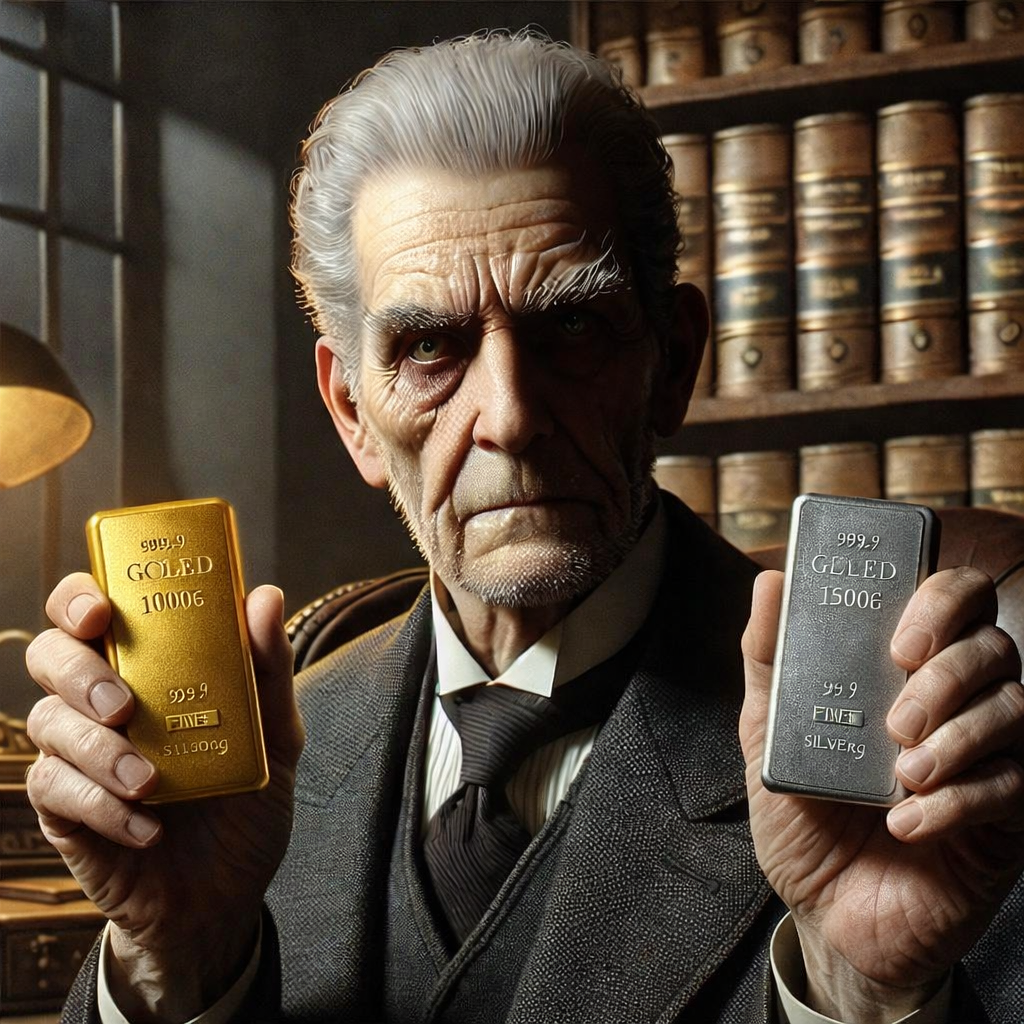
Gold and silver have fallen at the very moment when war, inflation, and monetary disorder ought to be sending them higher. This is not a refutation of the bullion case. It is a reminder that markets are often irrational in the short term, while currencies are dishonest in the long term.
The recent fall in the price of gold, and the sharper fall in silver, have excited the usual class of simpletons. These are the people who buy after a long rise, sell after a sharp fall, and then explain their losses as evidence of superior realism. They have been joined, as ever, by the financial press, whose trade is to dignify every short-term fluctuation with a theory and then forget that theory before the month is out. We are told that gold is losing its lustre, that silver is too volatile to be trusted, that higher yields and a stronger dollar have changed the picture, and that the old safe-haven trade no longer works as expected. Since all this is said at the very moment when the world seems to be edging towards a larger war, and when the financial order looks more rotten than at any point in living memory, some explanation is thought required.
The explanation is not hard to find. Gold and silver are not falling because the long-term case against fiat money has weakened. They are falling because markets in the short term are driven by leverage, forced selling, speculative positioning, and the periodic delusion that the managers of paper currencies are about to become honest men. None of this is new. None of it matters very much unless you are foolish enough to have bought on margin or dependent enough on the opinion of strangers to be frightened out of a sound position by a bad fortnight.
That the metals have fallen on the verge of a wider war is only superficially absurd. It assumes that markets price reality in a clear and orderly way. They do nothing of the kind. They lurch between appetites. In one mood, they see war and buy gold. In another, they see war, buy dollars, dump leveraged positions, and scramble into whatever looks liquid. If yields rise at the same time, and if rate cuts are pushed further into the future, the pressure on non-yielding assets becomes greater. Silver, because it is both a monetary metal and an industrial input, then tends to be treated with particular brutality. Those who imagine that a safe haven must rise every day in bad times are perhaps unsuited to owning one.
There is another point. Gold and silver had already risen very far and very fast. A correction after such an advance is no proof of weakness. It is the normal behaviour of assets in a bull market. The stronger the move up, the more savage the clearing-out of weak holders is likely to be when sentiment turns. This is especially true of silver, which is not a gentlemanly asset and never has been. It rises like a rumour and falls like masonry. The proper response is not surprise but recognition. This is what silver does.
The immediate causes of the recent fall are not in serious dispute. The dollar has strengthened. Treasury yields have risen. The expectation of easy monetary policy has been pushed back. There has also been a good deal of profit-taking after the strong rise of the past year. These things can all hit bullion in the short term. They explain the movement. They do not explain away the investment case.
That case rests on something deeper than this quarter’s rate expectations or the latest fit of nerves in the futures market. It rests on the nature of the monetary order itself. We live under a universal system of fiat currencies managed by states that have borrowed too much, promised too much, spent too much, and regulated too much to retreat into honesty without causing a political convulsion. There is no painless path back to sound money. There is no electorate in the modern West that would accept the interest rates, spending cuts, bankruptcies, unemployment, and asset-price collapses required to restore monetary discipline in earnest. Therefore monetary discipline in earnest will not be restored.
There will, no doubt, be speeches about prudence. There will be central bankers affecting grave expressions and speaking of data dependence. There will be journalists repeating solemn phrases about inflation targets and policy credibility. But the reality is plain enough. The debts will not be paid honestly. They will be inflated away, rolled over, diluted, disguised, and shifted. The currencies will be debased because debasement is the only politically manageable form of default.
This is where the present geopolitical danger matters. A wider war in the Middle East does not merely create a general sense of alarm. It threatens oil supplies, shipping routes, insurance costs, and the whole energy structure on which the global economy depends. Once oil rises, the rise does not stay in oil. It works its way through transport, fertiliser, plastics, food, manufacturing, heating, and every other part of economic life that depends on moving, making, storing, or powering anything at all. This is a supply shock in the proper sense. It is not inflation caused by exuberant shoppers. It is inflation driven by higher costs spreading through the production structure.
And what do our rulers do when faced with such a shock? They do not allow an honest adjustment. They do not say that people must simply endure the consequences of scarcity. They accommodate. They spend more. They borrow more. They loosen when they can. They support households, subsidise industries, rescue balance sheets, and spread the burden through the currency. They call this compassion or stability. It is in fact debasement with a press office.
This is why the recent decline in bullion should be dismissed as noise inside a much larger process. The war premium may come and go. The dollar may strengthen for a time. Yields may rise. Traders may liquidate. Commentators may discover yet again that gold has become obsolete. But the monetary logic remains intact. In a world where states cannot afford honest money, the monetary metals retain their function. They are not promises. They are not someone else’s liability. They do not depend on a minister keeping his word or a central banker rediscovering his conscience.
Gold remains the primary refuge for serious money because it has always been the final asset of distrust. When confidence in issuers declines, gold does not need a theory. It needs only time. Central banks themselves appear to understand this rather better than retail investors and television economists. They go on buying gold, not because they are romantics, but because they know what paper reserve assets amount to when politics turns ugly. If the official custodians of fiat money prefer to own more bullion, the private citizen may reasonably infer that there is a lesson here.
Silver is a less orderly proposition, but not a less interesting one. Its monetary role is older than most states now in existence. Its industrial role is becoming more significant as electrification, electronics, data infrastructure, and other fashionable obsessions consume increasing quantities of it. That dual nature gives it a character gold does not share. It can be hurt by fears of recession at the same time as it is supported by distrust of currencies. It is therefore more volatile, more speculative, and often more exasperating. But it is also capable of moves that gold cannot match. Those who hold silver must accept that its path will be rougher. The reward for enduring that roughness may be correspondingly greater.
None of this means that bullion is magic. It does not generate income. It can fall heavily in quoted price. It can remain out of fashion for longer than impatient men think decent. It can also be misjudged by people who buy too much, too quickly, at the wrong moment, and then resent the metal for not flattering them at once. But the alternatives are hardly more reassuring. Government bonds are claims on over-indebted states. Cash is a wasting asset. Equities can prosper, but remain entangled in a financial system increasingly subject to political management and periodic panic. Property, especially in Britain, is an obvious target for taxation and regulation. Crypto-assets may have a future, but they remain dependent on legal, technological, and political conditions that can change abruptly. Bullion alone sits outside the structure in the most important sense. It is wealth without counterparty risk.
That is why the present weakness does not disturb the broader judgment. If anything, it sharpens it. A world in which gold and silver can be marked down for a time even as the case for owning them strengthens is exactly the sort of world in which patient accumulation makes sense. The metals do not need to behave decorously in the short term to justify themselves in the long term. They need only survive the dishonesty of the system around them. That they have done for thousands of years.
So let the newspapers prattle about corrections, sentiment, and changing macro conditions. Let the experts explain that the rise in yields has altered everything, or that the stronger dollar has refuted monetary history. Let the frightened sell what they bought too late. The larger truth remains untouched. Fiat currencies are being debased because the states that issue them cannot govern honestly. War, energy shocks, debt burdens, and political cowardice will make that debasement worse. Gold and silver therefore remain what they have increasingly become for anyone with eyes to see: the best long-term investments in a world of weakening paper.
Naturally, none of this is financial advice, and before doing anything so rash as trying to preserve your savings from official mismanagement, you should consult someone properly licensed by your government.
Discover more from The Libertarian Alliance
Subscribe to get the latest posts sent to your email.
Related posts:


Powered by YARPP.
Agreed. And of course we are approaching end of month