The military defeat of the United States in the Iran War is only the beginning. Military defeats matter, of course. They destroy reputations. They expose incompetence. They reveal weaknesses that enemies had previously suspected but could not prove. Yet military defeats are often survivable. Great powers have lost wars before. Britain survived the American Revolution. Russia survived the Crimean War. France survived the humiliations of 1815 and 1870. The danger for the United States is that this defeat strikes at the foundations of the system that has sustained American predominance for half a century.
For thirty years, American politicians, generals, intelligence officials, journalists, and academic experts have repeated the same claim. The United States was not merely the strongest country in the world. It was the indispensable nation. It possessed an unmatched military. It controlled the world’s financial system. It maintained alliances on every continent. It could intervene almost anywhere and dictate outcomes. The Iran War has exposed this as fantasy.
The immediate humiliation is obvious enough. Washington threatened. Washington bombed. Washington assassinated. Washington proclaimed victory. Iran refused to collapse. The government survived. The military survived. The Strait of Hormuz was closed. The American Navy proved unable to restore normal shipping. Allies refused to participate in the adventure. Neutral states negotiated directly with Tehran while ignoring Washington. That alone would have been damaging. The deeper problem is that American power has always rested on far more than aircraft carriers and military bases. Since the 1970s it has rested on the petrodollar system.
This arrangement was one of the greatest financial tricks in history. Oil was priced in dollars. Nations that wished to purchase oil therefore needed dollars. Central banks accumulated dollars. Governments accumulated dollars. International trade accumulated dollars. The consequence was that demand for American currency remained artificially high regardless of the condition of the American economy. This allowed the United States to do something that would destroy almost any other country. It could deindustrialise. Factories could close. Heavy industry could migrate abroad. Manufacturing could be outsourced to Asia. Trade deficits could become permanent. Budget deficits could become permanent. The government could borrow on a scale that would bankrupt any normal state. The consequences never arrived because the world was compelled to keep buying dollars.
The arrangement suited the American governing class. Wall Street became the centre of the universe. Manufacturing was increasingly treated as an outdated activity suitable for foreigners. Real production gave way to financial engineering. The culture of enterprise was replaced by a culture of speculation. Wealth came less from making things and more from moving numbers around screens. America ceased to be a republic of producers and became an empire of intermediaries. An older generation built railways, steel mills, power stations, factories, and machine tools. Their successors built derivatives, debt instruments, consulting firms, lobbying networks, and investment products that existed largely to extract fees from one another.
For decades this appeared to work. The American elite congratulated itself on its sophistication. It explained that industrial production was obsolete. Manufacturing was low value. Finance was the future. The rest of the world would make things. America would manage the system. The reality was always different. America was consuming accumulated capital rather than creating new wealth. It was living off privileges created by its geopolitical position. The petrodollar concealed the weakness. Military supremacy protected the arrangement. Together they created the illusion of permanent prosperity. The Iran War may have destroyed both pillars simultaneously.
If the Persian Gulf slips beyond effective American control, the future of the petrodollar becomes uncertain. Oil exporters have already shown increasing willingness to accept settlement in alternative currencies. China has spent years constructing financial mechanisms designed to reduce dependence on the dollar. Russia accelerated this process after sanctions. Large parts of Asia, Africa, and Latin America increasingly regard the dollar not as a neutral trading instrument but as a political weapon. The Iran War has reinforced every incentive to abandon it. No state wishes to base its prosperity on a currency controlled by a government that openly discusses confiscating foreign assets, imposing secondary sanctions, destroying infrastructure, and overthrowing governments. The more Washington weaponises the dollar, the stronger the incentive becomes to replace it.
The consequences for the United States may be fatal. For half a century America has enjoyed privileges that no previous empire possessed. It could import more than it exported. It could borrow without restraint. It could finance military adventures without immediate fiscal consequences. It could accumulate debts so vast that they ceased to have any practical meaning. These privileges depended on foreign demand for dollars. Remove that demand and economic reality returns. The fiscal crisis that must follow may finally impose limits that American politicians have spent decades pretending do not exist. Deficits will matter again. Debt will matter again. Interest rates will matter again. Currency stability will matter again. For the first time in generations the United States may be forced to live within its means. This is why the defeat should be welcomed.
America’s decline is not merely the decline of a country. It is the decline of a system that rewarded some of the least admirable elements in modern society. The beneficiaries were not engineers, scientists, manufacturers, or skilled craftsmen. The beneficiaries were financiers. They were men whose principal talent consisted of extracting wealth created by others. They devised increasingly elaborate mechanisms of speculation and leverage. They treated productive industry as an inconvenience. They celebrated outsourcing because it increased quarterly profits. They hollowed out the industrial base of their own country while lecturing everyone else about efficiency.
There is justice in their present predicament. Men whose chief delight was in defrauding others have ended by defrauding themselves. They convinced themselves that paper wealth was real wealth. They convinced themselves that financial manipulation could permanently replace production. They convinced themselves that military power could indefinitely sustain economic illusions. Now the bill is arriving.
By contrast, the principal beneficiary of American decline appears to be China. One should not romanticise China. Chinese power will create problems of its own. Every great power creates problems. Every civilisation pursues its interests. Every ruling class seeks advantage.
Yet there is a striking difference between the assumptions of the Chinese elite and those of the American elite. Chinese leaders believe that wealth comes from production. American leaders believe that wealth comes from financial manipulation. Chinese leaders build ports, railways, power stations, factories, shipyards, and industrial systems. American leaders specialise in sanctions, military interventions, speculative finance, and public relations campaigns. The contrast is becoming difficult to ignore.
There is also a cultural difference. The Chinese leadership displays many faults. Hypocrisy is not among them. Chinese officials generally pursue Chinese interests and say so. American leaders spent decades insisting that every intervention, every bombing campaign, every covert operation, every sanctions regime, every proxy war, and every act of economic coercion was motivated by universal humanitarian concern. The pretence eventually became absurd.
Indeed, one reason for the growing contempt directed at Washington throughout much of the world is that its leaders came to believe their own propaganda. They genuinely imagined themselves morally superior. They imagined that power exercised by America ceased to be power and became virtue. The Iran War has punctured this illusion.
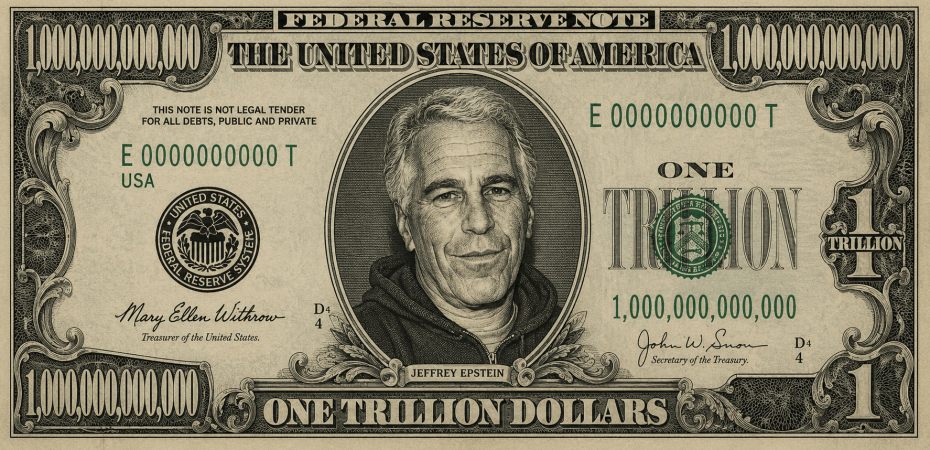
Meanwhile, scandals that would once have destroyed governments continue to accumulate around the American political class. The Epstein affair alone revealed a governing elite whose conduct often resembled moral degeneracy rather than public service. The fact that so many powerful figures appear connected to that world has further damaged the credibility of institutions already weakened by repeated foreign-policy disasters. One cannot imagine the Chinese leadership emerging from an equivalent scandal untouched. One can easily imagine it in Washington. That observation alone tells us much about the relative health of the two systems.
The collapse of American influence in the Persian Gulf therefore represents something larger than a regional setback. It marks the beginning of a transfer of power away from a civilisation dominated by financiers, lobbyists, intelligence networks, and military adventurers towards one still centred on industry, engineering, science, and production. That transfer will not solve humanity’s problems. It may create new ones. But it is difficult to imagine that it will be worse than the order now passing away.
The age of American hegemony has been one of endless intervention, financial parasitism, moral hypocrisy, and perpetual war. Entire countries have been shattered in the service of maintaining a global system that benefited a narrow oligarchy while impoverishing millions. The defeat in Iran does not end that system. It does, however, suggest that the end has begun. For that reason alone, it deserves to be welcomed.
Discover more from The Libertarian Alliance
Subscribe to get the latest posts sent to your email.


[…] Godwyn, “The Real Defeat of America,” Libertarian Alliance (UK) (8 June […]