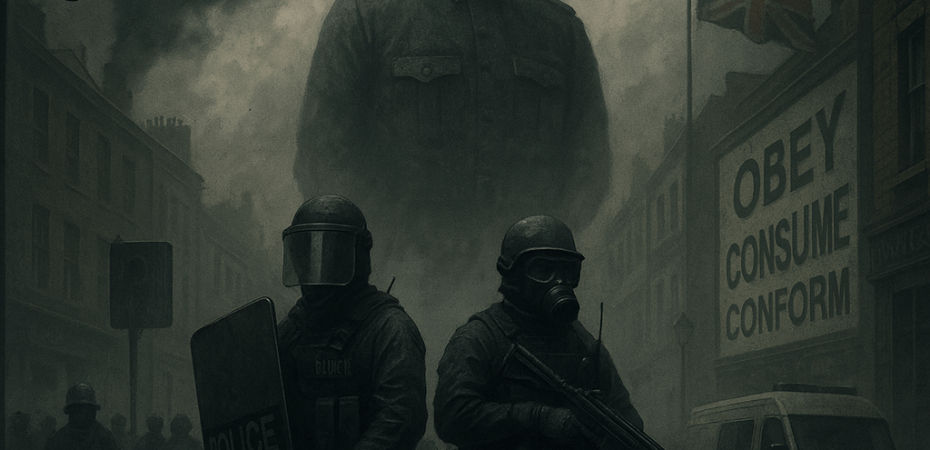
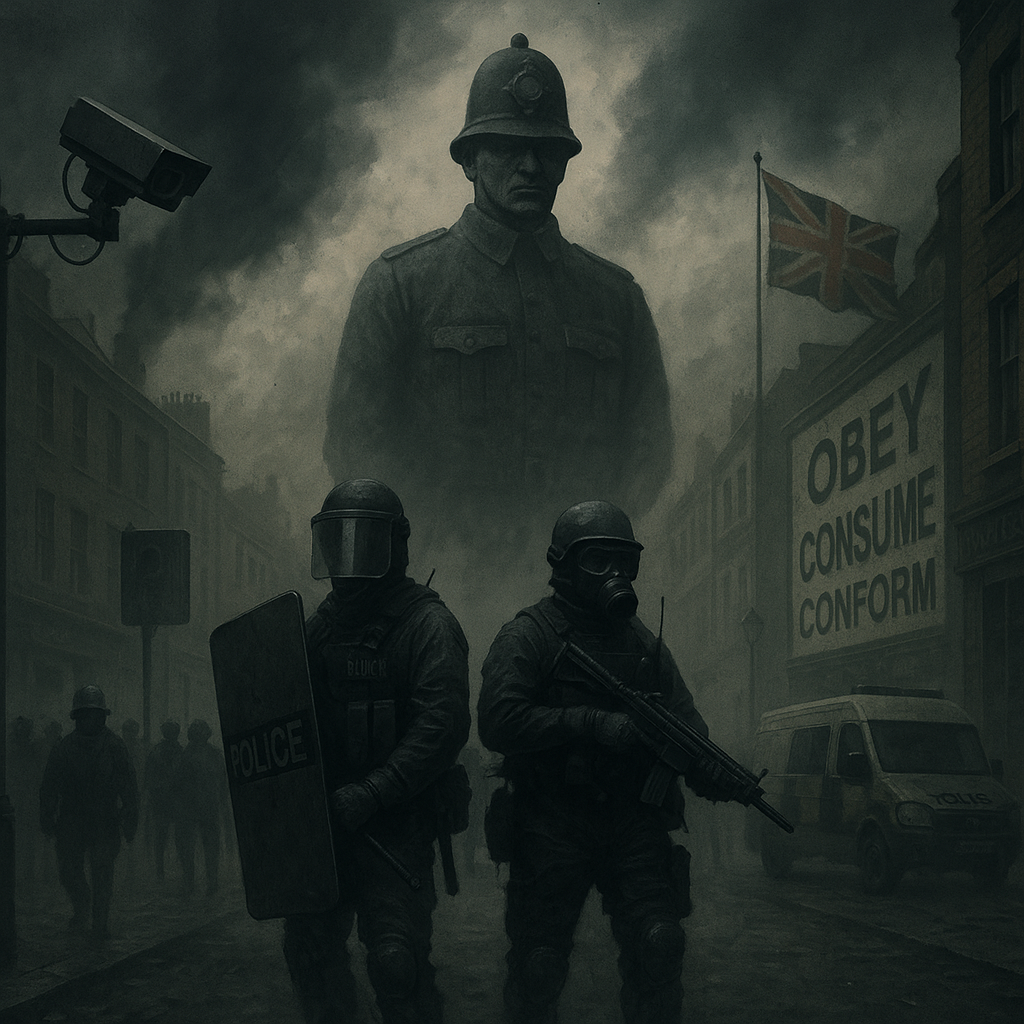
It is a curious fact of life in modern Britain that our rulers cannot leave bad enough alone. The country is already a police state. Speech is policed, association is policed, thought itself is on the edge of being policed. Yet this unhappy state of affairs is not enough for our masters. They must continue their mutilation of freedom, even as the ground crumbles beneath their feet. Enter the Crime and Policing Bill – a piece of legislation so comprehensive in its evil that it ought to have been printed not on paper, but on the stretched skin of one of its authors, as a warning to future generations.
The Government claims that this Bill is necessary to make our streets “safer.” It claims that it will protect “respect” and “community harmony.” What it proposes, however, is little more than a blueprint for the further degradation of whatever liberty remains to us. Or rather, I should say that the blueprint was drawn up long ago. What we see here is the final scrawling on the blueprints of a prison whose architects are starting to lose control of the site.
The most grotesque innovation of this Bill is the so-called Respect Order. According to the Government’s own factsheet, these allow authorities to obtain court orders against any individual who has “caused, or is likely to cause, harassment, alarm or distress to any person.” Likely to cause—not actual harm. Feelings, guesses, projections: that is all it takes.
Once obtained, these orders can impose “any prohibitions or requirements the court considers necessary.” Anything at all. You might be ordered not to post on social media. You might be ordered not to mention a public figure. You might be forbidden from attending lawful protests. You might be commanded to hand over your passwords, delete your digital footprint, and sit silently as your past is scrubbed away.
All of this, we are told, will be “proportionate” and “subject to human rights protections.” A joke, of course. The same “human rights protections” that allowed speech codes, hate crime laws, censorship of protest, the persecution of wrongthink. We are expected to believe that the authorities will show restraint when they have shown none before. We are expected to believe that a bureaucracy which already arrests men for memes will now, magically, act with caution and wisdom.
No: the real purpose of the Respect Orders is to allow the authorities to silence criticism without the bother of public trials. It will be enough for a council or police force to persuade a friendly judge that someone might cause distress. The bureaucrats will not need to prove anything to a criminal standard. They will not need to expose their accusers to cross-examination. They will simply act, and the citizen will obey—or be imprisoned.
There will be no public resistance to this. The British people are by now too atomised, too scared. The time when marches and petitions could achieve anything has long passed. Even if a few brave souls do protest, they will be isolated and crushed. Public opinion, where it exists at all, will turn a blind eye.
Yet all is not lost. It is not resistance from below that threatens the regime—it is collapse from within. As has been noted elsewhere, censorship itself is beginning to rot. Big Tech, once the faithful enforcer of orthodoxy, is fearful of lawsuits. The European courts, long complicit, are starting to rediscover some basic principles. Even sections of the British judiciary—though not enough—are quietly muttering about the rule of law.
More importantly, the ruling class is no longer united. There was a time, during the high years of Blair and Cameron, when the entire establishment sang from the same hymn sheet. That time is over. The factions are fighting. Some want to continue squeezing the people until nothing is left. Others, more intelligent if no less evil, realise that a host must be kept alive if it is to be drained.
The Crime and Policing Bill must be understood in this light. It is not a confident act of tyranny. It is a panicked spasm by a faction that knows it is losing ground. It is legislation by people who sense that the machinery of repression is breaking down, and who hope that one more turn of the screw will save them.
It will not. This Bill will become an Act, but will not save them. The administrative state is too bloated, too divided. The courts will balk at the worst abuses. The enforcers will be overwhelmed with conflicting orders. The public, though inert, is no longer as credulous as it was. Fear has given way to sullen hatred. Faith in the system has collapsed beyond repair.
It is a paradox, but a true one: this new wave of repression marks not the consolidation of power, but its dissolution. The masters of Britain are not marching to a new and stable tyranny. They are staggering into chaos.
Our duty, then, is not to place our hopes in the people. Nor is it to imagine some glorious rebellion. It is simply to endure—to wait—and to be ready when the structure finally falls under its own weight.
The Crime and Policing Bill is evil. But we must understand that its authors are not strong. They are desperate. Their vision of a cowed, silent Britain will not come to pass, because they themselves are too feeble and too divided to make it so. The real struggle is already taking place among them. Our task is to survive their dying thrashes, to prepare for the time when the ruins they leave behind can be swept away.
Britain is already a police state. This Bill will make it worse. But the men who made it are not gods. They are tired and divided. And that, in the end, will save us.
Discover more from The Libertarian Alliance
Subscribe to get the latest posts sent to your email.


