Dear Bryan,
You are a dazzling writer, and I do mean that in the technical sense—your prose is dazzling, even when it burns a little too brightly for comfort. You are also, if I may risk sentimentality, a very dear friend. That said, you really must stop writing with a full-length mirror in front of you. There’s a difference between a rhetorical flourish and a rhetorical flamethrower.
You make the case for legalising drugs with your usual verve, and I agree—entirely—that drugs should be legal. But your enthusiasm for liberty occasionally takes on the character of a private fantasy rather than a plausible policy. One doesn’t need to wish for the euthanasia of the underclass to conclude that prohibition has failed. And while I suspect your intention was partly satirical, I can’t help thinking it’s dangerous to wrap a good argument in the language of eugenic triumphalism, however mockingly deployed.
Where your essay veers from provocation into pathology is in its final paragraphs, where you write, without irony, that “the feeble-minded and the criminal” ought to overdose so they don’t reproduce. This is less libertarian than it is a sort of aesthetic nihilism in freedom’s clothing. If the best argument for liberty is that it lets the stupid die, one might wonder whether the concept hasn’t already perished.
Let us consider a more moderate but historically grounded case.
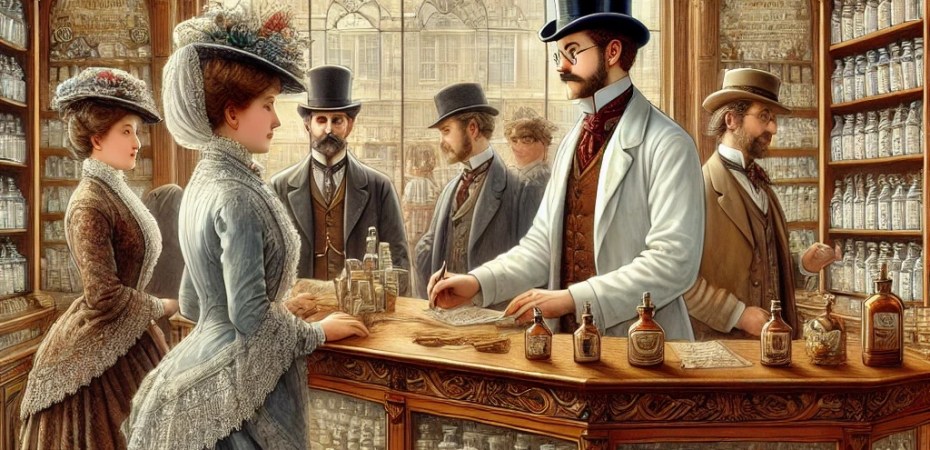
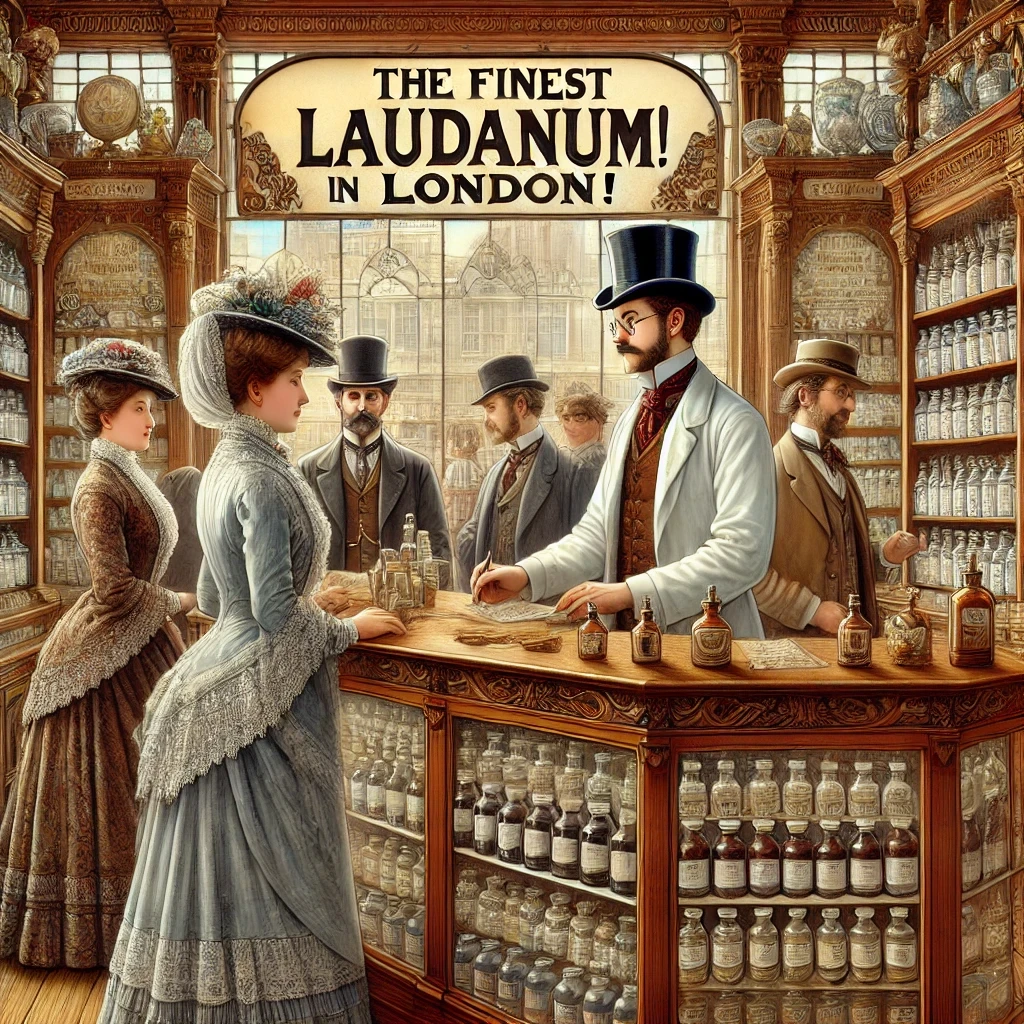
Before the First World War, drugs were not merely unregulated in Britain—they were unremarkable. As Virginia Berridge notes in Opium and the People, the 19th-century English could buy laudanum as easily as they could buy tea. No prescription was needed. Chemists sold morphine, opium-based lozenges, even preparations for infants. “Chlorodyne,” a popular cough remedy, was essentially morphine in syrup.
More important than the legal status was the absence of any associated criminality. There were no drug gangs, no networks of dealers stabbing one another for turf, no crack dens. The drug user was, more often than not, a respectable person. In fact, the biggest consumers of opium were not criminals or degenerates but middle-class women suffering from sleeplessness, neuralgia, or “female troubles.” In industrial areas like the Fens, the working class used opium to self-medicate in the absence of doctors. The worst that could be said was that some babies were dosed into silence—but this was a symptom of maternal exhaustion, not urban mayhem.
Criminality followed prohibition, not drug use. The 1920 Dangerous Drugs Act was not driven by a crime wave but by a war panic—specifically, a moral hysteria over cocaine use by soldiers and alleged cases of “corrupted white women.” As Berridge shows, drug control emerged not from medical necessity but from bureaucratic ambition and international diplomacy. And once the market was forced underground, it obeyed the classic logic of Prohibition: purer products, more dangerous dosages, and criminal networks stepping in to meet demand.
So yes, drugs are dangerous—but so is the war against them. A state that criminalises personal intoxication builds surveillance into everyday life. It justifies financial monitoring, police intrusion, and racial profiling. It crowds prisons with users rather than thieves, and it leaves the actual problems—poverty, despair, loneliness—unaddressed.
But the proper defence of legalisation is not that it helps the unfit die. The right defence is that liberty, even when it ends in folly, is better than coercion. Adults must be allowed to decide what risks they will take with their own minds and bodies. And when liberty is respected, the outcomes are usually—not always, but usually—better than those achieved by compulsion.
The solution to a failed drug war is not an arms-length cull of the poor. It is a return to the older English principle: that people should be left alone unless they hurt others. That principle built a free society. It is still the best defence of one.
Yours ever,
Sebastian
Reading List
Berridge, Virginia. Opium and the People: Opiate Use and Drug Control Policy in Nineteenth and Early Twentieth Century England. London: Free Association Books, 1999.
Courtwright, David T. Forces of Habit: Drugs and the Making of the Modern World. Cambridge, MA: Harvard University Press, 2001.
Musto, David F. The American Disease: Origins of Narcotic Control. Oxford: Oxford University Press, 1999.
Hari, Johann. Chasing the Scream: The First and Last Days of the War on Drugs. London: Bloomsbury, 2015.
Szasz, Thomas. Ceremonial Chemistry: The Ritual Persecution of Drugs, Addicts, and Pushers. Syracuse, NY: Syracuse University Press, 2003.
Discover more from The Libertarian Alliance
Subscribe to get the latest posts sent to your email.
[…] Reply here […]