There’s something especially bleak about reading mainstream journalism as it tries to explain problems it helped cause. The Daily Telegraph’s recent lament—“Are young people today really the saddest generation of the modern era?”—is a good example. It notes, with a tone of puzzled concern, that “two-thirds of 18 to 24-year-olds” in Britain have experienced poor mental health in the past year. Young people feel overwhelmed, disconnected, lonely, and anxious. The article nods politely to social media, to economic precarity, even to pandemic hangovers. But it never quite admits the full horror: that we’re not sad because we can’t cope. We’re sad because we can see what’s happening.
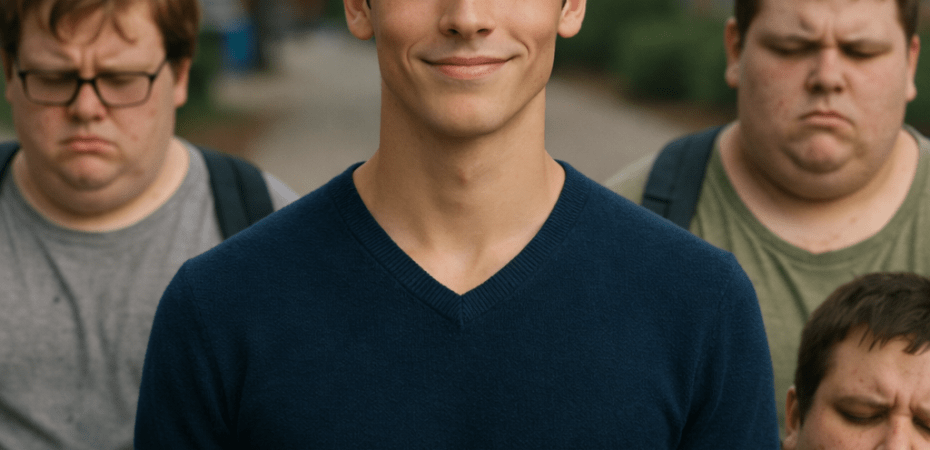
The boys in my school are mostly fat, mostly spotty, and usually smelly. They eat garbage: fried chicken, Monster Munch, Lucozade. It’s not just a health issue—it’s a mood issue. They are visibly unhappy, and they cope by eating more. The worse they look, the worse they feel. The worse they feel, the worse they eat. There is nothing mysterious about this. It is a self-reinforcing cycle of filth, made all the more disgusting by how avoidable it is.
I don’t say this from a position of disgusted superiority—well, not only. I say it because I see them every day, walking grease-slicked and mouth-breathing into lessons they don’t understand, wondering why they feel permanently angry or dead inside. Their entire existence is one of hormonal chaos made worse by poisoned inputs—sugar, seed oils, the wrong sort of pornography, TikTok, “influencers” who look like deformed barbie dolls. The modern boy is a lab rat with free access to every lever. And he pulls all of them at once.
What caused this? Two things.
First, the genes are collapsing. Since about 1970, the wrong people have been having most of the children. Idiocracy is no longer a dystopian comedy—it’s a demographic trend. The smarter and more disciplined have fewer children. The lazy and impulsive have been subsidised to breed. Each generation is a little more depressed, a little fatter, a little more lost.
Second, the system is hostile. Every institution that claims to care about “young people’s mental health” is also helping to destroy it. Schools are surveillance centres. Universities are debt traps. The job market is a carnival of unpaid internships and middle management psychodrama. The NHS offers SSRIs for every problem. The State wants you to be fat, ashamed, dependent, and obedient. That is not a conspiracy theory. It’s policy.
The article talks about loneliness and a “crisis of connection.” And yet what is more alienating than growing up in a world where you know you are disposable? That is what young people are beginning to realise. That they are not being prepared for a future. They are being processed. They are being turned into weak, manageable, anxious economic units—just functional enough to keep the machinery going, just broken enough never to revolt.
Our governing class is a mix of inherited wealth, media perverts, corporate managers, and talentless diversity hires. They are not wise. They are not noble. They are not even particularly intelligent. But they are united in a single goal: to extract as much value as possible from us while preventing us from noticing who is doing it.
You wake up to that around age twelve, if you’re paying attention. You realise you’re never going to afford a house. You realise that half your teachers are too thick to teach, and the other half are too broken to care. You realise that you’ve never seen a single adult who seems happy, and you start to understand why the boys around you are all gaming addicts with bad skin and worse tempers.
The article says, “those who are struggling most need to be helped to improve their wellbeing.” Fine. But what would that involve? Arresting sex therapists? Closing down the schools? Letting fifteen-year-olds open gyms and invest in Bitcoin? No chance. What they mean is: more therapy, more pills, and more condescending slogans. “Be Kind.” “You Are Enough.” I am, but most are not. That’s the whole point. Most of my generation aren’t enough—and we could be, if the institutions weren’t so committed to keeping us docile.
The therapeutic state wants you weak, confused, and grateful for interventions. It calls that compassion. But it is contempt.
There’s a reason so many boys in my year have given up. There’s a reason they waddle from lesson to lesson, sweating despair. It isn’t just bad lunch choices or hormones. It’s the dawning awareness that the future has been sold off, and they’re not invited to what’s left.
If I weren’t so healthy and good-looking, I’d probably be among them.

Discover more from The Libertarian Alliance
Subscribe to get the latest posts sent to your email.