
No science is ever settled. That is true even when it is pursued with honesty, and certainly untrue when enormous commercial interests are involved. Every entrenched medical protocol should be scrutinised, especially when it brings money in but rarely restores health. The Covid years were a lesson in what happens when regulatory capture and media complicity crowd out dissent. Many people were forced to inject new substances into their bodies under duress. Others were denied treatment altogether because their symptoms were labelled “unusual” or “non-compliant.” In such an environment, the instinct to question becomes not just permissible but necessary.
This is one reason why A Midwestern Doctor’s sprawling article on DMSO deserves careful consideration. “DMSO Heals the Lungs and Cures Chronic Respiratory Diseases” makes an extraordinary claim: that a forgotten chemical compound—dimethyl sulfoxide—can halt, or even reverse, some of the most intractable lung diseases known to medicine. This includes COPD, pulmonary fibrosis, and asthma. If true, the implications are revolutionary. If overstated, they risk undermining the credibility of the growing movement for medical scepticism. Either way, the article is a serious intervention into the conversation about what medicine should be—and whom it should serve.
The article opens with a simple claim:
Chronic respiratory diseases… remain an area that medicine struggles with, and as such many with them are subjected to a life of healthcare expenses, impaired stamina, and in many cases, a painful decline until they succumb to the illness.
That, regrettably, is undeniable. Few people who have watched an elderly smoker decline into breathless dependence on steroids and oxygen tanks would dispute that COPD is a death sentence. The official toolkit—bronchodilators, steroids, inhalers, and in later stages oxygen therapy—is palliative at best. Pulmonary fibrosis is even grimmer: it is generally fatal within a few years. And while asthma is more manageable, it, too, is incurable and must be medicated for life.
Here, DMSO enters not as a new miracle drug, but as a chemical known since the 1960s to have curious effects. It was used initially as an industrial solvent, but doctors soon noticed its potent anti-inflammatory and pain-relieving properties. According to the article, DMSO works because it penetrates cell membranes with unusual ease, reduces fibrosis, modulates immune responses, and enhances the delivery of other therapeutic agents.
The author argues that:
A large volume of published data and many user reports show that DMSO often produces remarkable results for a wide range of respiratory disorders.
Among the cited studies are experiments on rodents showing DMSO prevents radiation-induced lung damage, reduces inflammation after blood-flow trauma, and protects against chemically induced respiratory collapse. There are also anecdotal testimonies—many of them moving—from people with terminal lung conditions who tried nebulised DMSO and regained function. One woman describes her 85-year-old husband, diagnosed with pulmonary fibrosis, abandoning his wheelchair and returning to church services. Another user says DMSO “saved her neighbour from COPD,” calling it “a miracle.”
Sceptics might dismiss such stories as unverified and anecdotal. But one might also ask: If thousands of patients across different continents are finding relief in something cheap and over-the-counter, why is the medical establishment so uninterested?
Despite the hopeful tone, there are grounds for caution. Some of the cited studies are preclinical. Others are in rodents, not humans. The article references a 2020 Libyan hospital study in which 31 patients with lung abscesses were given a DMSO-antibiotic mixture through a chest tube—with full recovery in every case. That is promising, but it is not randomised or controlled. It would not pass under current drug-approval regimes. But then again, perhaps that is the point. As the author writes elsewhere:
Despite thousands of studies supporting its use, many American pharmaceutical products using DMSO… it had become another forgotten side of medicine.
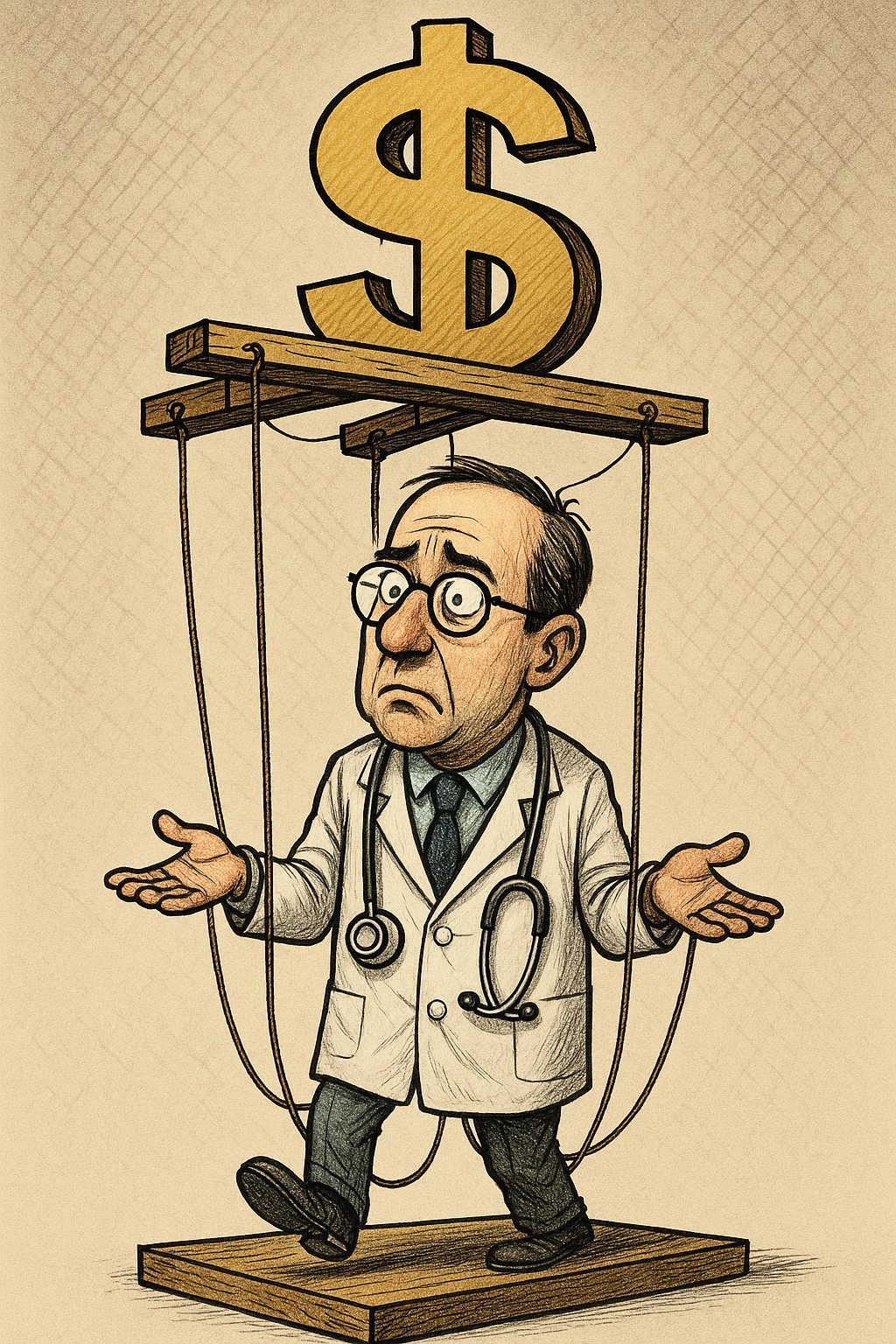
This is a recurring theme: that effective, low-cost therapies are systematically sidelined not because they fail, but because they do not generate enough profit. The pharmaceutical model depends on lifelong drug dependence. If DMSO, as the author claims, “rescues dying cells” and reduces the need for steroids or inhalers, it would not be welcomed by the makers of Trelegy or Spiriva. This is the same dilemma faced by other low-cost therapies, from ivermectin to ultraviolet blood irradiation. Once you understand the business model, silence starts to look strategic.
That said, not every claim in the article stands up to scrutiny. The author occasionally drifts into overreach, asserting that DMSO treats “a wide range of autoimmune, protein, and contractile disorders,” and even “a variety of head conditions” including tinnitus and vision loss. Elsewhere, the language becomes utopian:
I’ve received numerous testimonials from readers around the world about the life-changing effects DMSO has had on them… over 3,000 of them.
This sort of language risks undermining the credibility of the entire article. There is a difference between “plausibly therapeutic” and “universally curative.” While testimonials are moving and valuable, they are not a substitute for longitudinal, controlled studies. Nor is every dramatic improvement necessarily attributable to the treatment. Chronic illnesses, especially those involving inflammation, often have cyclical patterns. Remission is not always cure.
Still, it would be foolish to dismiss the piece on stylistic grounds. Its core insight—that the current medical establishment discourages exploration of non-patentable cures—is well founded. In Britain as in America, regulators are captured, medical journalists are lazy where not ignorant, and most doctors are too overworked to challenge protocol.
The NHS does not openly criminalise DMSO, but it has no place in its formulary. NICE has not issued any guidelines. If you went to your GP and asked about DMSO, you would almost certainly be warned against it, not because of specific harms, but because it sits outside the permissible script.
This is the same script that promotes GLP-1 agonists like Ozempic as miracle drugs, despite growing evidence of long-term endocrine disruption. It is the same script that denies children with long Covid access to antiviral therapies, but hands out antidepressants for the symptoms. The public sees this, and trust erodes.
In this context, the author’s bitterness toward the FDA and the pharmaceutical monopolies is justified:
Despite the public, the scientific community, and Congress petitioning the FDA to rescind their prohibition on DMSO, it all fell on deaf ears.
Once you realise that drug regulation is a cartel game, not a neutral process of evidence evaluation, the rise of these underground therapeutics begins to make sense.
If we strip away the messianic tone and focus on the plausible, we are left with several claims that deserve further exploration:
- DMSO has documented anti-inflammatory and anti-fibrotic properties, at least in animal models.
- There is limited human evidence suggesting DMSO may be helpful in ARDS, asthma, and chronic respiratory insufficiency, particularly when nebulised.
- Its ability to enhance drug absorption and cross cellular membranes could be revolutionary—if used cautiously.
- The suppression of research into DMSO appears motivated more by economics than by safety concerns.
None of this proves that DMSO cures COPD. But it does support a basic principle of medical ethics: if a safe compound offers some patients relief, the state should not block its use.
I am not a doctor. I am a school student with an interest in how institutions fail and what happens when truth becomes subordinate to policy. I do not believe every miracle cure on the internet. But nor do I trust a system that censored ivermectin, mandated experimental injections, and now wants to put everyone on weekly jabs of a synthetic gut hormone. The NHS is not neutral. The pharmaceutical lobby is not honest. Our newspapers are not curious. A Midwestern Doctor may exaggerate, but at least he still asks questions.
If the only real downside to DMSO is that it is cheap and unpatentable, then perhaps it’s time to start asking why the system distrusts it so much.
Suggested Reading
On DMSO and Alternative Medicine
- Morton Walker, DMSO: Nature’s Healer (Avery Publishing, 1993)
- Stanley Jacob and Robert Herschler, “Pharmacology of DMSO,” Journal of the American Medical Association, 1965
- Mark A. Hochman et al., “Review of Dimethyl Sulfoxide (DMSO),” Journal of Clinical Pharmacology, 1994
On Respiratory Disease and Medical Protocols
- NICE Guidelines on COPD, Asthma, and Pulmonary Fibrosis
- Sayer Ji, Cancer Killers: The Cause is the Cure (GreenMedInfo, 2014)
- Peter Gotzsche, Deadly Medicines and Organised Crime (Radcliffe, 2013)
On Regulatory Capture and Medical Economics
- Marcia Angell, The Truth About the Drug Companies (Random House, 2004)
- Ben Goldacre, Bad Pharma (Fourth Estate, 2012)
- Paul A. Offit, Do You Believe in Magic? The Sense and Nonsense of Alternative Medicine (Harper, 2013)
Discover more from The Libertarian Alliance
Subscribe to get the latest posts sent to your email.
Related posts:

Powered by YARPP.