
The Property and Freedom Society meets every September in Bodrum, Turkey. Since 2006 it has gathered friends of liberty in this old corner of Asia Minor. This year I had the privilege of attending for the first time. My official role was humbler than most: I was there to assist Dr Sean Gabb. It fell to me to guide him in and out of his mobility scooter, to steady him across the uneven pavements, and at times to keep his dentures securely in place. Such tasks may not sound glamorous, but they gave me an excuse to be constantly by his side, listening and learning.
The journey itself was a reminder that conferences are not only about lectures. Travel throws people together and creates those small incidents that stay in memory. By the time we reached the Hotel Karia Princess — the regular home of the Society — there was already a sense of shared achievement.
The hotel deserves a mention. Quietly luxurious, shaded by gardens, and staffed with unfailing kindness, it provided a refuge from the heat and noise of Bodrum. Meals in the courtyard, punctuated by the soft splash of the swimming pool, gave the conference an almost cloistered atmosphere. Yet this calm was balanced by the intensity of the talks, which ranged from monetary theory to piracy, from Roman slavery to Swiss anarchism.
The highlight outside the formal sessions was Dr Gabb’s impromptu tour of the Bodrum Castle Museum. The castle, built by the Knights of St John in the fifteenth century, now houses one of the world’s great collections of underwater archaeology. The stone walls, looking out over the harbour, and the jumble of Byzantine and Ottoman remains are impressive in themselves. But it was the cargoes of ancient shipwrecks that we were there to see.
Guiding us slowly up and down the many staircases — a Herculean task given the mobility scooter — Dr Gabb spoke with evident delight about the trade patterns revealed by amphorae, copper ingots, and exotic goods raised from the seabed. He explained how the Uluburun shipwreck, dating to the late Bronze Age, carried materials from as far apart as the Levant, Cyprus, and Central Europe. This was evidence, he told us, of a long-distance commercial network three thousand years old, one that tied together the eastern Mediterranean before the fall of Troy and the three century darkness that followed. The point, he stressed, was that globalisation is not new. Free exchange, even across dangerous seas, has always been a defining feature of civilisation.
We emerged from the tour sunburnt and somewhat thirsty, but with a vivid sense of how archaeology brings economic history to life. It was one of the most memorable lessons of the week, though given informally and outside the official programme.
The conference itself had its usual mixture of brilliance and provocation. Hoppe, DiLorenzo, Hülsmann, Ammous, and others spoke with the candour that Bodrum encourages. Papers were dense, arguments fierce, and evenings long with conversation. Yet what strikes me most, looking back, is the atmosphere of friendship. Whatever our differences in age or background, we were all bound by a shared curiosity and a sense of being outside the mainstream. In such company, even the task of keeping one’s teacher’s dentures steady becomes a kind of honour.
For me, as a younger participant, the experience was doubly valuable. I had the chance to watch great minds at work, but also to see the human side of scholarship. In a way, that balance — between high theory and common reality — was what made the week so rewarding.
As we left the hotel at the end of the week, exhausted but grateful, I thought about the peculiar blend that makes the Property and Freedom Society endure. It is part intellectual salon, part holiday camp, part family reunion. Where else could one hear a radical critique of democratic peace in the morning, discuss Bitcoin over lunch, wrestle a mobility scooter down castle steps in the afternoon, and share a glass of raki in the evening?
Bodrum 2025 will stay with me not only for the lectures — though they were extraordinary — but for the hospitality of the Karia Princess, the splendour of the castle, the generosity of colleagues, and the chance to serve a mentor. For all the burdens of travel, it was a lovely conference.

Discover more from The Libertarian Alliance
Subscribe to get the latest posts sent to your email.
Related posts:
 Stephan Kinsella on the Common Law: Lessons from Bodrum 2025
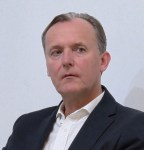 Stanislav Andreski’s Social Sciences as Sorcery: Enduring Errors and Academic Corruption – Thorsten Polleit, PFS Bodrum 2025
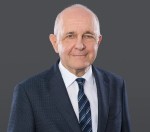 David Dürr on Swiss Anarchism – Property and Freedom Society Bodrum 2025
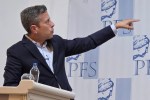 Saifedean Ammous on Property Rights and the Palestinian–Israeli Conflict – PFS Bodrum 2025
 Guido Hülsmann on Universities and the State – PFS Bodrum 2025
 Jeff Deist on Post-Persuasion America – PFS Bodrum 2025
 Hans-Hermann Hoppe on Democratic Peace and Re-Education – PFS Bodrum 2025
 Tom DiLorenzo on “Virtuous” War Crimes – The American and Israeli Traditions (PFS Bodrum 2025)
 Javier Milei and the Austrian School – A Critique from Bodrum 2025
 Pirates, Liberty, and Revolution: Alessandro Fusillo in Bodrum
 Douglas E. French’s When Movements Become Rackets: Review of the PFS Trilogy
Powered by YARPP.