
Property and Freedom Society, Bodrum 2025
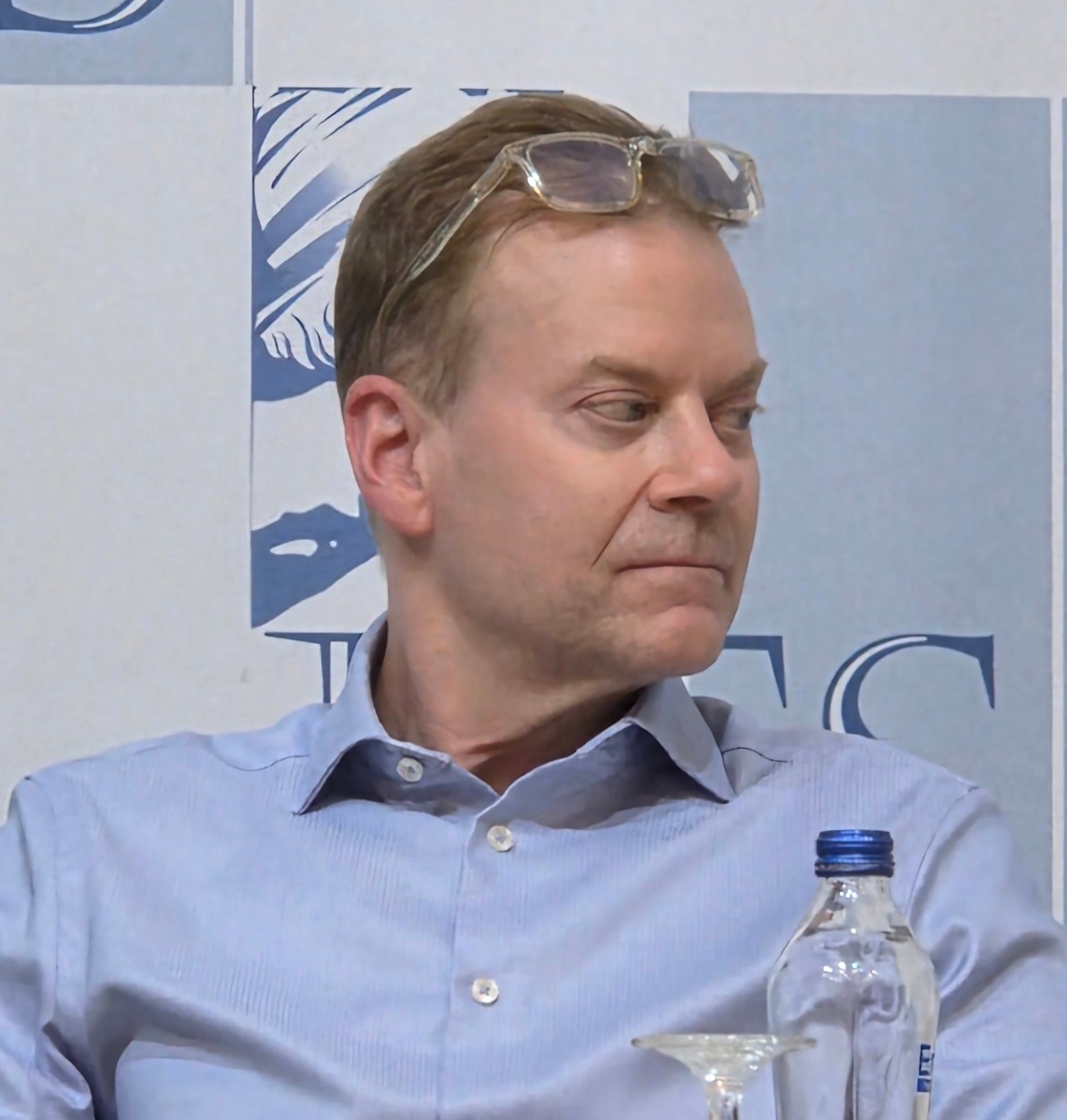
Jeff Deist on “Understanding Post-Persuasion America”
Reported by Sebastian Wang
This was a very dense lecture, delivered at speed, and no written summary can fully capture it. What follows is therefore not an exact transcript, but an attempt to convey its main themes and the atmosphere in which they were given.
Jeff Deist began by puncturing the fashionable claim that America is on the edge of civil war. Political violence, he reminded us, is nothing new. Assassination has been a feature of American life since the republic began, “as American as apple pie.” But to imagine that a country with a median age approaching forty, an average body mass index of twenty-nine, and an electorate whose passions are as sedentary as its lifestyle, is preparing for another Gettysburg is facile. Nor, he stressed, are there clear battle lines. America is too geographically and culturally diverse for that.
Yet none of this means that the United States is stable. Its problem is not imminent war but chronic weakness of identity. After two and a half centuries, it is no longer possible to say what America is or who qualifies as an American. The nation exists in the same sense that the European Union exists: as a political and economic arrangement, useful enough for generating wealth and maintaining infrastructure, but no longer capable of inspiring common loyalty or optimism. Material comfort is not trivial, but it cannot bind a people together. And compared with the confidence of the 1980s, America today is unstable, fragmented, dysgenic, and increasingly joyless.
The answer, in Deist’s view, is radical decentralisation and subsidiarity. There may be four hundred million people within America’s borders—he cast doubt on the official statistics—but they no longer like or even understand one another. The post-war liberal consensus is finished. There is no remaining justification, perhaps no longer any practical possibility, for an American hegemony of universal rules, foreign wars, and standardised economic policy. What is required now is the building of local populism, grounded in communities and states rather than in Washington.
Here he turned to the most provocative theme of the talk: that we live in a post-persuasion America. Politics used to be fought through debate and argument. That age is over. The explosion of information has not made people more curious, but less. The flood of data has narrowed attention spans and exhausted intellects. Faced with overload, minds close. The average citizen no longer reads, reflects, and then changes opinion. He is passive, distracted, dulled. In such a society, persuasion loses its force. What remains is mobilisation. This does not mean giving up on persuasion entirely. There will always be individuals open to argument. But the political strategy of the future is not to convince the mass, but to organise it.
This analysis led him to a strong rejection of neoconservatism and the Cold War mythology from which it drew legitimacy. Fusionist conservatism, which yoked traditionalists to free-marketeers under the banner of anti-Communism, is dead. And, Deist insisted, it was always hollow. The Soviet Union was never an existential threat. By the 1990s it was plain that its economy was a joke, its military incapable, its ideology spent. America wasted trillions fighting an unnecessary Cold War, enriching a military-industrial complex that still consumes the substance of the country. American hegemony abroad hollowed out American life at home, leaving behind a zombie economy and a debased currency. To go on defending that project is not just misguided but impossible.
What, then, of liberalism? Here Deist was unsparing. He dislikes the phrase “classical liberalism.” It once made sense for Hayek and Popper, who wanted to distinguish themselves from the socialist left. Today it is little more than branding, used to curry favour with progressive donors. Modern “classical liberals” are simply ensuring the funds keep flowing from corporations that have already gone over to the left.
Nor should Ludwig von Mises be treated as an oracle. Mises was a man of his time, scarred by two world wars, who believed that enlightened democracy was the only hope. He was a liberal, but also a nationalist. His model assumed ethnically homogeneous states, living peacefully with their neighbours. He hoped for liberal institutions, but he never imagined them surviving in a multicultural empire. Murray Rothbard saw this limitation clearly. He rejected the utilitarian atheism of Mises, preferring a natural-law anarchism. Hans-Hermann Hoppe pushed the logic further, to radical decentralism and voluntary communities.
The larger point is that the liberal project of neutral institutions and individual self-actualisation is an illusion. Institutions are never neutral. Democracies rest on the fiction of consent, but in practice they always turn corrupt. “Anything peaceful,” Leonard Read’s old slogan, is not a foundation for society. Radical individualism is a myth. Men are social animals. Cohesion comes from families, communities, and shared loyalties, not from atomised citizens each pursuing their own version of the good life.
This explains why, in Deist’s view, liberal America has failed. It imagined that openness and neutrality would guarantee freedom. In practice, those same values were turned against it. Open societies allowed enemies to march through its institutions. The commitment to include everyone destroyed the ability to exclude anyone. The result is that basic American values no longer unite, but corrode.
His conclusion was stark. The task is not to keep alive the illusion of a liberal America, but to build something new on different foundations. That means decentralisation, state sovereignty, and above all an honest recognition that persuasion has reached its limits. The America of debate, argument, and consensus is gone. The America of mobilisation, fragmentation, and local resilience is the reality of the future.
Discover more from The Libertarian Alliance
Subscribe to get the latest posts sent to your email.
Related posts:
 Stanislav Andreski’s Social Sciences as Sorcery: Enduring Errors and Academic Corruption – Thorsten Polleit, PFS Bodrum 2025
 Guido Hülsmann on Universities and the State – PFS Bodrum 2025
 Hans-Hermann Hoppe on Democratic Peace and Re-Education – PFS Bodrum 2025
 Pirates, Liberty, and Revolution: Alessandro Fusillo in Bodrum
 Stephan Kinsella on the Common Law: Lessons from Bodrum 2025
 “Roman Slavery: Horror and Paradox – Sean Gabb in Bodrum”
Powered by YARPP.
[…] Deist (USA): Understanding Post-Persuasion America [Sebastian Wang, “Jeff Deist on Post-Persuasion America – PFS Bodrum 2025,” Libertarian Alliance [UK] Blog (Sep. 20, […]
[…] Media, persuasion, ideological warfare – for instance, Jeff Deist on “Post-Persuasion America.” […]