
This essay has little to do with libertarian polemic, at least not obviously. Instead, it is born of a personal obsession: the music of European civilisation between roughly 1780 and 1830, and the social conditions that enabled its unparalleled flourishing. One city dominates this period—Vienna, a magnet for genius and a hub of musical production. It is no coincidence that composers such as Haydn, Mozart, and Beethoven all found their way there. The reasons were as much economic as artistic, and it is this economic structure that deserves attention.
The period from 1780 to 1830 represents the apex of European music, at least for those who value clarity, balance, and emotional precision over the excessive indulgences of later periods. Classical form allows for the perfect marriage of structure and expression—music that is deeply moving without descending into sentimental excess. It is music that appeals to the intellect as much as to the emotions. The Classical era’s genius lies in its ability to be rigorous and yet never mechanical, expressive but never undisciplined.
On a personal level, this music appeals because it embodies an ideal of order, one that reflects the best of European civilisation at its height. It is a testament to an age when artistic achievement was measured against timeless standards rather than the whims of transient fashion. Mozart’s perfect phrasing, Beethoven’s dramatic tensions, Haydn’s inexhaustible inventiveness—all of these qualities speak to a mind that wants precision and coherence in art. This is music that rewards careful listening, offering layer upon layer of complexity within an apparently simple framework.
One of the central explanations for Vienna’s dominance in this period is the peculiar political structure of the Holy Roman Empire. Far from being a coherent state, the Empire was a patchwork of near-independent principalities, each with its own court eager to display its sophistication. Music was a key marker of prestige, leading to a proliferation of positions for composers, kapellmeisters, and performers. This system was a boon to talent. While France and Britain centralised their patronage in a single royal court, Germany’s decentralisation meant that dozens of petty rulers competed to attract and employ musicians.
Leibniz himself recognised this advantage, writing in 1679, “Aren’t the myriad of princely [German] courts a glorious means to allow so many people to distinguish themselves who would otherwise remain lying in the dust?” The same fragmentation that left Germany politically weak was a fertile ground for culture.
Vienna, as the Habsburg capital, enjoyed particular advantages. Though Joseph II was the most musically inclined of the Habsburg rulers, all of them cultivated music as a matter of policy. Haydn, for instance, spent most of his career in service to the Esterházy family, a noble house with both the wealth and inclination to maintain a musical establishment that rivalled those of major European capitals. Mozart, by contrast, attempted to break free from the rigid servitude of aristocratic employment and become a freelance composer. The results of his experiment were mixed—his income was substantial, but unpredictable, and he often found himself in financial distress.
By the late 18th century, a transition was underway: from private patronage to the free market. While composers still relied on aristocratic commissions, a growing bourgeoisie in Vienna provided an alternative revenue stream. Public concerts, subscription series, and music publishing allowed composers to earn independent income.
Mozart, ever the entrepreneur, capitalised on this shift. He staged his own concerts, sold subscriptions, and engaged in extensive publishing. His letters are filled with discussions of money, not because he was venal, but because he understood the necessity of financial independence. “Believe me, my sole purpose is to make as much money as possible; for after good health, it is the best thing to have,” he wrote in 1781.
Publishing was particularly lucrative. Though piracy was rampant, legal music printing enabled composers to sell their works directly to consumers. The increasing popularity of the piano—an instrument that became standard in middle-class homes—further expanded the market. Mozart’s piano sonatas and Beethoven’s early works were written with this new audience in mind.
Despite these opportunities, financial security remained elusive for many composers. The cost of living in Vienna was high, and inflation during the late 1780s eroded the purchasing power of musicians’ incomes. Mozart, for all his ingenuity, struggled with debt, though the common image of him dying in abject poverty is exaggerated. His annual income—converted into modern terms—was likely equivalent to a comfortable middle-class salary. Yet his spending was extravagant, and he often borrowed money to maintain his lifestyle.
Haydn, in contrast, thrived financially. His long-term employment with the Esterházys provided stability, and his ventures in England—where the musical market was even more developed—made him a wealthy man. He capitalised on the emerging capitalist structures, negotiating favourable terms for performances and publication rights.
Beethoven, the bridge between the Classical and Romantic periods, enjoyed a blend of patronage and market earnings. He secured annuities from noble patrons but also benefited from the expanding concert scene. His increasing deafness forced him to rely more heavily on publishing, and he became one of the first composers to exploit the economic potential of his work.
As the 19th century progressed, the court patronage system declined, replaced by a fully-developed musical market. The Napoleonic Wars disrupted noble finances, and the old aristocratic families could no longer sustain their extravagant cultural spending. Composers had to adapt. The Romantic era saw figures like Liszt and Paganini turn performance into a spectacle, pioneering the modern celebrity musician.
Vienna remained a centre of music, but it was no longer the exclusive hub. Composers began to look elsewhere—Paris, London, and even New York. The city that had nurtured the Classical period gave way to new centres of artistic production.
The explosion of musical genius in 18th-century Vienna was no accident. It was the result of a unique confluence of economic and political factors: the fragmented German states creating demand for musicians, the rising bourgeoisie funding a new musical market, and the transitional period between patronage and capitalism offering composers unprecedented, if precarious, opportunities.
Had Mozart been born a century earlier, he would have been a well-paid servant of a noble court. A century later, he might have become a touring virtuoso. As it was, he—and his contemporaries—flourished in an era that balanced aristocratic largesse with early capitalism. The result was an artistic golden age, one unlikely to be repeated.
Reading List
Baumol, William J., and Hilda Baumol. On the Economics of Musical Composition in Mozart’s Vienna. Journal of Cultural Economics 18, no. 3 (1994): 171-198.
Ehrlich, Cyril. The Piano: A History. Oxford: Clarendon Press, 1990.
Moore, Julia V. Mozart in the Marketplace. Journal of the Royal Musical Association 114 (1989): 18-42.
Robbins Landon, H.C. Mozart: The Golden Years, 1781-1791. London: Thames and Hudson, 1989.
Steptoe, Andrew. The Mozart-Da Ponte Operas: The Cultural and Musical Background to Le Nozze di Figaro, Don Giovanni, and Così fan tutte. Oxford: Clarendon Press, 1988.

Discover more from The Libertarian Alliance
Subscribe to get the latest posts sent to your email.
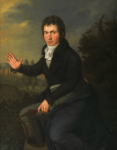

“….this music appeals because it embodies an ideal of order,…”
These words could almost have been written by Hitler. The Nazis even banned any notes higher than top ‘C’ on the clarinet, because everything had to fit in with their rules, arbitrary though they be.
Beethoven, by contrast, burst out of the musical constrictions to create new possibilities – you can even date his piano works by their tonal range, which expanded as the instruments became larger with a greater range. I can’t remember who it was (possibly Schindler) who pointed out that Beethoven had written consecutive fifths in one of his quartets, which was forbidden by Bach’s rules. “Bach forbids it, so I allow it” came the riposte.
I think i is a mistake to impose a cut-off date of 1830. There is much music written later in the 19th century that still qualifies for your plaudits of classical music. Bruckner’s symphonies, in particular, represent towering intellectual achievements. They push the musical language to its limits without ever becoming vulgar or grandiose like, say, Wagner. I am told that in one of his double-fugues, Bruckner manages to sound every note of the scale simultaneously – and it still sounds like music.
There is a phenomenon that I have observed, which applies not only to music, but to the sciences and indeed politics. And that is that the latter half of the 19th century produced an extra-ordinary number of significant people. Look at the list of composers and you will find an inordinate number who were born around 1870. Albert Einstein qualifies, as does the man with reference to whom I began this comment.
Hugo Miller