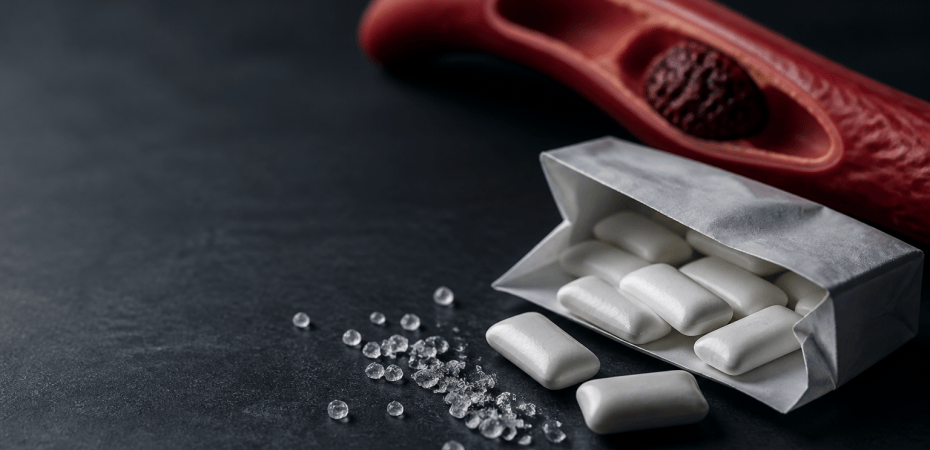
I regard chewing gum as a most disgusting habit. There is something almost ruminant about watching somebody work the same piece of flavoured rubber around his mouth for an hour, occasionally opening it so that everyone nearby can hear the process. Bubble gum is worse. It turns the human face into an unsuccessful balloon-making machine. I need no medical reason to avoid chewing gum. Manners and appearance settled the question long ago.
Still, the latest research on xylitol—the sweetener commonly added to sugar-free gum—gives everyone else a more serious reason to think. A study presented at the 2026 Congress of the European Society of Cardiology has associated high blood levels of xylitol with an increased risk of heart attack, stroke and death. The study is large, the associations are substantial, and an earlier paper found that xylitol makes blood platelets more reactive.
This does not prove that one stick of chewing gum will cause a heart attack. It does suggest that a substance marketed as a healthy replacement for sugar may not be as innocent as everyone assumed. That is worth examining properly.
What the New Study Found
The new research used data from 17,710 people in two long-running studies: the Canadian Longitudinal Study on Aging and EPIC-Norfolk in Britain. Researchers measured xylitol in the participants’ blood and compared those with the highest levels against those with the lowest. They were looking for major adverse cardiovascular events, which in this case meant death, heart attack or stroke. In the Canadian group, those in the highest quarter for blood xylitol had a 57 per cent greater risk of one of these events over six years than those in the lowest quarter. In the Norfolk group, the increase was 18 per cent over thirty years.
The numbers were adjusted for the usual cardiovascular risk factors, including age, sex, smoking, cholesterol, diabetes and high blood pressure. The association also remained after taking account of body mass index. This is important because people who are overweight or diabetic may be more likely to use sugar substitutes. Without adjustment, the researchers might simply have discovered that people already at higher cardiovascular risk consume more low-sugar products.
There also appeared to be a dose-response relationship. Risk did not rise only in one anomalous group. It increased across the xylitol categories: the higher the blood level, the higher the cardiovascular event rate. All this makes the finding harder to wave away.
But it remains an observational finding. The researchers did not randomly assign thousands of people to eat xylitol for thirty years. They found that people with more xylitol in their blood also suffered more cardiovascular events. That is not the same as showing that the first caused the second.
This distinction appears in both the European Society of Cardiology’s press release and the Guardian report on this. It is the most important distinction in the whole discussion.
Blood Xylitol Is Not the Same as Eating Xylitol
Xylitol is usually described as an artificial sweetener, but this is slightly misleading. It is a sugar alcohol that occurs naturally in small amounts in certain foods. The human body also produces it as part of glucose metabolism. Commercial xylitol is still unusual in scale. According to the European Society of Cardiology, the amounts added to sweetened products may be more than a thousand times greater than the small amounts occurring naturally. It is used in chewing gum, sweets, toothpaste, jam, yoghurt, ice cream, drinks and some products marketed to diabetics or people following low-carbohydrate diets.
The problem is that a measurement of xylitol in the blood does not necessarily tell us how much xylitol somebody has eaten. A person may have a high level because he consumes large quantities of sugar-free products. But a high level might also reflect some disturbance of glucose metabolism, liver function, kidney clearance or another biological process connected with cardiovascular disease. In that case xylitol might be a marker of illness rather than its cause. This is not a trivial objection. It goes to the centre of the study.
The thirty-year Norfolk result raises another difficulty. Dietary habits can change greatly over three decades. A blood sample taken at the beginning cannot prove that somebody continued consuming the same products in the same quantities for the rest of his life. Unless repeated measurements were made—and the public summary does not tell us that they were—the study gives us a long follow-up from a limited picture of exposure.
There is also the question of absolute risk. The figures of 57 per cent and 18 per cent are relative increases. A 57 per cent rise sounds terrifying, but one cannot judge its practical importance without knowing the starting risk. Raising a risk from one in a thousand to roughly one and a half in a thousand is not the same as raising it from one in ten to nearly one in six. The press release does not give the absolute event rates. This does not invalidate the finding, but it prevents the public from understanding its true scale.
If the 2026 study stood alone, I would regard it as interesting but inconclusive. Nutritional epidemiology has produced far too many dramatic associations for every headline to be treated as a commandment. People eat foods, not isolated molecules. They also have different incomes, habits, illnesses, medications and reasons for choosing particular products. Statistical adjustment can deal with some of this. It cannot reproduce a randomised trial. But the new study does not stand alone.
The Platelet Evidence Is More Concerning
In 2024, Marco Witkowski and his colleagues published a study in the European Heart Journal entitled “Xylitol is prothrombotic and associated with cardiovascular risk”. That title is less restrained than I would prefer, but the study did considerably more than compare dietary questionnaires. The researchers first examined fasting blood samples from two groups of patients. In the validation group of 2,149 people, those with the highest xylitol levels had a 57 per cent greater adjusted risk of a major cardiovascular event over three years than those with the lowest levels. Again, this was observational. Again, endogenous xylitol and abnormal metabolism could have complicated the relationship.
The researchers therefore went further. They exposed isolated human platelets, platelet-rich plasma and whole blood to xylitol. They also studied clot formation in mice. Finally, they gave a xylitol-sweetened drink to ten healthy volunteers and measured what happened to their blood. Xylitol increased several measures of platelet reactivity. After the volunteers drank it, their blood xylitol rose sharply and their platelets became more responsive. Platelets are small components of the blood that help form clots. This is essential when one cuts a finger. It is less desirable when a clot blocks an artery supplying the heart or brain. Heart attacks and many strokes are not simply caused by the slow accumulation of material in blood vessels. The catastrophic event is normally thrombosis: a clot suddenly cuts off the blood supply. A substance that makes platelets more reactive is therefore not something to dismiss casually.
The human experiment involved only ten people. It did not show that any of them suffered a heart attack. It measured short-term changes in platelet behaviour, not long-term disease. The mouse experiments cannot simply be transferred to human beings. Laboratory measures can also look dramatic without producing a meaningful difference in real clinical outcomes.
But here the pieces begin to fit together in a way that deserves attention. The observational studies find that people with high blood xylitol suffer more cardiovascular events. The laboratory work finds that xylitol increases platelet reactivity. The small human experiment finds that drinking xylitol rapidly raises its concentration in the blood and produces measurable changes in platelets.
The mechanism does not prove the epidemiology. The epidemiology does not prove the mechanism causes disease. But each makes the other more plausible. That is much stronger than the ordinary nutritional headline in which people who report eating one food happen to live slightly longer than people who report eating another.
The Clotting Mechanism Makes Sense
The proposed chain is straightforward. A person consumes a significant amount of xylitol. The xylitol enters his blood. His platelets become more reactive. If he already has damaged or unstable arteries, this greater readiness to clot might increase the chance of a heart attack or stroke. There is no need to invoke a conspiracy or some wholly new theory of cardiovascular disease. Clotting is already central to the conventional explanation of acute cardiovascular events.
This is one reason I take the findings seriously. In my earlier discussion of Malcolm Kendrick’s thrombogenic theory of heart disease, I argued that modern cardiology sometimes gives cholesterol so much attention that it makes the clot appear almost as an afterthought. Yet the event that kills is usually a clot. Whatever role cholesterol, inflammation, endothelial damage and metabolism play in producing arterial disease, platelet activation remains important at the final stage.
If xylitol really makes platelets more willing to aggregate, its effect could matter most in people who already possess vulnerable arteries. It might do little to a healthy seventeen-year-old while being more consequential in an older diabetic with established cardiovascular disease. The studies do not yet tell us whether this is so. But it would be surprising if the risk were perfectly uniform. Medicine often makes the mistake of treating a population average as an individual destiny. The same exposure can be trivial in one person and dangerous in another.
The Case Is Serious, but Not Yet Complete
There are several reasons not to declare xylitol a proven cardiovascular poison.
First, the latest results were presented at a conference. At the time of writing, the European Society of Cardiology has published a press release, not a complete peer-reviewed paper containing all the methods, tables and sensitivity analyses. Conference findings can be important, but they should not be treated as though every detail has already survived full examination.
Second, the observational studies measured blood xylitol rather than directly measuring long-term dietary consumption. This leaves open the possibility that endogenous production or impaired clearance contributes to the association.
Third, the human intervention study had only ten volunteers. Every participant showed increased measures of platelet responsiveness, which is striking, but ten people cannot establish the rate of heart attacks caused by years of consumption.
Fourth, a laboratory change is not automatically a clinically important change. The body contains many compensating mechanisms. A measurable increase in platelet activity may be temporary, too small to affect most people or important only when combined with other risk factors.
Fifth, xylitol has been used for years, particularly in dental products, without an obvious epidemic of cardiovascular injury. Its best-known adverse effect has been digestive. Large quantities can produce wind, cramping and diarrhoea because sugar alcohols are incompletely absorbed.
This history of use is mildly reassuring. It is not decisive. Most earlier studies of xylitol were designed to examine dental health, blood glucose or gastrointestinal tolerance. A trial looking at tooth decay in a few hundred people is unlikely to detect a modest increase in cardiovascular events appearing many years later. An absence of evidence can be genuine reassurance only when somebody has looked properly for the relevant harm.
The Dental Benefits Are Real
Xylitol did not become popular for no reason. It is less readily fermented by the bacteria associated with tooth decay, and xylitol chewing gum has been promoted as a way to stimulate saliva and reduce dental caries. It also provides sweetness with a smaller immediate effect on blood glucose than ordinary sugar. These are real benefits. A fair review should not erase them merely because a cardiovascular concern has appeared.
There has already been criticism of the 2024 paper from researchers interested in the dental use of xylitol. Gregory Valentine, Eva Söderling and Peter Milgrom argued in the European Heart Journal that previous xylitol-loading studies had not shown thrombotic harm and that the experimental model used by Witkowski and his colleagues might exaggerate the danger.
This objection deserves a hearing. It would be foolish to abandon decades of research because of one laboratory experiment. But it is equally foolish to use the dental benefits as proof of cardiovascular safety. A substance can be good for teeth and bad for platelets. Human biology is under no obligation to make every effect point in the same direction. Both facts can be true at once.
Toothpaste Is Not the Same as Eating Spoonfuls of It
The Guardian lists chewing gum, toothpaste, jam, yoghurt and ice cream together. This is understandable journalism, but it can give a misleading impression. Finding the same ingredient on several labels does not mean that every product creates the same exposure. Toothpaste is normally spat out. The quantity of xylitol swallowed after brushing is likely to be much smaller than the quantity consumed in sweets, drinks or xylitol sold by the bag as a direct replacement for sugar. A person who brushes his teeth twice a day should not assume that he is in the same position as somebody who puts several spoonfuls of xylitol into food and drinks.
Chewing gum lies somewhere between these examples. Xylitol dissolves into the saliva and is swallowed, but the dose depends upon the product and the amount consumed. One piece after a meal is not the same as chewing xylitol gum throughout the day.
This is where precise labelling would help. Consumers should be able to see how many grams of xylitol a product contains. Vague terms such as “sugar alcohols” or “natural sweeteners” make sensible judgement difficult. The fact that a substance is natural tells us almost nothing. Arsenic is natural. So are hemlock, tobacco and poisonous mushrooms. This does not mean that xylitol is comparable to any of them. It means only that “natural” is a description of origin, not a certificate of safety.
Do Not Go Back to Sugar
The British Heart Foundation’s response was sensible. The xylitol findings are not a green light to eat more sugar. This point should be obvious, but nutritional debate has a habit of swinging between absolutes. Fat is condemned, so people consume industrial quantities of refined carbohydrate. Sugar is condemned, so every non-sugar sweetener is treated as a miracle. A warning appears about one sweetener, and sugar immediately begins looking traditional and harmless. It is not harmless in large quantities. Excessive free sugar contributes to tooth decay, excess calorie intake and poor metabolic health. Sugary drinks make it especially easy to consume enormous amounts without feeling full.
The better response is not necessarily to find a new chemical that allows everything to remain unbearably sweet. It may be to stop expecting sweetness in every food and drink. Plain yoghurt does not require syrup. Coffee does not require transformation into a liquid pudding. Water does not need to glow in a colour unknown to nature. The modern diet is full of products designed to keep the palate in a permanent state of childhood.
There is something strange in the belief that every appetite must be satisfied while every consequence is technologically removed. We want sweetness without sugar, stimulation without tiredness, fat loss without hunger and pleasure without restraint. Sometimes technology helps. Sometimes it merely conceals the original problem and introduces another one. Xylitol may prove to be such a case.
What I Would Do
I would not panic about incidental exposure from toothpaste or the occasional food containing xylitol. The available evidence does not justify that. I would avoid consuming large amounts of it as a daily sugar substitute. Bulk xylitol is often sold with the suggestion that it can replace sugar in equal quantities. Given the platelet findings, I do not think this is prudent. I would also be cautious about frequently consuming xylitol-sweetened drinks, sweets or chewing gum. There is no nutritional need for these products, and the proposed cardiovascular risk is now credible enough to remove the assumption of innocence.
People with previous heart attacks, strokes, diabetes or established vascular disease have stronger reasons for caution. They should not alter prescribed treatment because of an article, but they may reasonably ask a doctor whether substantial xylitol consumption makes sense in their circumstances.
Most importantly, I would wait for the complete 2026 paper. We need to know the absolute event rates, the measured xylitol concentrations, the extent of repeated testing, the handling of kidney and metabolic function, and whether the association survives every reasonable attempt to explain it by confounding or reverse causation.
Independent replication would also matter. The earlier platelet work and the new cohort analysis involve overlapping researchers. This does not make the results unreliable, but science becomes more convincing when different groups using different methods reach the same conclusion.
A Warning Worth Taking Seriously
The right conclusion is not that xylitol has been proved to cause heart attacks. It has not. Nor is the right conclusion that the study can be ignored because it is observational. The platelet experiments make that response too easy. What we have is a serious warning built from several kinds of evidence. High blood xylitol is associated with cardiovascular events in multiple cohorts. Xylitol increases platelet reactivity in laboratory experiments. A xylitol drink produces both a sharp rise in blood xylitol and increased platelet responsiveness in healthy volunteers. The associations continue over longer follow-up in a much larger general population. Each piece has limitations. Together they are concerning.
Regulators – so long, that is, as they should be allowed to function – should now require better long-term safety evidence and clearer labelling. Manufacturers should stop presenting xylitol as though “sugar-free” and “natural” settle every health question. Researchers should distinguish dietary xylitol from the xylitol produced inside the body and identify the doses at which any clinically meaningful risk appears. Until then, ordinary caution is justified.
Modern medicine and nutrition both have a weakness for simple villains and simple replacements. Cholesterol is declared the cause of heart disease. Fat is replaced with sugar. Sugar is then declared the cause of metabolic disease. Sugar is replaced with sweeteners. The replacement acquires a health halo before anyone has studied its long-term effects properly. Reality is normally less convenient. Sugar can be harmful in excess without every substitute being beneficial. Xylitol can protect teeth while perhaps making platelets more reactive. A study can be observational while still revealing something important. A mechanism can be plausible without being finally proved.
The evidence on xylitol has not reached certainty. It has gone well beyond a curiosity. And chewing gum remains disgusting.
Reading List
European Society of Cardiology, “Xylitol may increase the risk of cardiovascular events”, 26 August 2026.
Andrew Gregory, “Sweetener used in chewing gum and jam linked to strokes and heart attacks”, The Guardian, 28 August 2026.
Marco Witkowski et al., “Xylitol is prothrombotic and associated with cardiovascular risk”, European Heart Journal, vol. 45, no. 27, 2024, pp. 2439–2452.
Gregory C. Valentine, Eva Söderling and Peter Milgrom, “Oral health benefits and safety of xylitol and potential cardiovascular risk: questioning the validity of the model of Witkowski et al.”, European Heart Journal, vol. 46, no. 27, 2025, pp. 2705–2706.

Discover more from The Libertarian Alliance
Subscribe to get the latest posts sent to your email.