
In PSHE the other day, we were each given a printout of an essay called “Anti-fatness as anti-blackness: Violence at home, violence abroad”. It is by Da’Shaun Harrison, it was published in November 2024, and it comes with a biography describing its author as “a trans theorist and Southern-born and bred abolitionist in Atlanta, GA”. The South in question is the American one. I mention this because the essay concerns the paediatricians of North Carolina, the slave patrols of the old Confederacy, the wife of an American president and the blockade of Gaza, and it was handed to a room of teenagers in the North of England in a lesson where the H is supposed to stand for Health. I do not know who chose it. I have read it three times, which I suspect is more than can be said for whoever did choose it.
Its thesis is in its first heading: “Anti-fatness is anti-blackness. In this way, fatness, as with blackness, is always and already criminalized, penalized, objectified, and marginalized”. Put into English, the claim is that the preference for thin bodies over fat ones has little to do with health. Harrison says so outright: “Fear of fatness and the preference for thinness are, principally and historically, not about health, but rather, they are a way to legitimize race, sex, and class hierarchies.” Doctors, dieticians, the body mass index, the police, Michelle Obama and the Israeli army are all, on this account, parts of one machine, and the machine was built to manage slaves. The conclusion is that it must be destroyed, along with something Harrison calls civil society.
I will begin with the part that should, if I had any, deserve my respect. The essay opens with a child. Harrison was a fat child who was “picked on often for being fat. And for eating”, and who dealt with this by not eating where anyone could see: “I’d grown such a fear of eating in front of others that the only solution I saw was not to eat at all. I was in elementary school.” The same child, we are told, lived with depression and had concluded “that everyone else thought that I should die”. Later, when the mother suggested an eating disorder to one of the doctors, he is reported as answering: “That’s not likely, as eating disorders aren’t typically seen in boys, especially when they are African American and overweight.”
If that was said, the doctor was a fool. Eating disorders are missed in boys and in fat patients because doctors go looking for thin white girls, and a child who goes “all day—sometimes even two—without eating” needs something better than another lecture about the scales. I have been unkind about fat people before, and will be again when they ask for it. I can find nothing to be unkind about here. Children are vicious, and a child taught to be ashamed of eating does not get thinner. That child gets stranger about food, and this one did.
Had the essay stopped there, it would have been a useful piece of evidence on how not to treat a fat child. But Harrison did not want a better paediatrician. From one incompetent doctor and a playground of nasty children, the essay moves within two paragraphs to “the violence of the diet industrial complex”, to “colonial entities”, and to “the cissexism, biological determinism, and anti-black anti-fatness at the very foundation of these institutions”. A private misery has to become a world system, and a world system needs a history. The one supplied is false in nearly every particular I have been able to check.
Start with the authority. Harrison leans on Sabrina Strings’s Fearing the Black Body (2019), and summarises it like this: “What Strings makes clear is that the moment Europeans saw Africans for the first time, they decided they were too round and too black for care.” Strings makes nothing of the kind clear. Her book begins in the Renaissance, when painters treated plumpness as beauty, and its argument is that fatness was tied to blackness later, by the race theorists of the Enlightenment and the Protestant moralists who followed them. That argument can be disputed, but it is an argument about a change spread over three centuries. Harrison has turned it into a single glance on a beach. A writer who misreports the one work of history the case depends on is not to be trusted with the rest.
The rest is worse. “It was in the early 19th century that anti-fatness was established as a coherent ideology. As the slave represented capital and forced labor, fatness had to become about greed and ungodliness.” Fatness did not have to become about greed and ungodliness in the early nineteenth century, because it had been about both for a very long time. Gluttony was on Gregory the Great’s list of the capital sins at the end of the sixth century. St Paul complained of people “whose God is their belly” (Philippians 3:19). On the medical side, the Hippocratic Aphorisms observe that οἱ παχέες σφόδρα κατὰ φύσιν ταχυθάνατοι γίνονται μᾶλλον τῶν ἰσχνῶν—those who are by nature very fat are more liable to sudden death than the thin (2.44). That was written some four centuries before Christ, by Greeks who had no Atlantic trade to justify and whose own slaves were mostly Thracians, Scythians and other Greeks. In 2008, the Japanese government began measuring the waists of its citizens between forty and seventy-four. I should like to hear which plantation that was for.
Then come the cracker and the cornflake. “From its origins, diet culture was intended to force fat people to deny our desires and to abstain from the things that bring us pleasure.” The founders named are the Reverend Sylvester Graham and Dr John Kellogg. Both men did think that rich food inflamed lust, and both were cranks. But their terror was masturbation, and the people they wished to save from it were neither fat nor black. Graham lectured to anxious Protestant young men in the cities of the American North-East in the 1830s. Kellogg ran a sanitarium in Michigan for paying customers. Their target was the thin clerk with wandering hands. Worse for the thesis, Graham’s keenest followers included the abolitionists. Theodore Weld, who did as much as any man in America to turn opinion against slavery, was a devoted Grahamite, and Oberlin College, the most anti-slavery institution in the country, put its students on the diet until they complained of being hungry all the time. A regime taken up with most enthusiasm by the people trying to end slavery makes a poor instrument of slave control.
The same carelessness produces the claim “that without a slave to patrol, there would be no police; that without a slave to control, there would be no health and medical institutions that manufacture the body mass index (BMI) or ‘obesity epidemic’”. The index was devised in the 1830s by Adolphe Quetelet, an astronomer in Brussels with a passion for averages, when Belgium was barely a country and owned neither colonies nor slaves. It got its present name in 1972 from Ancel Keys, an American physiologist. As for the police, the force that most of the others were copied from was set up in London in 1829 by Sir Robert Peel, a Lancashire man born in Bury, for a city with no slaves in it. There were slave patrols in the American South, and they did feed into Southern policing. I concede it. This may explain a sheriff in Georgia. It does not explain the constable outside Greggs.
Having dealt with history, the essay turns to current affairs. “To clarify the throughline between war, eating disorders (or disordered eating), disembodiment, and fatness, I look to Palestine. Palestine is proof that the throughline is fascism and anti-fatness as anti-blackness.” The facts cited in support are, so far as I can check them, real. Dov Weissglas was reported in 2006 as saying that the idea was to “put the Palestinians on a diet, but not to make them die of hunger”. The Israeli defence ministry did work out how many calories Gaza needed to stay short of malnutrition, and the document was forced out through the courts in 2012. Crisps and chocolate were at one time among the goods kept out. All of this is disgraceful, and I have no quarrel with Harrison for saying so.
But look at what the facts are made to prove. A population was kept short of food on purpose, and its children are thin because there has not been enough to eat. This is offered as evidence for a theory in which the great injustice of the age is the disapproval suffered by people who have eaten too much. Hunger imposed by a blockade and disapproval of overeating are opposite conditions. It takes a rare self-absorption to look at the first and see a branch of the second.
The other exhibits are a lifestyle column in The Jerusalem Post, headed “How to use the stress from the Israel-Hamas war to lose weight”, and a speech that Michelle Obama made in 2011. From these two, Harrison derives “an explicit connection here between israel encouraging their citizens to ‘use the war’ as a means to ‘lose weight’ and Michelle Obama’s campaign against fat children to prepare them for the u.s. military (which also means preparing them for war against Palestinian people)”. The small letters are deliberate. An editor’s note explains that “non-capitalization and lowercase settings for American, U.S., Israel/Israeli, and Black are used as an intentional style choice by the author”. Empires have survived worse.
Here I find myself, to my annoyance, half in agreement. Mrs Obama did say that “nearly 27 percent of 17- to 24-year-olds are too overweight to serve in our military”, and that the generals “decided to do something about it”. I dislike this as much as Harrison does. A government that looks at a classroom and sees an infantry battalion is no friend of the children in it, and I have no wish to be kept in condition for somebody else’s war. But this habit of governments is old, and it has nothing to do with race or with fat. When Britain went to war in South Africa in 1899, about three in four of the men who volunteered in Manchester were turned away as unfit. They were undersized and underfed, and they were white. The result was a committee on “physical deterioration” in 1904 and school dinners in 1906. The state wanted soldiers, so it fed the poor. A century later, another state wants soldiers and tells the poor to eat less. The motive in both cases is the one I object to. In neither is it “anti-blackness”. And anyone who decides that, because a recruiting sergeant takes an interest in his health, he will take none in it himself has let the sergeant do his thinking for him.
The argument about food is where the essay trips over itself. We are told that “When we call some foods ‘junk’ or ‘unhealthy,’ we moralize that food, and in doing so, (im)moralize some bodies/flesh.” We are also told to be angry about “food deserts, food apartheid, and food insecurity”. But a food desert is a district where the shops sell little except what Harrison forbids us to call junk. If no food is better than any other, the people who live there have nothing to complain of. If they do have something to complain of, then some food is better than other food, and the nutritionists were right. Harrison wants the grievance and also wants to deny the fact on which the grievance rests. The essay then makes the muddle compulsory: “If you care about any of the aforementioned issues, including food deserts and genocide, you must also care about anti-fatness. To not care about the latter is to make null your care for the former.” So a man who objects to the starving of Gaza, but thinks a diet of crisps is bad for you, has his objection struck out. I doubt the people of Gaza were consulted.
The same thing happens with pleasure. Graham and Kellogg were wicked because they wanted people “to deny our desires and to abstain from the things that bring us pleasure”. A page or two later, we learn that “revolution is about the death of Desire and of our desires”. The cornflake was oppression because it asked people to give up what they wanted. The revolution is freedom, and asks for the same thing with a capital letter.
None of this would matter if it were only bad history in bad prose. (A fair sample of the prose is “the black fat subject is relegated to a bifurcated abject human-animal experience”.) But the essay has a practical message, which is that the doctor is the enemy. The “obesity epidemic” goes into inverted commas. So does “healthy”. The doctors of Harrison’s childhood are remembered as people who “saw my body as an opportunity to support their abuse”. We are warned against the idea “that to obtain power one must be thin or muscular”. I am both, and am still waiting. I cannot leave a classroom without permission.
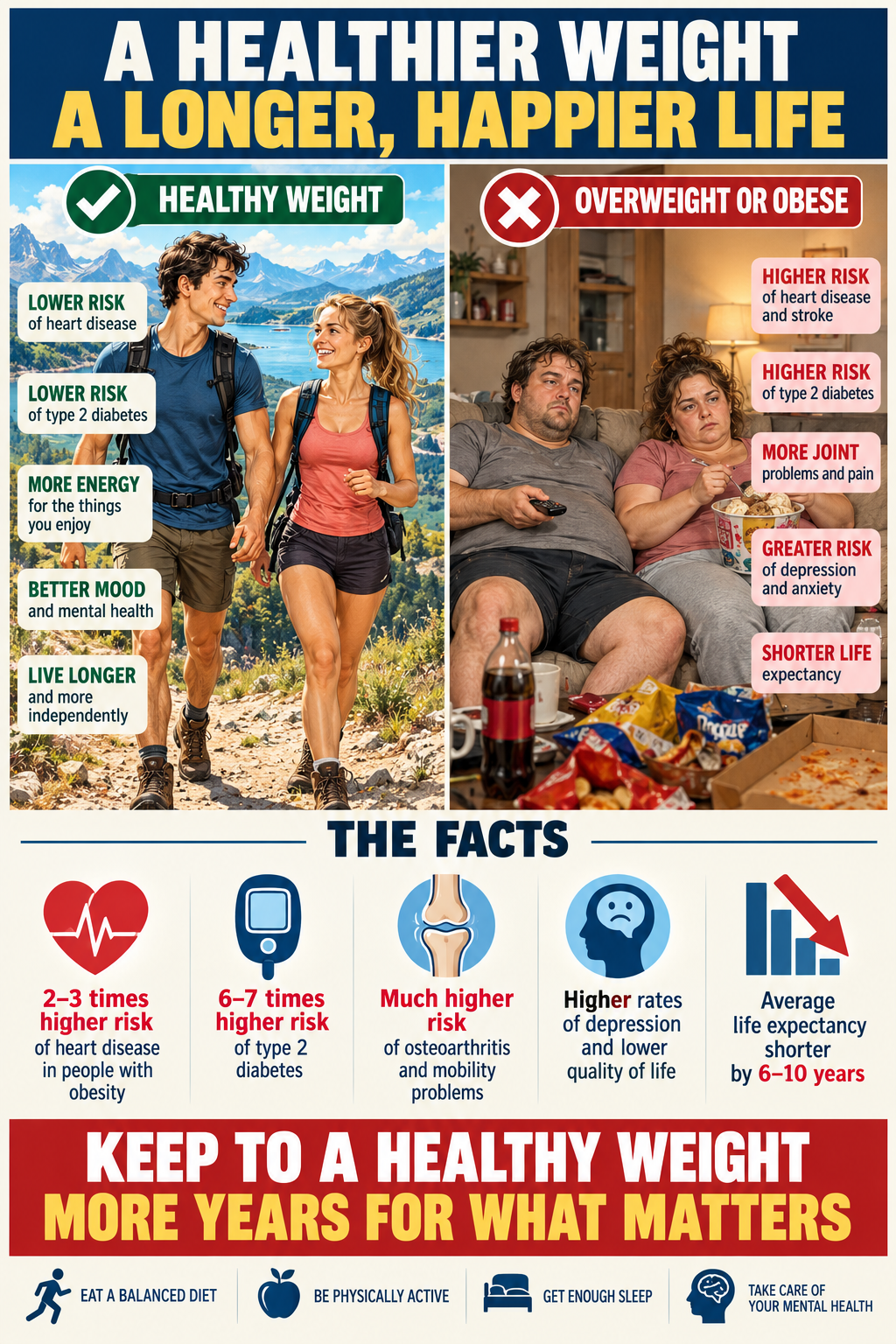
Now, I hold that an adult’s body is his own. If Harrison wishes to be fat, that is no business of mine, of Mrs Obama’s or of any general, and I would abolish every tax and regulation that tries to nag people thin. But the liberty to do a thing does not make the thing harmless, and bodies take no notice of discourse. A pooled analysis of about 900,000 adults, published in The Lancet in 2009, put the cost of severe obesity at eight to ten years of life, which it compared with the effect of smoking. On the American government’s own figures for 2017-18, 49.6 per cent of black adults were obese, against 42.2 per cent of white adults, and for black women the figure was 56.9 per cent. Black Americans have more diabetes than white Americans, and more of the kidney failure and amputations that follow it. These are the people Harrison claims to speak for, and they are being told that the one professional who might warn them in time is a slave patroller with a stethoscope. I would rather Harrison lived to ninety and spent every year of it being wrong in print. The doctrine makes that less likely, for its author and for everyone who believes it, and that is the worst thing I have to say about it.
Then there is the programme. “Any form of change that keeps civil society intact is a change that harms the black fat.” And: “what freedom can there be for us if the world does not burn?” I am not easily shocked by people who want to pull things down. I want a good many things pulled down myself, beginning with the Department for Education. But I can say what I want gone and what I expect to find standing afterwards. Harrison wants the hospitals, the police, the laboratories and civil society itself gone, and offers nothing in their place except the death of Desire. A burning world is hard on everybody. It is hardest on the chronically ill. By the essay’s own account, the child with the gastrointestinal disorder was “immediately flown to Chapel Hill’s hospital to be operated on”, was in hospital twice more, and afterwards “sat in countless appointments” with specialists. The hospital at Chapel Hill is, I take it, the one belonging to the University of North Carolina. That makes it one of the “government-funded scientific institutions used to punch down at fat folks”. On that occasion, it seems to have saved one.
That leaves the question of what this was doing in my PSHE lesson. I do not want it banned. I am glad to have read it, in the way you are glad to have seen what was under the stone. But the law here is not obscure. Sections 406 and 407 of the Education Act 1996 forbid the promotion of partisan political views in the teaching of any subject in a maintained school, and require that pupils be given a balanced presentation of opposing views when political issues come up. Academies are held to much the same rule by other means. An essay that calls for the end of civil society is, I think, political. So here is the opposing view, in case nobody else in the building was planning to supply it. Some food is better for you than other food. Being very fat shortens your life, whatever colour you are. A doctor who says so is doing his job, and a doctor who misses an eating disorder is doing it badly, and neither of them is patrolling for slaves.
More than a fifth of children in England now leave primary school obese. Some of them were in the room. They were handed a sheet of paper telling them that the scales are an instrument of slavery and that the only way out is for the world to burn. There is another way out, which is to eat less rubbish and go swimming. It is less exciting than the revolution, but it can be started on Thursday.
Sources:
- Harrison, “Anti-fatness as anti-blackness: Violence at home, violence abroad”
- Synapsis review of Strings, Fearing the Black Body
- Oberlin Heritage Center, “Sylvester Graham and his Influence on Daily Life in Oberlin”
- American Archive, Carol Berkin interview for The Abolitionists (Weld as a Grahamite)
- Seneca, “National Efficiency and the Boer War” (Manchester recruits)
- CDC NCHS Data Brief 360, adult obesity 2017–18
- Obesity Health Alliance on the 2024/25 National Child Measurement Programme
Discover more from The Libertarian Alliance
Subscribe to get the latest posts sent to your email.
Related posts:
 Junk Food for Junk People, and the Joy of Watching Them Rot
 Obesity as a Behavioural Addiction: A Study in Therapeutic Evasion
 Bodybuilders, Bulimia, and the Terror of Looking Good
 The Body Never Lies: Why Physical Excellence is One of Life’s Greatest Investments
 Some Provisional Truths About Diet and Health
 The Pill That Makes Us Thin: Orforglipron and the Medicalisation of Appetite
 Lose Fat, Not Yourself: Why Structure Beats Motivation
 Blood Pressure, Beyond the Slogans: What the Best Evidence Really Shows
Wegovy: The Needle That Never Lets Go
Blood Pressure, Beyond the Slogans: What the Best Evidence Really Shows
Wegovy: The Needle That Never Lets Go
 Charitable Thoughts for the New Year
 The Food Pyramid, and the Limits of State Nutrition
 Salt and Blood Pressure: the Danger of Medical Absolutes
Powered by YARPP.