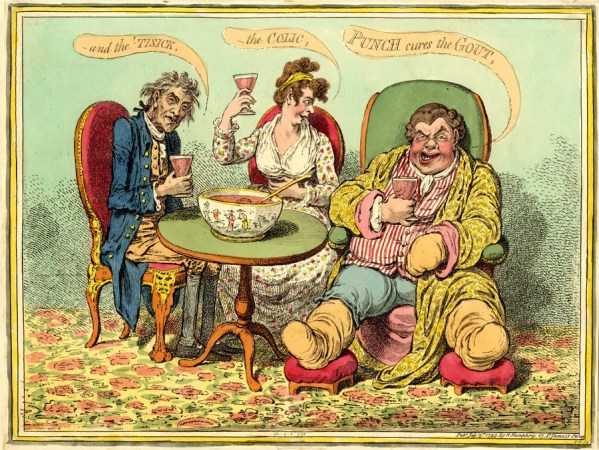
Gout has the distinction of being both a serious disease and, for much of history, something approaching a social joke. Few other illnesses have been drawn so often by cartoonists as an obese gentleman in a nightshirt, his swollen foot propped on a cushion after an evening of port and roast beef. The joke worked because everyone understood what gout supposedly meant. It was the punishment of prosperity, visited on men who had eaten too much, drunk too much and generally enjoyed themselves rather more than Providence intended.
I have lately had reason to look beyond the joke. One of my relatives has been diagnosed with a mild form of the condition, and I have done what I suppose most people now do in these circumstances, which is to read everything I could find. Much of it was repetitive, some of it was nonsense, and a fair amount contradicted the rest. But enough of it was interesting, and enough of it useful, that I thought it worth setting down what I have learned.
There is some truth in the caricature. Yet gout is considerably more interesting than the caricature suggests. It is one of the oldest diseases for which we possess recognisable descriptions. Its history stretches from ancient Egypt through Hippocrates and Galen to modern biochemistry, and its changing prevalence tells us something about the relationship between human biology and material abundance. It has even intruded now and then into political history. William Pitt the Elder, Benjamin Franklin, Thomas Jefferson and John Hancock all suffered from it, and there are at least plausible arguments that attacks of gout influenced events surrounding both the American Revolution and the adoption of the United States Constitution.
The disease was recognised remarkably early. Podagra – gout affecting the joint at the base of the great toe – appears to have been identified in Egypt as far back as the third millennium BC. Hippocrates, writing in the fifth century BC, called it the “unwalkable disease”. His observations remain perceptive. He noticed that gout was overwhelmingly a disease of men, that women seldom suffered from it before the menopause, and that eunuchs escaped it altogether. He also connected it with the manner in which affluent people lived, and distinguished what he regarded as the arthritis of the rich from the rheumatic complaints of the poor. Galen, in the second century AD, described tophi – the chalky deposits that can form under the skin after years of untreated disease – and, while he blamed debauchery and intemperance, recognised that heredity also played a part. His near contemporary Aretaeus of Cappadocia had already written of a gouty disposition that ran in families.
Ancient medicine naturally lacked any understanding of uric acid, and medieval physicians explained the disease through the humoral system they had inherited from the Greeks. The English word itself comes from gutta, Latin for a drop, and is first found in the writings of Randolphus of Bocking, a thirteenth-century Dominican. The idea was that an excess of one of the bodily humours might “drop” into a joint and inflame it. The explanation was wrong, but it is worth remembering that the people who believed it were not fools. They were trying to impose a coherent causal structure on observations they had no means of investigating with chemistry or microscopy.
By the seventeenth century, Thomas Sydenham was able to describe an acute attack with painful accuracy, because he had suffered from the disease for more than thirty years. In his Treatise of the Gout and Dropsy, published in 1683, he describes the victim going to bed in good health, only to be woken at about two in the morning by a severe pain in the great toe, followed by chills, shivering and a little fever. The pain grows through the night until, as the standard translation has it, the affected part is so “exquisite and lively” that it “cannot bear the weight of the bedclothes nor the jar of a person walking in the room”. Anyone tempted to regard gout as a comic inconvenience should read Sydenham. The cartoons may be amusing; the disease is not. Sydenham also left us one of the better consolations ever offered to a sufferer: that gout, “unlike any other disease, kills more rich men than poor, more wise men than simple.”
Yet the comic reputation tells us something about the social history of illness. Gout became known as the “disease of kings” precisely because the conditions associated with it were once available mainly to the prosperous. Meat, wine and abundant food were not everyday possessions for most Europeans. To develop an illness associated with consuming them could therefore function, perversely, as evidence that you had arrived in life. As late as 1900, The Times could observe that, while the common cold was well named, gout seemed instantly to raise the social status of its victim. In 1964, Punch welcomed the news that, in keeping with more democratic times, gout was now open to all, adding that it was ridiculous a man should be barred from enjoying it because he had gone to the wrong school.
This is amusing, but the democratisation of gout has a serious side. Conditions once associated with the table of an eighteenth-century aristocrat have become available at comparatively little cost to almost everyone in a developed society. The problem of scarcity has not disappeared, but it now coexists with the opposite problem: an abundance of food and drink that human metabolism was never shaped to encounter every day of the year. About one adult in forty in the United Kingdom now has gout. The Global Burden of Disease study estimated that some 56 million people had it worldwide in 2020, and projects something close to 96 million by 2050, mostly because populations are growing larger and older.
The chemistry behind the disease was uncovered slowly. Antoni van Leeuwenhoek examined material from a gouty tophus in 1679 and saw through his microscope what he called “long, transparent little particles”, many of them pointed at both ends. In 1776 the Swedish chemist Carl Scheele identified uric acid in a kidney stone, and in 1797 William Hyde Wollaston demonstrated urate in material taken from a tophus on his own ear. In the middle of the nineteenth century Sir Alfred Baring Garrod made the decisive connection. Using a simple test of his own devising – a thread suspended in acidified serum, on which urate crystals would form if enough were present – he showed that the blood of gouty patients was loaded with uric acid. The deposited urate, he argued, was “the cause, and not the effect, of the gouty inflammation.” In 1899, Max Freudweiler showed that injecting urate crystals into a joint could provoke an attack. Then, in 1961, Daniel McCarty and Joseph Hollander examined the fluid from gouty joints under polarised light and found the needle-shaped crystals of monosodium urate, putting their central role beyond reasonable dispute. Aspirating a swollen joint and looking for those crystals remains the definitive test today.
This history is worth dwelling on because it is an unusually good example of medicine progressing through the correction of its own ideas. The humoral explanation gave way not because someone announced that ancient medicine was stupid, but because improved instruments made better observations possible. The crystals could be seen, their chemical composition identified, their effects experimentally investigated, and eventually their role in the disease demonstrated. Gout thus became one of those relatively satisfying medical problems in which cause and pathology can be connected with unusual clarity.
There is nevertheless an important distinction between hyperuricaemia – too much urate in the blood – and gout. Uric acid is produced when the body breaks down purines, which are found in our own cells as well as in food. Most mammals possess an enzyme called uricase, which converts urate into the far more soluble allantoin. Our ape ancestors lost it through a series of mutations many millions of years ago, and nobody is quite sure why. One theory is that urate served as a useful antioxidant; another is that it helped maintain blood pressure on a salt-poor diet. Whatever the reason, our circulating urate levels are much higher than those of most animals, and not far below the point at which urate stops dissolving. When that point is passed, crystals can form, particularly in cooler peripheral joints such as the big toe. The immune system treats these crystals as a threat and attacks them with extraordinary violence. That is the acute attack.
But high urate does not mean that an attack must follow. Many people live for years with hyperuricaemia and never develop gout, while others are considerably more susceptible. Genetics matters. Kidney function matters, because about two thirds of the urate we produce is disposed of through the kidneys and most of the rest through the gut. Diet matters, though not always in the way suggested by the old caricature of the gluttonous squire. Alcohol, especially beer, certain purine-rich foods, sugary drinks, obesity and some common medications – diuretics and low-dose aspirin among them – can all raise the risk. Gout is therefore not simply divine judgement on someone who has eaten too much Stilton.
The hereditary element, noticed so early, has now been traced to particular genes. The most important are those that control the transporters moving urate out of the blood and into the urine or the gut. One of them, ABCG2, has a common variant that reduces its efficiency, and this variant is roughly three times as frequent among East Asians as among Europeans. It is not the only reason why a Chinese family might find gout turning up in its members, but it is part of the answer. The same kind of explanation lies behind one of the most striking facts in modern epidemiology: that Māori and other Pacific peoples have some of the highest rates of gout in the world.
Treatment has an equally long history. Colchicine comes from the autumn crocus, Colchicum autumnale, which the Greeks knew as a powerful purgative. Its specific use against gout is usually credited to Alexander of Tralles, a sixth-century Byzantine physician. This is itself a useful reminder of how misleading the familiar picture of a thousand-year medical darkness after the fall of Rome can be. Byzantine physicians preserved classical medicine and sometimes developed it in useful directions, and Alexander’s use of colchicum was one such development.
Colchicine works because it interferes with the inflammatory response to urate crystals, though its toxicity and its effect on the bowels have always made it an unpleasant medicine. Sydenham, who distrusted purgatives, would not use it, and his authority kept it out of favour for well over a century, until Anton von Störck revived it in Vienna in 1763. It is still prescribed, though in far smaller doses than our ancestors endured. Modern medicine has added non-steroidal anti-inflammatory drugs and corticosteroids for acute attacks. But all these treatments only suppress inflammation. A different class of drug tackles the underlying accumulation of urate.
The most important of these has been allopurinol. It was developed in the early 1960s by George Hitchings and Gertrude Elion, working in the American laboratories of Burroughs Wellcome – a commercial firm, it is worth noting, and not a government research institute. Hitchings and Elion shared the Nobel Prize for Medicine in 1988 for this and a string of other drugs. Allopurinol blocks the enzyme xanthine oxidase and thereby reduces the production of uric acid. A newer drug, febuxostat, works in the same way. Other drugs increase the excretion of urate through the kidneys, while for the most severe cases there are injectable preparations of uricase – the enzyme we lost millions of years ago – which dissolve urate directly. Modern gout is therefore, at least in principle, remarkably treatable. Keep urate low enough for long enough, and existing crystals dissolve. Even established tophi can gradually disappear. Gout is often described as the one form of arthritis that can, in effect, be cured.
There is an interesting tension here between pharmaceutical treatment and lifestyle. Garrod himself recommended reducing purine-rich foods, and later investigations have confirmed that diet affects the level of uric acid in the blood. But the effect is smaller than most people imagine. Only about a quarter of the urate in our bodies comes from food and drink; the rest is made internally. The National Institute for Health and Care Excellence, in its 2022 guideline, goes so far as to say that no specific diet has been shown to prevent attacks, though it does recommend dealing with excess weight and heavy drinking.
Bryan might not, but I would be cautious about turning this into another simple story in which natural living is virtuous and pharmaceutical medicine wicked. Gout is one of the conditions for which modern drugs can produce dramatic benefits, particularly for people with recurrent attacks or tophi. Someone whose genes or kidneys maintain persistently high urate levels cannot necessarily eat his way out of the problem. Conversely, prescribing tablets while ignoring obesity, heavy drinking or poor metabolic health would be equally unsatisfactory. The sensible approach is to treat the patient rather than declare allegiance to either pharmacology or lifestyle medicine.
And this, when I came to look at what actually happens to gout patients in Britain, turned out to be the most surprising part of the story. For a disease whose cause is so clearly understood and whose treatment is so cheap – allopurinol costs the health service pennies a day – gout has been managed remarkably badly. A large study published in 2015 found that, of people newly diagnosed in the United Kingdom, fewer than one in five were given urate-lowering treatment within six months, and barely more than a quarter within a year. Most were sent away with painkillers and told to come back at the next attack. Then, in 2018, a trial run from Nottingham compared ordinary general practice with care from specially trained nurses, who explained the disease to patients, started them on allopurinol and raised the dose until their urate reached a target. After two years, 95 per cent of the nurse-led patients had reached the target, against 30 per cent of those left with their GPs. They also had fewer attacks. The difference was not a new drug. It was information, and the persistence to act on it.
It is a lesson that anyone newly diagnosed – including my relative – might take to heart. I am not a doctor, and nothing here should be taken as medical advice. But, having read the guidance, I think there are some questions worth asking at the surgery. The current British guideline says that everyone with gout should at least be offered a discussion about urate-lowering treatment, and that it should be offered outright to those with repeated or troublesome attacks, kidney disease, tophi, or who take diuretics. The approach recommended is “treat to target”: start on a low dose, measure the blood urate, and increase the dose until the level falls below 360 micromoles per litre – or below 300 for more severe disease. It should normally be started a few weeks after an attack has settled, not in the middle of one; and because dissolving crystals can themselves provoke attacks during the first months, it is usually accompanied by a low dose of colchicine. Many people give up on allopurinol because they have an attack soon after starting it and conclude that it has made things worse. They should be told in advance that this is likely and does not mean the drug is failing.
There is one further point that seems particularly relevant to families like mine. In a small number of patients, allopurinol causes a serious and occasionally fatal skin reaction. The risk is strongly linked to a gene variant called HLA-B*58:01, which is several times more common among Han Chinese, Koreans and Thais than among Europeans. The American College of Rheumatology recommends that patients of these ancestries be tested for it before starting allopurinol. The British guideline does not mention the test, but it exists, and anyone of Chinese descent about to begin treatment might reasonably ask about it. If the result is positive, there are alternatives.
As for diet, the evidence is more interesting than the old lists of forbidden foods. Beer is the worst of the alcoholic drinks, partly because it contains purines of its own, with spirits next and moderate wine apparently least harmful. Offal, game, oily fish and shellfish are rich in purines and best eaten sparingly. Purine-rich vegetables, by contrast – peas, beans, lentils, spinach, mushrooms – do not seem to raise the risk at all. A large American study published in 2008 found that men who drank two or more sugary soft drinks a day were nearly twice as likely to develop gout as those who drank less than one a month, because fructose itself raises uric acid. Coffee and low-fat dairy produce appear, if anything, to be protective. The evidence that cherries help is suggestive rather than conclusive. None of this is a substitute for treatment where treatment is needed, but it is a better guide than the common belief that gout is simply the reward for eating too much red meat.
The historical relationship between diet and gout becomes particularly interesting when East and West are compared. Traditional Asian diets, with rice and vegetables providing most of their substance and relatively modest quantities of meat, were historically associated with comparatively little gout. As Asian societies have grown richer and their diets more Westernised, gout has become increasingly common. This is part of a wider international rise in hyperuricaemia and gout accompanying affluence.
As someone of Chinese ancestry living in England, I find this transformation rather interesting. For most of history, the great nutritional problem facing humanity was obtaining enough food. Chinese cuisine, like most traditional cuisines, developed under circumstances in which economy mattered. Meat could flavour a dish without making up half of it. Rice, vegetables and small portions of more expensive ingredients made practical sense long before anyone had heard of serum urate.
Prosperity has altered this. The modern Chinese middle class can now eat like eighteenth-century European aristocrats if it wishes, and it increasingly suffers from some of the same diseases of abundance. Add a genetic inheritance that already leans towards high urate, and it is not surprising that gout, once rare in China, is now common. There is a quiet irony in this. Economic development has succeeded so magnificently at defeating some ancient problems that it has made others commonplace.
Gout also has one of the more entertaining political histories of any disease. William Pitt the Elder suffered badly from it, and it has been suggested that his attacks helped shape the quarrel between Britain and its American colonies. During one of his absences, Parliament passed the Stamp Act of 1765. Pitt returned and helped secure its repeal, telling the Commons that he rejoiced that America had resisted, and arguing that the colonists, as Englishmen, could not properly be taxed without their consent. The more remarkable case came the next year. By 1767 Pitt, now Earl of Chatham, was actually head of the government, but gout and what seems to have been a nervous collapse left him shut away and unable to act. In his absence, Charles Townshend, his Chancellor of the Exchequer, pushed through the duties on colonial imports that led, by a chain of events, to the Boston Tea Party. It would be foolish to claim that gout caused the American Revolution. But illness can remove particular men at decisive moments, and history is sometimes altered by contingencies of this kind.
Benjamin Franklin and Thomas Jefferson were also sufferers. Franklin’s gout became so severe that he was reportedly carried to the Constitutional Convention in a sedan chair. While in Paris in 1780, he wrote one of the better essays on the disease, a “Dialogue between Franklin and the Gout”, in which the Gout lectures him on his fondness for food and his reluctance to walk, and explains that its visits are for his own good. The Comte de Vergennes, the French foreign minister whose support was essential to the American cause, was another member of this uncomfortable fraternity. There has even been speculation that shared experience of gout created a degree of sympathy among these men. This is impossible to prove. But anyone who has endured the same painful illness as another person will understand why it is not entirely ridiculous.
The best story concerns John Hancock. When Massachusetts met in 1788 to decide whether to ratify the new Constitution, Hancock was president of the convention and the most popular man in the state. The vote was close, and he took to his bed with what contemporaries regarded as a suspiciously convenient attack of gout. It has been said that his recovery followed hints from the Federalists that he might be considered for high federal office. He then appeared, his feet wrapped in flannel, to propose a set of recommended amendments that brought enough waverers round, and Massachusetts ratified by 187 votes to 168. Perhaps the gout was genuine. Perhaps it was diplomatic gout. Politicians have suffered from remarkably well-timed illnesses ever since.
These stories should not distract from what is important about gout. It provides an unusually long record of the interaction between disease, civilisation and scientific understanding. Hippocrates could recognise the clinical pattern and its association with affluent living, but he could not explain its chemistry. Seventeenth-century microscopy revealed crystals without explaining what they were. Eighteenth- and nineteenth-century chemistry identified urate and connected it with the disease. Twentieth-century biochemistry revealed the metabolic pathways well enough for medicines to interfere with them deliberately. Two of the leading authorities on its history, George Nuki and Peter Simkin, describe gout as a paradigm for the rational treatment and prevention of a chronic rheumatic disease. It is a fair description – with the awkward qualification that the rational treatment has so often not been given.
Yet I think there is another lesson. Human beings are exceptionally good at altering their environment and much less good at altering themselves. Our economies can transform within a generation; our biology cannot. Foods that were once rare become everyday purchases. Physical labour disappears from ordinary life. Alcohol and calories become permanently available. The result is not that prosperity is bad. It would be perverse to romanticise the hunger and exhausting labour from which our ancestors were fortunate to escape. It is that abundance requires a degree of self-command that scarcity imposed automatically.
The old moralists who associated gout with intemperance were therefore not entirely mistaken, even though their physiology was. Nor were they entirely right. Gout is influenced by heredity, kidney function and metabolic circumstances over which the individual may have little control. It should no more be treated as proof of moral failure than diabetes or high blood pressure. Still, prosperity changes the diseases from which societies suffer, and personal habits remain part of the story. So does personal responsibility of another kind: the willingness to find out what the evidence says, and to insist on being treated accordingly.
Perhaps this explains why James Gillray’s caricature The Gout, published in 1799, remains so effective. The small, fire-breathing demon sinking its teeth and claws into the sufferer’s inflamed foot is absurd, but anyone who has experienced an acute attack will recognise something in it. Modern medicine has replaced Gillray’s demon with monosodium urate crystals, neutrophils, inflammatory mediators and metabolic pathways. This is an enormous improvement in explanation and, more importantly, in treatment.
But the underlying human problem has not entirely changed. We remain creatures whose ingenuity has given us access to pleasures in quantities our ancestors could scarcely imagine, while leaving us with bodies formed under very different conditions.
Gout was once the disease of kings. Its democratisation is, in a strange way, evidence of one of humanity’s greatest achievements. The poor can now afford to eat themselves into diseases once reserved for princes.
Perhaps the final stage of progress will be learning that we do not always have to – and, where our genes have decided otherwise, having the sense to take the tablets.
Further Reading
Practical guides for patients
- NHS, “Gout”. The standard plain-English overview of symptoms, causes and treatment.
- Arthritis UK (formerly Versus Arthritis), “Gout: symptoms, causes and treatment”. Thorough and well written, with sensible advice on diet, exercise and medication.
- The UK Gout Society, “All About Gout”. A small charity’s collection of free factsheets, including a useful one on diet.
Clinical guidance
- National Institute for Health and Care Excellence, Gout: diagnosis and management (NG219, 2022). The current guideline for the NHS in England and Wales; the “Recommendations” section is readable by a layman and worth knowing before seeing a doctor.
- American College of Rheumatology, “2020 Guideline for the Management of Gout”, Arthritis Care & Research. The American equivalent, including the recommendation on HLA-B*58:01 testing for patients of East Asian descent. A shorter summary is in the College’s press release.
- British Society for Rheumatology, “Guideline for the Management of Gout” (2017), Rheumatology. The specialists’ guideline, more detailed than NICE.
Research
- Dalbeth and others, “Gout”, The Lancet, 2021. An authoritative review of the science, from genetics to treatment.
- -F. Kuo and others, “Rising burden of gout in the UK but continuing suboptimal management”, Annals of the Rheumatic Diseases, 2015. The evidence that most British patients were not being properly treated.
- Doherty and others, “Efficacy and cost-effectiveness of nurse-led care … for gout”, The Lancet, 2018. The Nottingham trial. The University of Nottingham’s press release is a quicker read.
- K. Choi and G. Curhan, “Soft drinks, fructose consumption, and the risk of gout in men”, BMJ, 2008.
- GBD 2021 Gout Collaborators, “Global, regional, and national burden of gout, 1990–2020, and projections to 2050”, The Lancet Rheumatology, 2024.
History
- Nuki and P. A. Simkin, “A concise history of gout and hyperuricemia and their treatment”, Arthritis Research & Therapy, 2006. Free to read, and the source of many of the stories above.
- Roy Porter and G. S. Rousseau, Gout: The Patrician Malady (Yale University Press, 1998). The standard cultural history of the disease, from the Greeks to the twentieth century; a review in Medical History gives a good idea of its contents.
- Benjamin Franklin, “Dialogue between Franklin and the Gout” (1780). Short, funny and still sound advice.
- Nobel Prize in Physiology or Medicine 1988. The award to Hitchings, Elion and Sir James Black, with accounts of their work.
- James Gillray, The Gout (1799), Metropolitan Museum of Art, New York. The caricature itself, viewable online.

Discover more from The Libertarian Alliance
Subscribe to get the latest posts sent to your email.
Related posts:
 Medicine in the Loaf
 Fatness and Savagery: What the Byzantines Knew and We Forget
 The Health and Morality of Coffee with Spices
 The Food Pyramid, and the Limits of State Nutrition
Why Coffee Is Good for Your Health: History, Evidence, and the Case for a Morning Cup
 Xylitol and the Clotting Question: Why the Latest Warning about Sugar-Free Gum Deserves Attention
 Blood Pressure, Beyond the Slogans: What the Best Evidence Really Shows
 Charitable Thoughts for the New Year
 Bodybuilders, Bulimia, and the Terror of Looking Good
The Clot and the Creed of Progress: Reflections on Malcolm Kendrick and the Dogmas of Cardiology
 Is Dementia Really Being Defeated?
 The People Who Must Go
Powered by YARPP.
I’ve had gout before and you can get it by overindulging in protein if your trainer tells you to eat 200g of protein a day. But here’s the thing, when the NHS on various sites says “the evidence that cherries help is suggestive rather than conclusive”, this is just ignorance. If your relative has gout, buy him 2 punnets of cherries from the supermarket. Eat them all in one go, spitting out the stones of course, and he will wake up with no gout. It works every single time.